
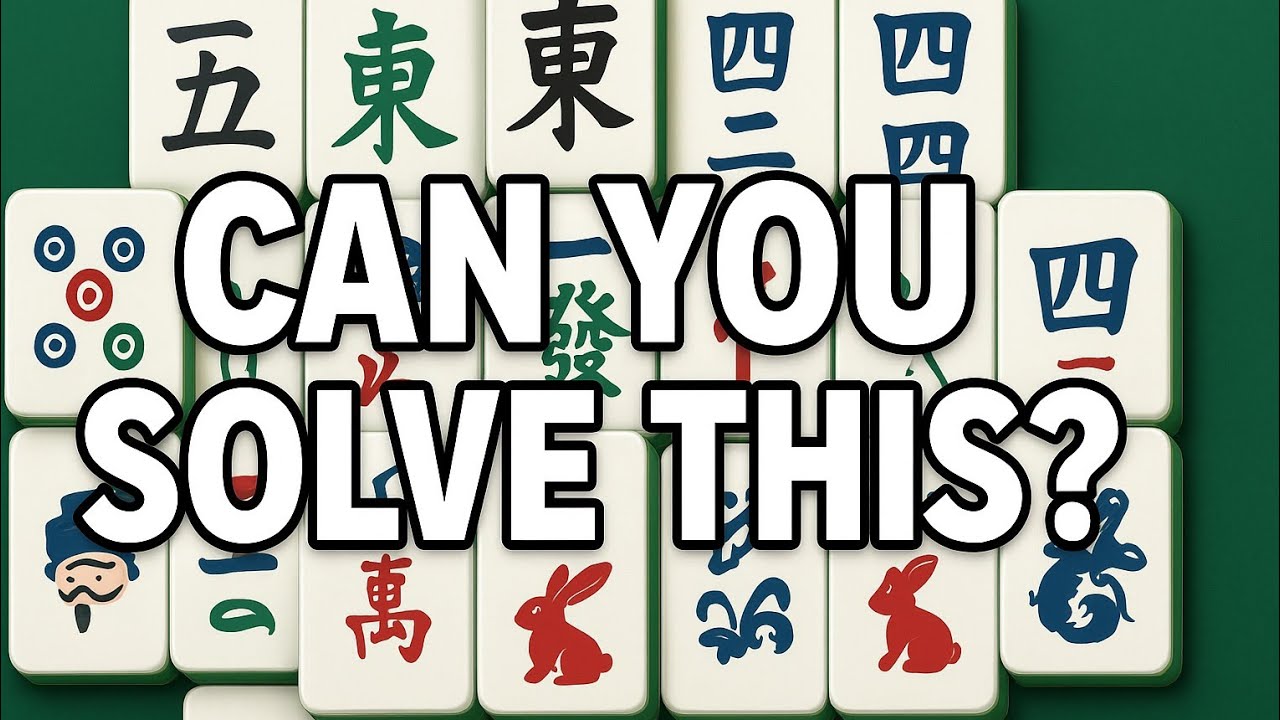
To succeed in Vita Mahjong, you must focus on systematic board clearing by identifying and removing available tile pairs from the top down. Understanding the spatial relationship between stacked tiles is essential for preventing deadlocks, where no further moves are possible. By prioritizing the removal of tiles that unlock the most future options, you can maintain a steady flow of matches through the game’s various puzzle layouts, ensuring you reach higher difficulty stages without running out of legal moves.
Understanding the Fundamental Mechanics of Vita Mahjong
At its core, Vita Mahjong is a game of patience and spatial awareness. The goal is to clear the board by matching pairs of identical, "free" tiles. A tile is considered free if it meets two specific criteria:
- It must not have another tile placed directly on top of it.
- It must have at least one side (left or right) open.
Because the game is designed for seniors and casual players, the interface is clean and high-contrast, yet the difficulty scales as you progress. New players often fall into the trap of matching the first pair they see. However, expert players recognize that every move changes the board state. Before you tap, identify which tiles are currently blocking others. If a pair is sitting on the edge of the board, it is usually safe to remove. If a pair is buried in the center, you must first clear the "protective" tiles surrounding it.
The Art of Strategic Layer Removal
Board stability is the difference between a quick win and a frustrating stalemate. A common mistake in Vita Mahjong is "tunnel vision," where a player clears one corner of the board completely while leaving the center stacks untouched. This creates a vertical imbalance that often leads to an unplayable board state.
To maintain board stability, use a "horizontal sweep" strategy. Try to keep the height of the tile stacks relatively even across the entire field. By peeling away layers uniformly, you ensure that you always have access to a variety of potential matches across different sections of the screen. If you reach a point where your moves are concentrated in only one area, pause and look for ways to clear tiles in other sections to regain structural balance.
Managing High-Density Tile Stacks
Some levels in Vita Mahjong feature complex "towers"—dense, multi-layered structures in the center of the screen. These are the most dangerous parts of any board. When dismantling a tower, focus on the following:
- Count the Symbols: There are four of every tile type. If you see three of a kind, be extremely careful. If you match two of them, you only have one left, which can easily become "orphaned" if the last tile is trapped under a deep layer.
- Target the Blockers: Identify which tiles are holding up the most weight. These are your "keystone" tiles. Prioritizing these will cause a cascade of new options to open up.
- Avoid Early Clearing of Non-Blockers: If a pair is sitting on the surface but isn't covering anything, consider leaving it alone until you need a "safe" move to reset your focus.
Visual Scanning and Pattern Recognition
Vita Mahjong utilizes distinct categories of tiles: Characters, Winds, Dragons, Bamboo, and Dots. Because these symbols are visually consistent, you can train your brain to scan for them rapidly.
To improve your speed and accuracy, perform a "perimeter scan" before every move. Look at the outermost tiles first, as these are your most accessible resources. If you find yourself stuck, look for the vertical symmetry of the board. Many levels in Vita Mahjong are designed symmetrically; if you see a specific tile on the far left, there is a high probability that its pair—or a similar structural challenge—exists on the far right. Recognizing this symmetry is the fastest way to overcome "blind spots" where you feel no moves remain.
Utilizing In-Game Tools and Hints
Vita Mahjong is designed to be a rewarding experience, and the game provides tools to assist when you hit a genuine deadlock. However, using these tools too early can hinder your long-term skill development.
- The Hint Tool: Use this only when you have scanned the board for at least 30 seconds without success. Treat the hint as a learning opportunity—ask yourself, "Why didn't I see that?" rather than just clicking the suggested pair.
- The Shuffle Tool: This is your last resort. Use it only when there are truly no legal moves left on the board. Note that shuffling can often change the game’s difficulty, as it redistributes the tiles in a way that might either open up or close off future potential matches.
Common Mistakes to Avoid
Even experienced players can fall into bad habits. To ensure consistent progress through the higher levels of Vita Mahjong, avoid these three common pitfalls:
- The "Easy Match" Trap: Don't clear a pair simply because it’s easy. Always check if that match will restrict your access to a deeper, more important tile.
- Ignoring the "Orphans": If you see a tile that has no matching pair available, it is an "orphan." You must immediately prioritize clearing the tiles covering its potential partners. If you ignore an orphan for too long, you will eventually reach a state where you cannot clear the board.
- Rushing the Timer: While there is no strict time limit, playing too fast leads to errors. Vita Mahjong is a brain-training game; the slower, more deliberate you are, the better your spatial memory will become.
Conclusion: Developing a Winning Mindset
Mastering Vita Mahjong is less about luck and more about proactive board management. By focusing on layered removal, maintaining horizontal balance, and identifying the keystone tiles that hold up your stacks, you can solve even the most challenging layouts. Remember that every tile you remove should serve a purpose—either to unlock a new, deeper layer or to preserve a path for your remaining tiles. Approach each board with patience, treat every move as a strategic decision, and you will find yourself progressing through Vita Mahjong’s difficulty tiers with ease.

Free Vita Mahjong Codes
Current active codes and how to redeem them.

Emily Johnson
Emily writes practical mobile strategy guides with a focus on resource planning, base progression, and the early decisions that shape a long-term account.
COMMUNITY
Player Comments
75 players commented on this guide.
The explanation is clear, especially for beginners.
Can you add more details about early game in a future update?
This saved me time in the early game.
Good guide for Vita Mahjong players. The early game part was useful.