
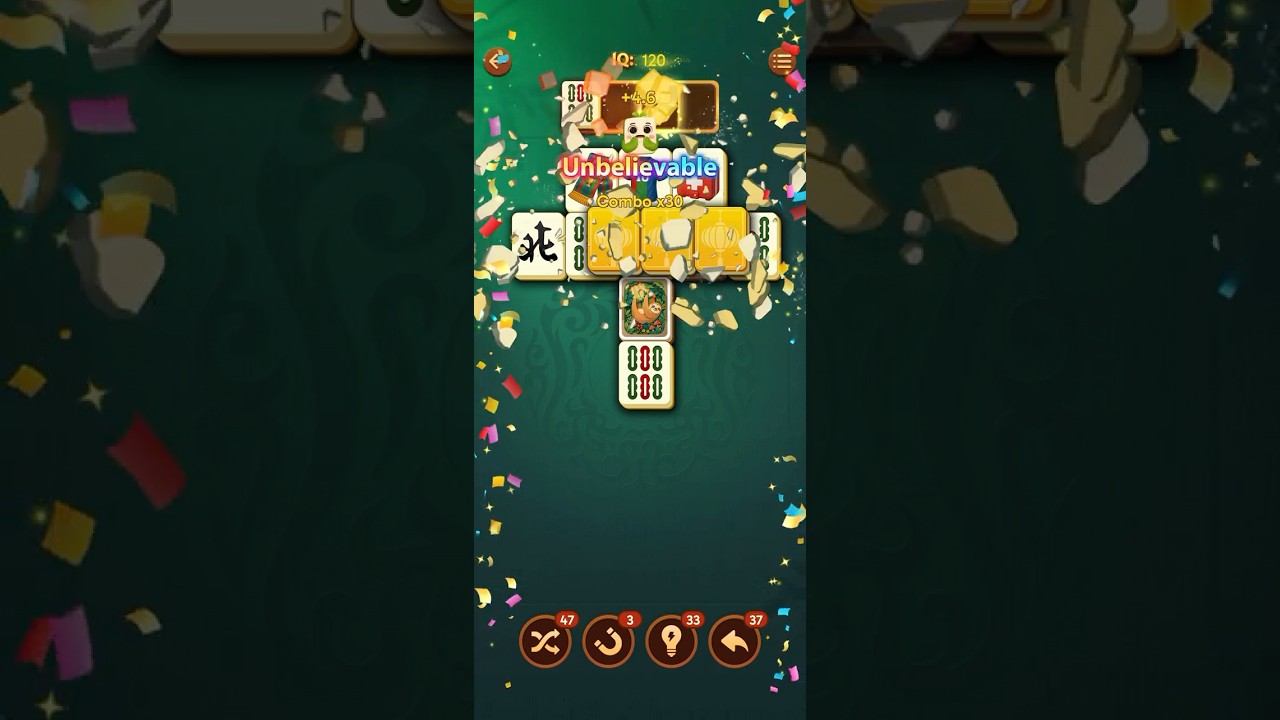
To clear Super Hard Level 44 in Vita Mahjong, focus on dismantling the elevated central stack and unblocking the lateral wings before clearing free perimeter pairs. Prematurely matching open edge pieces removes available partners needed to unlock deeper, identical tiles trapped within the vertical layers.
Board Layout and Tile Matching Priorities
Super Hard Level 44 introduces a sharp difficulty increase by concentrating tiles into a multi-layered central column flanked by narrow horizontal wings. In standard Mahjong solitaire rules, a tile is playable only when its top face is uncovered and at least one long lateral side (left or right) is completely unobstructed.
Because the center of Level 44 is stacked several layers deep, clearing flat edge tiles early provides no developmental value and often strands the central pyramid. Prioritize your moves based on structural position rather than simple availability:
| Tile Category | Board Position | Priority Level | Recommended Action |
|---|---|---|---|
| Peak Stack Tiles | Center multi-layer summit | Highest | Match immediately whenever an identical uncovered tile is available. |
| Wing Anchors | Tiles pinning lateral rows | High | Clear to open side columns and uncover trapped suits. |
| Perimeter Tiles | Flat edge pieces with open sides | Low | Reserve as backup matches to liberate inner layers later. |
Preserving outer perimeter pairs creates an emergency reserve. When an inner tile finally becomes accessible, an open edge tile ensures you have a valid match ready without needing to reshuffle the board.
Tracking Duplicate Suits to Avoid Deadlocks
Standard tile sets in Vita Mahjong feature four identical copies of each tile across standard suits (Dots, Bamboo, and Characters) as well as Honors (Winds and Dragons). Pairing two exposed tiles without checking where the remaining two copies reside can trap a required matching partner directly underneath an unmovable stack.
Before confirming any pair, run a quick three-point check:
- Count visible copies: Determine whether two, three, or all four duplicates of that tile are visible on the board.
- Inspect vertical overlaps: Check whether identical tiles sit directly on top of each other in the same column. Matching one with an outside tile leaves the lower duplicate buried and unusable until another copy appears.
- Balance suit removal: Avoid clearing all available matches in one suit while leaving other suits buried beneath dense layers.
Using In-Game Tools Effectively
Vita Mahjong includes accessibility tools at the bottom of the screen—Undo, Hint, and Shuffle—to assist with difficult configurations. Treat these as targeted rescue options rather than routine moves:
- Undo: Use this immediately when removing a central tile reveals an underlying piece that has no viable matches on the board. Reversing the move allows you to test an alternate pairing sequence.
- Hint: Reserve this for instances where the board appears stalled to confirm whether an overlooked perimeter or wing move is legally open.
- Shuffle: Save this exclusively for board states with zero legal moves remaining, particularly when the central tiers have already been partially reduced.
Step-by-Step Clearing Sequence
Following a phased sequence prevents deadlocks and methodically opens the board:
- Uncap the center summit: Match the uppermost tile on the center stack as early as possible. If it pairs with a lateral wing piece, take that match to simultaneously lower the stack and free a side column.
- Open the lateral wings: Work inward from the sides only when an edge match directly unpins a tile abutting the central column. Leave independent corner tiles alone during this stage.
- Level the mid-layers: Once the center stack is reduced to two layers, clear lateral tiles to maximize the visible surface area.
- Clear the remaining base: Methodically match the final flat layer against the preserved perimeter pieces until the board is clear.

Free Vita Mahjong Codes
Current active codes and how to redeem them.

James Brown
James focuses on Android gaming on PC, emulator setup, controls, performance tuning, and practical troubleshooting for longer play sessions.
COMMUNITY
Player Comments
110 players commented on this guide.
Nice guide. I am checking the other Vita Mahjong articles next.
This helped me understand strategy much better.
Can you add more details about strategy in a future update?
I tried this today and it worked better than my old setup.