
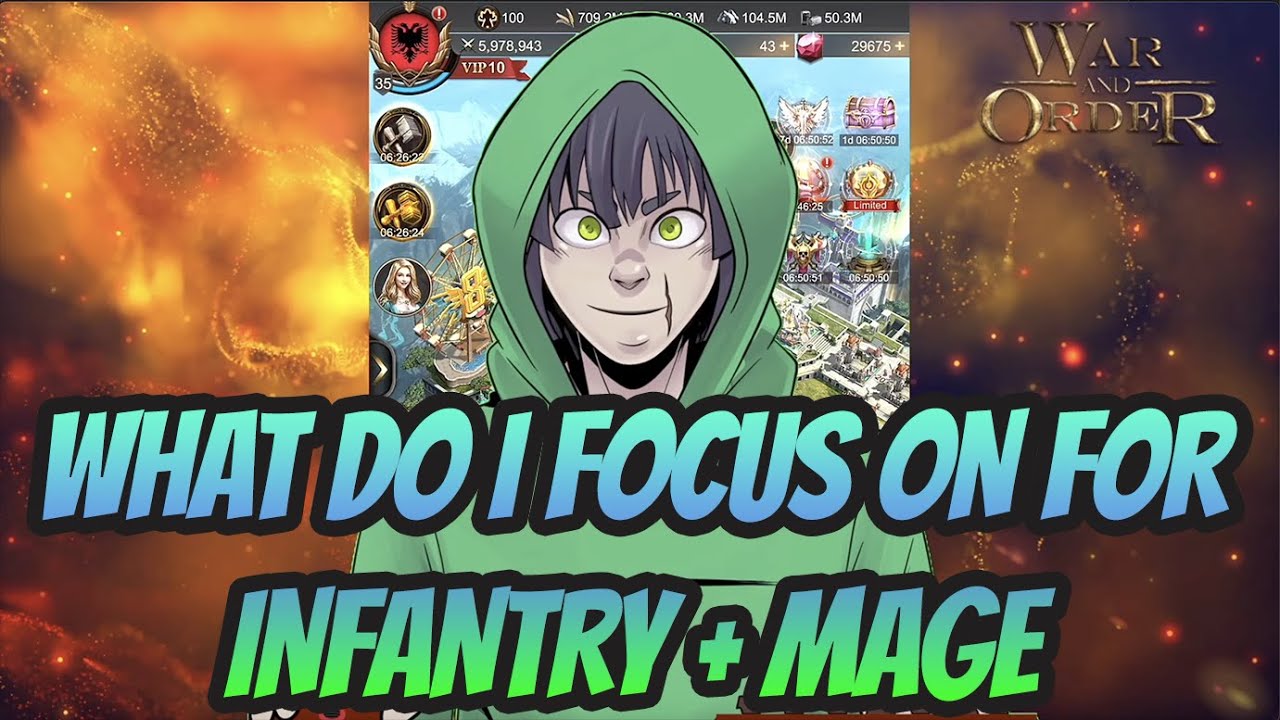
To build a specialized Infantry and Mage account in War and Order, allocate all of your College research, forge materials, and Beast development into frontline durability and backline magic damage while completely bypassing Archer and Cavalry upgrades. Concentrating your investments into two roles produces higher effective combat stats earlier than spreading resources across all four unit types.
Your frontline Infantry absorbs incoming physical and magical damage, while rear-rank Mages deliver area-of-effect spells that bypass a significant portion of enemy physical defense.
College Research Priorities
Bypass Cavalry and Archer nodes in the military trees until your core duo reaches maximum capacity. Allocate research time strictly according to this order:
- Infantry Health and Defense: Upgrade Infantry Health first, followed by Infantry Defense. If your front line falls, rear-rank spellcasters will collapse rapidly.
- Mage Attack and Lethality: Prioritize Mage Attack across both basic and advanced trees, followed by Mage Lethality and overall damage percentage nodes to speed up enemy clear times.
- March Size and Hospital Capacity: Expand march limits to deploy larger frontline shields and more backline damage dealers. Increase hospital capacity in parallel to protect your highest-tier units from permanent loss during attacks.
When advanced trees unlock, apply universal army bonuses where available, but restrict unit-specific nodes to Infantry resilience and Mage attack power.
Equipment and Gem Configuration
Target equipment attributes that specifically support your two unit classes rather than broad hybrid stats. When forging armor pieces—such as helmets, chest armor, and boots—prioritize native rolls for Infantry Health and Mage Attack. Select weapons and accessories that maximize pure Mage damage bonuses. Use refinement materials to roll off Archer and Cavalry lines in favor of your primary pair.
Socket gems according to the role of each gear slot:
| Gear Slot Type | Primary Gem | Secondary Gem | Combat Objective |
|---|---|---|---|
| Defensive (Chest, Shield/Offhand) | Infantry HP | Infantry Defense | Extends frontline survival against hostile rallies. |
| Offensive (Weapon, Ring) | Mage Attack | Mage Penetration / Damage | Accelerates damage through enemy frontline tanks. |
| Utility (Boots, Helm) | Army HP | Mage Attack / March Speed | Supports reinforcement timing and backline output. |
Beast Talents and Skills
Invest your War Beast talent points exclusively into the defensive and magic branches. Do not use beast abilities to compensate for unresearched Cavalry or Archer stats; use them to amplify your primary duo.
- Passive Skills: Equip abilities that trigger shields on your Infantry or grant flat health increases at the start of battle.
- Offensive Skills: Slot abilities that raise Mage spell damage, trigger backline strikes, or reduce enemy defense ratings to help your Mages wipe out opposing rear ranks during extended sieges.
March Composition and Layering
Do not split your march into a simple 50/50 ratio of your highest-tier units. A functional march layers unit tiers to handle combat rounds and absorb overkill damage effectively:
- High-Tier Elite Infantry (35%–40%): Use your highest available defensive Infantry tier (odd or even depending on your Barracks level) as your primary damage sponge.
- Low-Tier Buffer Infantry (5%–10%): Add a smaller group of lower-tier footmen to prevent single-turn overkill mechanics from wiping out your elite frontline units.
- High-Tier Strike Mages (45%–50%): Pack your highest available tier of Mages to deliver the army's primary offensive output.
- Token Buffer Units (1%–2%): Include single-unit deployments of one Archer and one Cavalry soldier. These single units absorb opening enemy skill triggers and delay opposing target acquisition without requiring stat investment.

Free War and Order Codes
Current active codes and how to redeem them.

James Brown
James focuses on Android gaming on PC, emulator setup, controls, performance tuning, and practical troubleshooting for longer play sessions.
COMMUNITY
Player Comments
43 players commented on this guide.
This helped me understand strategy much better.
I wish I had read this before upgrading the wrong thing.
The explanation is clear, especially for beginners.
This guide answered the exact question I had.