
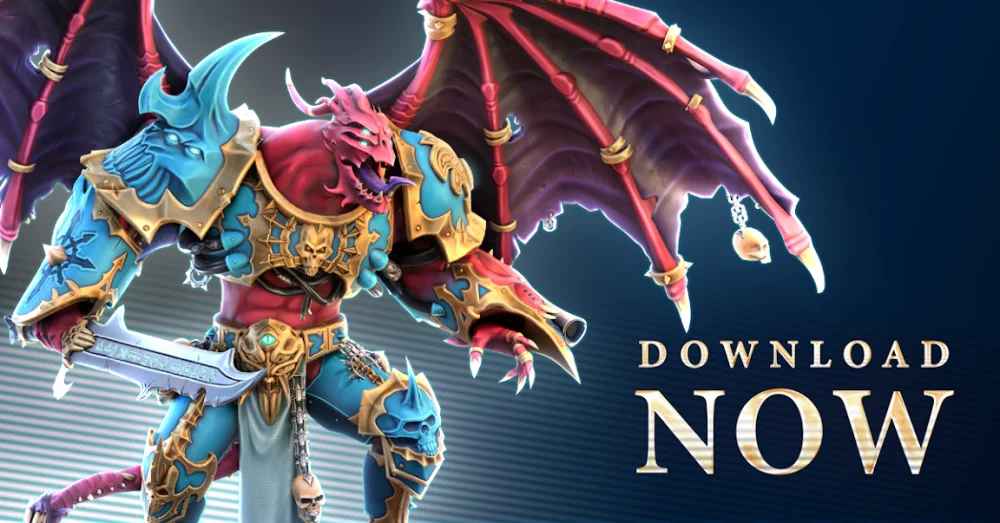
In pure five-character battles in Warhammer 40,000: Tacticus ™ ™, choose squads that function as self-contained synergy engines rather than rosters made of individually powerful carries. Without cross-faction staples like Eldryon or Marneus Calgar to boost damage or patch tactical weaknesses, monofaction teams succeed or fail based on shared resource traits, action economy, and balanced battlefield roles.
Monofaction Squad Tier Rankings
To evaluate how a faction performs when locked to its own roster, measure whether its passive traits trigger off teammates, whether it can generate bonus turn actions or summons, and whether it has sufficient frontline durability and sustain.
| Tier | Representative Factions | Primary Tactical Strengths | Main Tactical Vulnerabilities |
|---|---|---|---|
| S-Tier (Dominant) | Adeptus Mechanicus, Thousand Sons, Necrons | Compounding passive loops, heavy summon generation, runaway scaling | High roster investment; vulnerable to summon counters |
| A-Tier (Competitive) | Death Guard, World Eaters, Ultramarines | High baseline durability, relentless melee pressure, dependable frontlines | Predictable movement; vulnerable to ranged kiting |
| B-Tier (Situational) | T'au Empire, Tyranids, Black Templars | High ranged burst damage, zone denial, suppressive fire | Melee vulnerability or fragile summon anchors |
| C-Tier (Disjointed) | Space Wolves, Astra Militarum, Dark Angels | High single-target burst or defense on specific heroes | Competing passives, zero internal healing or sustain |
Top Monofaction Synergies
The highest-performing pure rosters trigger compounding effects whenever an ally takes a standard action.
Adeptus Mechanicus
The Adeptus Mechanicus roster functions as the premier mechanical attack engine:
- Exitor-Rho: Acts as the primary damage catalyst, launching bonus attacks whenever a Mechanical ally attacks or triggers an ability.
- Tan Gi'da: Regularly spawns Skitarii Vanguard and Infiltrator summons, creating additional Mechanical sources to activate Exitor-Rho.
- Actus: Provides targeted field repairs and triggers extra ally attack sequences.
- Vitruvius: Boosts squad-wide armor penetration to pierce heavily armored defenders.
Thousand Sons
Thousand Sons leverage shared Cabal Points to fuel active skills and psychic multipliers:
- Abraxas: Serves as the board controller by using his active skill to summon Pink Horrors, which duplicate into Blue Horrors whenever psychic attacks are executed nearby.
- Yazaghor: Repositions slow allies directly into melee range via targeted teleports.
- Ahriman: Spreads Flame hexes across enemy tiles and raises squad psychic critical hit potency.
Necrons
Necrons rely on the Living Metal trait to create a war of attrition through self-healing and summon swarms:
- Aleph-Null: Produces self-replicating Scarabs while healing adjacent friendly Mechanical units.
- Makhotep: Manipulates allied movement and orders nearby summons to strike out of turn.
- Anuphet: Summons a line of Necron Warriors that scales in size based on the number of casualties accrued in the match.
- Imospekh: Punishes aggressive enemy melee movements with multi-shot Overwatch fire.
Competitive Bruiser Rosters
A-tier factions bring durable stats and straightforward game plans, but they lack the explosive turn manipulation found in S-tier lineups.
Death Guard
The Death Guard grind down opposing squads through passive debuffs and high resilience:
- Contagions of Nurgle: Automatically reduces the armor and damage of adjacent enemy units.
- Rotbone: Provides consistent revivals and healing, forcing opponents to chew through frontline health bars multiple times.
- Maladus and Corrodius: Maladus delivers heavy cleave damage against grouped targets, while Corrodius provides a movement-speed banner to offset the team's slow baseline advance.
World Eaters
World Eaters rely on relentless close-quarters momentum:
- Khârn the Betrayer and Angrax: Deliver punishing melee burst damage when closing with enemy lines.
- Wrask: Grants defensive barrier shields to absorb incoming fire during the initial charge.
- Weakness: Without native ranged pressure, the roster struggles if opponents kite their advance across large maps.
Monofaction Weaknesses in Popular Mixed-Meta Rosters
Several factions contain elite characters for general play that underperform when isolated within a pure five-character team.
- Space Wolves: Ragnar Blackmane delivers exceptional melee burst with his War Howl, but his faction teammates (Ulf, Arjac, Njal, and Tjark) feature disconnected mechanics. Ice terrain generation, anti-psyker passives, and deep strike abilities do not actively feed into one another. The lack of native healing leaves them vulnerable in prolonged skirmishes.
- Astra Militarum: Strong meta heroes like Commissar Yarrick and Thaddeus Noble struggle when locked into a pure Imperial Guard squad. Fragile frontline units such as Kut Skoden and Sibyll Devine lack defensive layering and sustained healing, leaving rear artillery exposed once aggressive brawlers reach their backline.
Deployment Tactics for Pure Factions
When running monofaction setups, adapt your positioning to the team's mechanical engine:
- Protect your primary trigger unit: In engine-dependent squads, identify the lynchpin. Keep Actus and Tan Gi'da behind cover so Exitor-Rho continues to chain bonus attacks, or shield Abraxas until Cabal Points are pooled.
- Maintain tight aura formations: Teams utilizing proximity traits like Death Guard's Contagions of Nurgle or Ultramarine buffs must advance within adjacent hex ranges to apply their debuffs and passive bonuses.
- Use summons to absorb single-target bursts: When fielding summon-heavy rosters like Necrons, position durable summoners outside immediate threat ranges to bait enemy hits, then deploy swarms into bottlenecks to tie up single-target attackers.
Free Warhammer 40,000: Tacticus ™ Codes
Current active codes and how to redeem them.

James Brown
James focuses on Android gaming on PC, emulator setup, controls, performance tuning, and practical troubleshooting for longer play sessions.
COMMUNITY
Player Comments
42 players commented on this guide.
This saved me time in the early game.
I wish I had read this before upgrading the wrong thing.
The explanation is clear, especially for beginners.
I tried this today and it worked better than my old setup.