
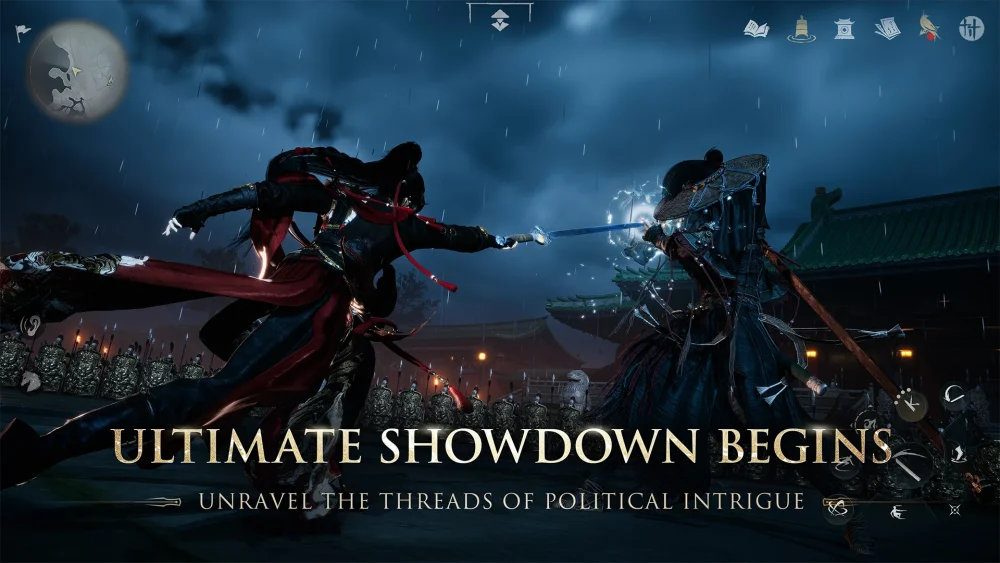
To dominate the competitive arena in Where Winds Meet, you must evolve beyond basic attack patterns and master the mechanical nuances of the game's most lethal archetypes: the Wuming (Nameless Sword) and the Jiuhuan (Implementation Sword). These styles represent the two most common high-pressure threats in modern competitive play. By internalizing their telegraphs, managing your spacing, and treating every duel as a resource-depletion exercise, you can dismantle even the most aggressive opponents.
Understanding the Mechanical Archetypes
In Where Winds Meet, combat is defined by frame data and movement commitment. Recognizing which style your opponent is using is the first step toward victory.
Wuming: The High-Mobility Shredder
Wuming players rely on "stickiness." They aim to close the gap instantly and maintain constant pressure to prevent you from using your own mobility tools. Their kit is built around rapid lunges and multi-hit combos designed to trigger hit-stun.
- The Threat: If a Wuming player gains momentum, they can trap you in a cycle of staggers.
- The Counter: Never trade damage with a Wuming player. Their output is balanced around speed, not raw burst. You must use your mobility to create space, forcing them to use their gap-closers prematurely.
Jiuhuan: The Calculated Punisher
Jiuhuan users play a high-stakes game of "bait and punish." Their attacks are slower, wider, and deal significantly higher individual damage per hit. They rely on the opponent making a mistake by overextending or attempting to parry too early.
- The Threat: One or two successful Jiuhuan combos can end a round. Their "wind-up" animations are long, which often baits novice players into attacking, only for the Jiuhuan player to execute a high-damage counter-swing.
- The Counter: Patience is your greatest weapon. You must wait for the peak of their animation before committing to a strike or a parry.
Strategic Spacing: The Art of the Whiff
The most common error in Where Winds Meet is standing within the "danger zone"—the distance where an opponent can hit you, but you cannot safely retreat.
Creating Whiff Windows
Against Jiuhuan users, you should practice "active baiting." Move into their strike range just long enough to trigger their attack animation, then immediately dash backward or strafe to the side. When they miss, they enter a "whiff" state—a brief period of recovery animation where they cannot block or dodge. This is your primary window to initiate your high-damage combos.
Managing Wuming Pressure
Against Wuming players, you must force them to exhaust their mobility. If you are constantly moving away, the Wuming player is forced to burn their dash skills. Once their dash is on cooldown, they lose their ability to control the pace of the fight. Use your traversal skills—such as wall-running or short-burst glides—to force them into unfavorable terrain where their linear dashing attacks become predictable.
The Economy of Cooldowns and Energy
PvP in Where Winds Meet is fundamentally a game of resource management. Both Wuming and Jiuhuan styles are energy-intensive, and their most powerful abilities are tethered to significant cooldowns.
- Track the Escape Tool: Both styles have a "panic button" or evasive maneuver. If you force your opponent to use this, do not immediately chase them. Wait for their movement to stagnate, then punish them when they are forced to return to the neutral game.
- The 3-to-5 Second Window: After a major offensive rotation, your opponent will be at their most vulnerable. If they have just committed to a high-damage Jiuhuan combo or a Wuming lunge sequence, you have a 3-to-5 second window where their defensive options are limited. Do not spam basic attacks here; use your most efficient, high-burst skills to maximize damage.
- Environmental Awareness: Never fight in an open area if you are losing the trade. Use the environment to break line-of-sight. If you can force a Wuming player to dash into a wall or a Jiuhuan player to swing into an obstacle, you effectively reset the neutral game in your favor.
Mastering the Counter-Attack
The difference between a mid-tier player and a master lies in the transition from defense to offense. In Where Winds Meet, the parry is your most reliable tool, but it must be used with surgical precision.
The Slow-Motion Cue
When you successfully parry, the game provides a distinct "slow-motion" visual cue. This is not just for style; it is a tactical window. You must immediately follow up with a high-impact, low-start-up attack. Avoid "wind-up" heavy attacks here, as a skilled opponent will have enough time to recover and dash away before your strike lands.
The Psychology of Punishment
When you successfully counter-attack, you shift the psychological momentum of the duel. If you punish a Wuming player for every dash, they will eventually become hesitant to close the gap. Once they start playing timidly, you have won the mental game. From that point on, you can dictate the pace, forcing them to play reactively rather than proactively.
Practical Daily Habits for PvP Success
To truly master these matchups, you cannot rely on duels alone. Integrate these habits into your daily Where Winds Meet routine:
- Resource Planning: Ensure your gear and stat builds are optimized for the specific weapon style you are countering. If you struggle against Wuming, prioritize defensive stats that reduce hit-stun duration.
- Resource Milestones: Regularly review your spending milestones. Focus on upgrading gear that provides meaningful cooldown reduction for your own defensive skills.
- Analyzing Replays: If the game supports it, record your losses. Watch them in slow motion to identify the exact moment you made the "error of commitment"—the moment you attacked when you should have waited.
- The Kaifeng Palace Practice: Use the Kaifeng Imperial Palace chapter missions as a "sparring ground." The AI in these areas is tuned to be aggressive, providing an excellent environment to practice your parry timing against complex enemy attack strings without the pressure of a real-time PvP environment.
By focusing on spacing, respecting the cooldown economy, and mastering the counter-attack, you will turn the tide against even the most formidable Wuming and Jiuhuan players. Remember: Where Winds Meet favors the player who controls the engagement, not the one who strikes first.

Free Where Winds Meet Codes
Current active codes and how to redeem them.

Emily Johnson
Emily writes practical mobile strategy guides with a focus on resource planning, base progression, and the early decisions that shape a long-term account.
COMMUNITY
Player Comments
132 players commented on this guide.
I wish I had read this before upgrading the wrong thing.
The tips are practical and easy to follow.
This helped me understand strategy much better.
This saved me time in the early game.