
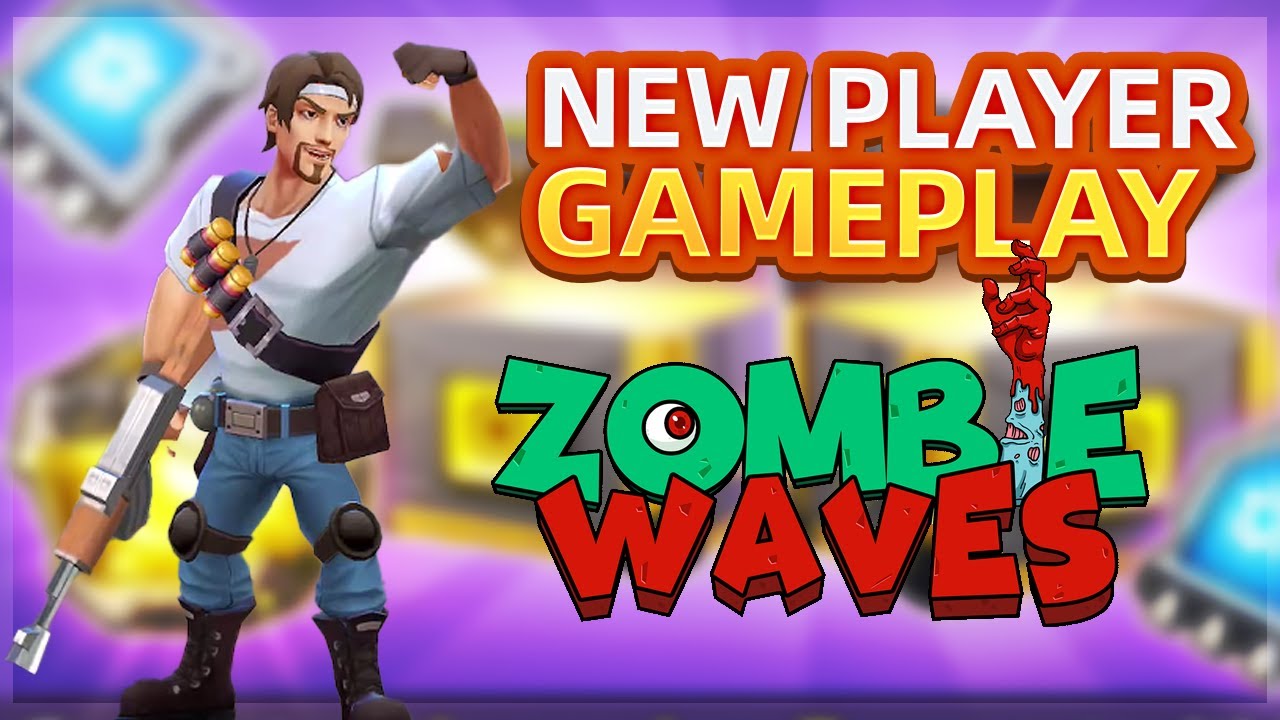
Successfully clearing the opening stages of Zombie Waves requires a deliberate balance between maximizing damage output and maintaining constant movement to evade overwhelming hordes. In Chapters 1 and 2, you are not just surviving; you are learning the core rhythm of the game’s roguelite mechanics. By mastering movement patterns, prioritizing crowd-control skills, and learning to read boss telegraphs early, you can build a resilient hero capable of tackling the more punishing difficulty spikes found in later game content.
Prioritizing Mobility: The Golden Rule of Survival
In Zombie Waves, your primary defensive tool is not health, but your ability to remain mobile. Because enemies in the early chapters spawn in predictable, dense waves, standing still for even a few seconds creates a "pincer" effect where you are inevitably trapped.
- The Kiting Principle: Always keep your hero in motion. By circling the perimeter of the arena, you force the AI-controlled zombies to clump together, which optimizes your damage output against multiple targets simultaneously.
- Avoid the Corners: Never retreat into a corner or a confined space. Corners are "death traps" that restrict your movement options, making it impossible to dodge projectiles or escape encirclement.
- Dash Discipline: Save your dash ability for emergency escapes rather than constant movement. Use it to blink through a line of enemies when you feel the wall of zombies closing in too tightly.
Strategic Skill Selection: Building for Crowd Control
Every time you gain experience and level up during a run, Zombie Waves presents you with random skill upgrades. During the first two chapters, your goal is to transition from single-target damage to screen-clearing power.
Top Tier Early-Game Priorities:
- Area-of-Effect (AoE) Skills: Skills like the Doom Scythe or high-piercing projectiles are far superior to single-target weapons. If a skill hits multiple enemies, it effectively doubles or triples your damage-per-second (DPS) in dense clusters.
- Projectile Count & Fire Rate: Prioritize passive upgrades that increase your projectile count or firing speed. These are the "bread and butter" of a successful run, as they allow you to create a "kill zone" around your character.
- Utility over Raw Stat Buffs: While a 10% damage increase is nice, a skill that adds knockback or slows enemies is often more valuable. Knockback keeps the swarm at a manageable distance, giving you more breathing room to maneuver.
Pro-Tip: If you are forced to choose between a defensive health boost and an offensive upgrade, lean toward offense. In Zombie Waves, killing enemies faster reduces the amount of time they have to deal damage to you, making it the most reliable "defensive" strategy.
Mastering Elite Boss Encounters
Bosses in Chapters 1 and 2 serve as the final exam for your current build. Unlike common mobs, bosses have telegraphed attack patterns that require you to abandon your "run and gun" approach for focused evasion.
- Pattern Recognition: Every boss has a specific wind-up animation before a heavy attack. When you see this, stop attacking entirely and focus solely on your hero's positioning.
- Spacing Strategy: Maintain a medium-long distance from the boss. This gives you the maximum amount of time to react to projectile spreads or charge attacks.
- The Punishment Window: After a boss completes a signature attack, there is usually a brief cooldown period where they move slower. This is your primary window to unleash your high-damage skills and abilities.
Understanding Environmental Hazards
The maps in Zombie Waves vary in layout, and your playstyle must adapt to the terrain.
- Open Fields: In wide-open areas, maintain a wide perimeter. Use your range to pick off stragglers before they join the main horde.
- Narrow Corridors: When the map narrows, prioritize skills with high piercing or "bouncing" capabilities. This allows your projectiles to travel down the length of the corridor, hitting multiple zombies in a single shot.
- Edge Awareness: Always keep one eye on the screen edges. Enemies spawn from the periphery, and getting tunnel vision on the center of the screen is a common mistake that leads to taking unnecessary "chip damage" from peripheral zombies.
Avoiding Common Beginner Mistakes
New players often lose runs in the early stages due to three common pitfalls. Avoiding these will immediately improve your win rate:
- Stationary Skill Traps: Be wary of skills that lock you into a stationary animation. While they may offer high damage numbers, they leave you vulnerable to being swarmed in the chaotic later waves of a level. If a skill stops your movement, it is generally a liability in Chapters 1 and 2.
- Neglecting Synergy: Don't just pick the highest rarity skill. Look for how skills work together. For example, a "Freeze" effect combined with a "Spreadshot" upgrade is significantly more effective than two random high-damage skills that don't complement each other.
- Ignoring Movement Speed: If you feel overwhelmed, look for movement speed upgrades. Being able to outrun the swarm is often the difference between a successful clear and a game-over screen.
Final Decision Framework: What to Choose?
When you are at a level-up screen, use this quick checklist to make your decision:
- Does this hit more than one enemy? (Prioritize Yes)
- Does this allow me to fire while moving? (Prioritize Yes)
- Does this help me keep enemies at a distance? (Prioritize Yes)
- Is this a raw health boost? (Only take if your HP is critical and no other viable offensive/utility options exist.)
By following these strategies, you will move beyond simple survival and begin to master the mechanical depth of Zombie Waves. Focus on clean movement, prioritize AoE damage, and respect the boss patterns, and you will clear Chapters 1 and 2 with ease.
Free Zombie Waves Codes
Current active codes and how to redeem them.

Emily Johnson
Emily writes practical mobile strategy guides with a focus on resource planning, base progression, and the early decisions that shape a long-term account.
COMMUNITY
Player Comments
58 players commented on this guide.
I tried this today and it worked better than my old setup.
This saved me time in the early game.
I wish I had read this before upgrading the wrong thing.
The tips are practical and easy to follow.