
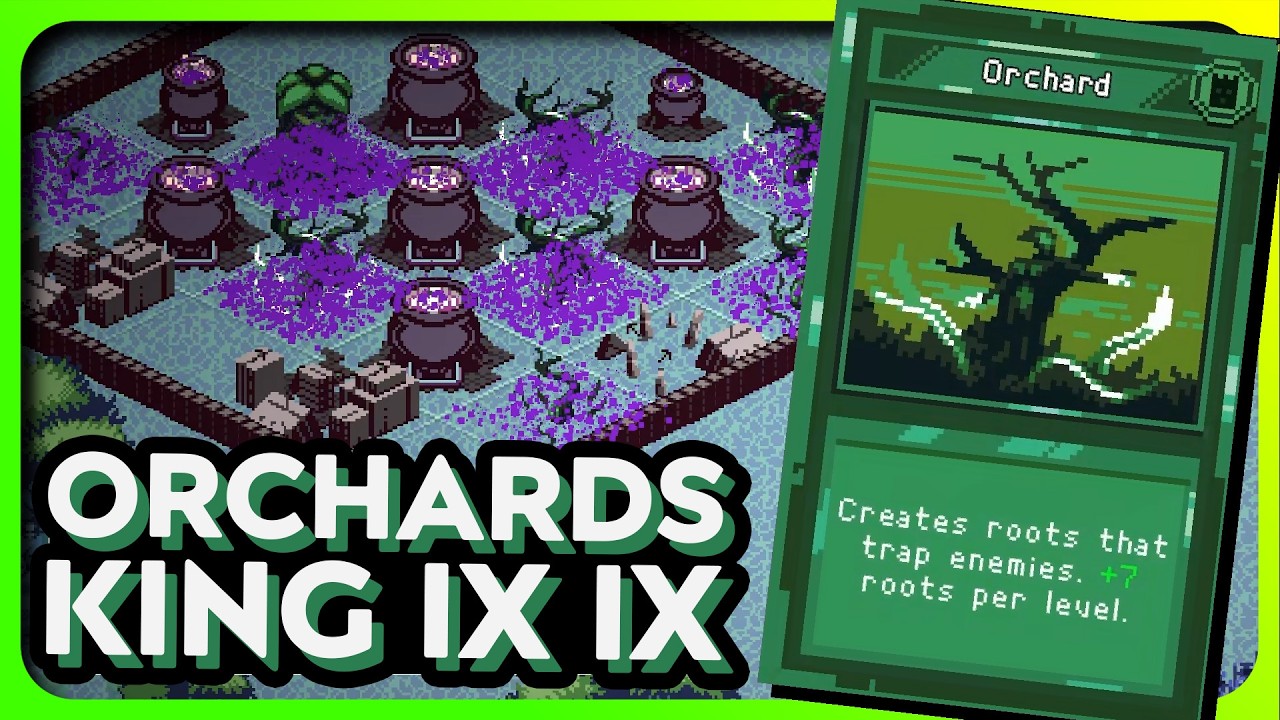
To beat King IX IX difficulty using an Orchard Poison build in 9 Kings, place an early Orchard in your back rank to fund your economy, route enemy paths through multi-target poison emitters, and stall waves with durable frontline blockers. Enemy health pools scale exponentially on King IX IX, causing flat-damage infantry to fall off quickly. Stacking compounding poison ticks behind defensive terrain dissolves elite waves and bosses without requiring unsustainable unit spam.
Core Setup and Tile Placement
Success on King IX IX requires strict tile management due to restricted board space and early wave pressure. Your placement must protect fragile value engines while maximizing the time enemies spend inside your damage zones.
| Component | Tactical Role | Placement Priority |
|---|---|---|
| Orchard Core | Resource generation and poison synergy baseline | Protected backline corner |
| Toxic Spores / Dispensers | Wide-area poison stack distribution | Mid-lane chokepoints |
| Barricades and Stalling Units | Movement delay over active hazard zones | Frontline edge tiles |
| Deck Thinning Cards | Removal of low-impact starter cards | Played immediately upon draw |
Deploy the Orchard in a rear corner during the opening rounds. The Orchard provides continuous passive scaling and funds critical draft rerolls. If an early draft forces a choice between low-tier offensive units and an Orchard, take the Orchard and rely on cheap obstacles to stall early pathing.
Designing Chokepoints and Stalling Lines
Poison relies on compounding damage over time rather than instant burst damage. A poison build fails if enemies reach your core structures before the damage ticks accumulate.
- Avoid flat frontlines: Do not place blockers in a straight, wide line across the board. Wide fronts divide incoming damage inefficiently and allow enemies to slip past hazard zones.
- Funnel into corridors: Use terrain obstacles, entanglements, or expendable defenders to force approaching units into single-file lanes.
- Offset defender placement: Position defensive units slightly behind the forward edge of your poison field. Forcing enemies to step into the poison cloud before contacting your frontline guarantees they take continuous damage throughout the engagement.
- Stack travel time: The longer a boss or armored elite marches through active poison clouds, the more stacks compound, substantially lowering their health before they hit your barrier.
Drafting Priorities and Deck Thinning
Late rounds on King IX IX punish bloated card pools. Drawing low-impact melee units or mismatched spells delays the defensive refills and poison buffs required to stabilize incoming waves.
Follow this drafting and maintenance sequence:
- Secure the core engine: Draft your Orchard and initial area-of-effect poison applicators early.
- Prioritize area spread over single-target output: Select buildings and cards that spread toxic clouds or venom across multiple lanes rather than single-target poison attacks.
- Purge starter clutter: Use removal cards, sacrifice mechanics, or shop services to eliminate basic starter units and un-synergized combat cards as soon as your poison infrastructure is stable.
- Pass on marginal cards: Choose gold conversion or skip rewards when draft offerings do not contribute to stalling or poison damage.
A slim deck ensures you consistently draw essential barrier cards, crowd-control tools, and toxic amplifiers on every turn.
Late-Game Upgrades and Scaling
In the final rounds of King IX IX, standard combat troops die within seconds of frontline contact. Pivot your investment entirely toward multiplying poison efficacy and reinforcing your stalling barriers:
- Upgrade existing poison structures: Enhance emitter tick speed and hazard radius rather than buying competing damage types.
- Invest surplus resources in barrier health: Channel late-game Orchard revenue into barrier durability so your chokepoints can withstand sustained elite hits while poison finishes the kill.

Free 9 Kings Codes
Current active codes and how to redeem them.

Emily Johnson
Emily writes practical mobile strategy guides with a focus on resource planning, base progression, and the early decisions that shape a long-term account.
COMMUNITY
Player Comments
99 players commented on this guide.
The tips are practical and easy to follow.
I wish I had read this before upgrading the wrong thing.
This helped me understand strategy much better.
Good guide for 9 Kings players. The strategy part was useful.