
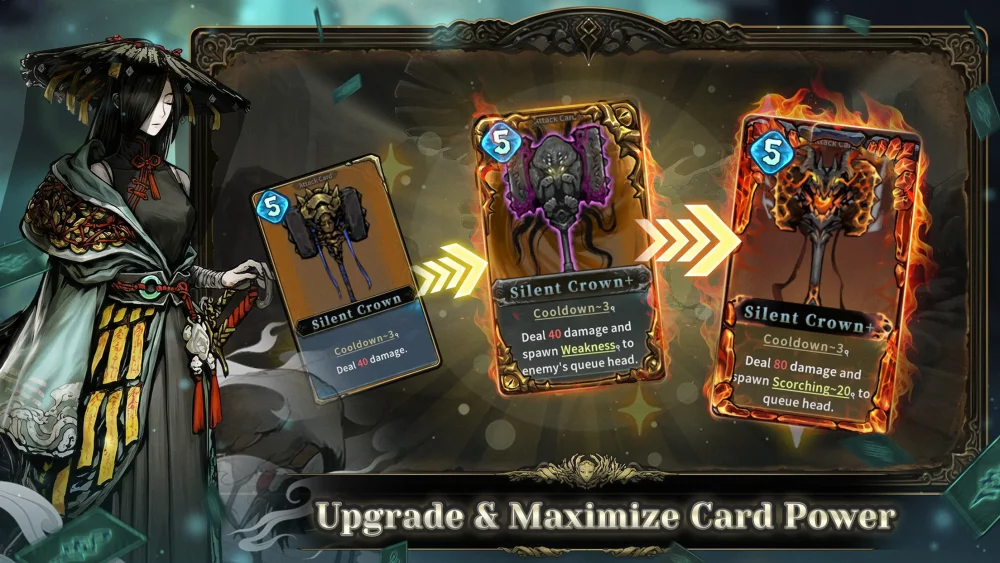
In the dark medieval fantasy world of Abyssal Soul, your starting class dictates the flow of your entire deck-building run. For players who choose the low-status Servant background, the early game can feel like a grueling uphill battle. However, the Season 15 update introduced a run-defining artifact that completely flips this dynamic: the Broken Immortal Sword.
This hidden relic acts as the primary catalyst for rapid "Soul Cultivation" growth, allowing you to bypass the time-consuming grind of standard defensive deck archetypes. By wielding this sword, you transform your deck from a collection of marginalized laborer skills into a formidable, hyper-scaling combat engine. This comprehensive guide breaks down exactly how to find the Broken Immortal Sword, how to exploit its unique card synergies, and how to manage the hidden threat mechanics tied to its explosive power.
Identifying the Broken Immortal Sword Location
The Broken Immortal Sword is not a standard item found in the early-game loot pool, nor can it be drafted from standard combat rewards. Instead, it is a hidden narrative artifact tied exclusively to the "Servant Arc" during Act 1 of your run.
To find it, you must actively route your path through the map's neglected periphery nodes—specifically the ? Event nodes located near the Waste Management or Lower Catacomb zones. Ignoring these early exploration prompts in favor of standard elite combats will lock you into a traditional, slower leveling path that lacks the explosive power spikes provided by the sword.
The Remnant Aura Event Choices
Once you navigate to the correct event node, the game will present a narrative prompt indicating a "Remnant Aura" emanating from a pile of discarded weapons. How you interact with this text prompt determines the trajectory of your run.
- Inspect the Discarded Blade (Recommended): Choosing this option adds the Broken Immortal Sword to your primary relic slot. It immediately replaces your starting pitchfork or broom, altering your base attack cards to "Swing" variants.
- Report to Sect Elders (Avoid): Reporting the item yields a small sum of gold (usually 50-75 coins) and a minor reputation boost. However, it results in the permanent loss of the artifact for that run, effectively locking you out of the critical power-scaling loop intended for this specific build.
Leveraging Sword-Swing Cultivation Mechanics
In Abyssal Soul, most tactical combat relies on balancing Mana and Action Points (AP) to play high-impact cards. The Broken Immortal Sword subverts this by introducing a unique resonance principle tied to your deck's most basic cards.
Once equipped, the "Swing" mechanic becomes your most efficient source of passive stat growth. Every time you play a card with the Swing keyword during combat, the sword generates a percentage-based boost to your total Soul Cultivation base (which directly increases your max HP and base attack damage for the rest of the run).
Deckbuilding for Maximum Resonance
To maximize this growth, your deckbuilding strategy must shift away from high-cost, heavy-hitting cards and focus entirely on card cycling and zero-cost attacks.
- Prioritize 0-Cost Swings: Cards like Desperate Lunge or Servant’s Swipe cost 0 AP but still trigger the sword's resonance. Drafting these allows you to play 4 to 5 Swings per turn, skyrocketing your cultivation multiplier.
- Draft Card Draw: Because your individual Swings do very little damage in the early game, you need to draw through your deck quickly. Cards like Scavenger’s Insight (Draw 2, Exhaust 1) are mandatory to keep your hand full of Swings.
- Avoid Heavy Spells: The sword actively penalizes the use of high-mana spells by temporarily halting your cultivation growth for the turn. Stick to physical, movement-based, and swing-based cards.
This strategy allows players to reach the next power threshold significantly faster than peers who rely solely on static Campfire meditation to upgrade their stats.
Overcoming Low-Status Limitations and Exposure
The core challenge of the Servant background involves navigating the rigid social hierarchy of the dark medieval sect while secretly building your combat power. The Broken Immortal Sword serves as your primary tool for breaking these constraints, allowing you to clear "Sect Challenge" elite nodes that are usually reserved for high-ranking Knight or Mage classes.
Managing the Hidden Exposure Meter
However, this rapid growth comes with a severe mechanical trade-off. The sword draws negative attention from high-ranking NPC enemies if used recklessly. Wielding the sword introduces a hidden "Exposure" meter to your run.
Every time your cultivation growth rate significantly outpaces your current rank, your Exposure increases. If the meter maxes out, you will trigger an unavoidable "Investigation Event" where an Elite Inquisitor ambushes you. In the early game, an Inquisitor will easily wipe your run, as your deck is not yet fully optimized.
How to Mitigate Exposure:
- Throttle Your Combos: Do not play 10 Swings in a single turn against a weak enemy just to farm stats. Cap your Swings to what is strictly necessary to win the fight, plus one or two extra.
- Perform Manual Labor: When traversing the map, occasionally choose "Manual Labor" event nodes over combat. These nodes cost a small amount of HP but significantly lower your public profile, reducing your Exposure meter.
- Rank Up Quickly: Use your inflated stats to defeat Act Bosses. Officially elevating your rank at the end of an Act permanently increases your maximum Exposure threshold, giving you more leeway to spam Swings in Act 2 and Act 3.
Strategic Trade-offs: The Glass Cannon Problem
While the Broken Immortal Sword provides an unparalleled growth advantage, it occupies your primary weapon slot. This means you cannot equip traditional defensive gear like the Iron Bulwark or Aegis Shield. In the early game, this creates a distinct glass-cannon scenario: your offensive scaling is incredibly high, but your durability remains that of a base-level servant.
Defensive Deck Solutions
To survive high-level boss encounters, you must compensate for this lack of innate defense through careful card drafting.
- Movement-Based Mitigation: Draft cards like Shadow Step or Evasive Roll. These provide Dodge tokens, allowing you to completely negate incoming damage rather than trying to block it with armor you don't possess.
- Defensive Talismans: Equip passive artifacts like the Ethereal Talisman if you find them in shops. These provide a flat shield at the start of every combat, giving you a buffer to set up your Swing combos.
- Lifesteal Synergies: As your base damage scales from the sword's cultivation, lifesteal becomes incredibly potent. Drafting a single copy of Vampiric Coating will allow your 0-cost Swings to heal you for massive amounts by the late game.
Artifact Maintenance: Preventing the Dull Status
One of the most easily overlooked mechanics in Abyssal Soul is artifact degradation, and the Broken Immortal Sword is highly susceptible to it. The blade’s effectiveness degrades after every 5 combat encounters if you fail to "cleanse" it.
Failing to maintain the sword results in the "Dull" status effect. A Dull sword nerfs your cultivation growth rate by a staggering 50% and removes the bonus damage from your Swing cards until the item is restored.
Utilizing Spirit Pools
To prevent this, you must plan your map routing around the sect's Spirit Pool resources (the equivalent of Campfires in other roguelikes).
When you arrive at a Spirit Pool, you will be given standard options like Resting (healing HP) or Upgrading a card. If you possess the Broken Immortal Sword, a third option appears: Cleanse Artifact.
You must prioritize Cleansing over Healing or Upgrading whenever the sword is within 1 combat of degrading. This requires strict resource management. Ensure you are taking minimal damage during standard encounters so you aren't forced to choose between healing a fatal wound and maintaining your primary win condition.
Final Verdict on the Broken Immortal Sword Build
Mastering the Broken Immortal Sword transforms Abyssal Soul from a standard tactical card battler into an immensely satisfying zero-to-hero power fantasy. By carefully managing your Exposure, drafting a hyper-efficient deck of 0-cost Swings, and meticulously routing your path to maintain the blade at Spirit Pools, you can completely break the game's scaling mechanics.
While the early game requires precise play to survive the glass-cannon phase, the payoff in Act 3 is unmatched. By the time you reach the final boss encounters, your marginalized sect servant will be dealing damage that rivals the most optimized high-tier classes, proving that in the dark fantasy world of Abyssal Soul, the most discarded tools are often the most dangerous.

Free Abyssal Soul Codes
Current active codes and how to redeem them.

Emily Johnson
Emily writes practical mobile strategy guides with a focus on resource planning, base progression, and the early decisions that shape a long-term account.
COMMUNITY
Player Comments
48 players commented on this guide.
The tips are practical and easy to follow.
Can you add more details about early game in a future update?
This guide answered the exact question I had.
This helped me understand early game much better.