
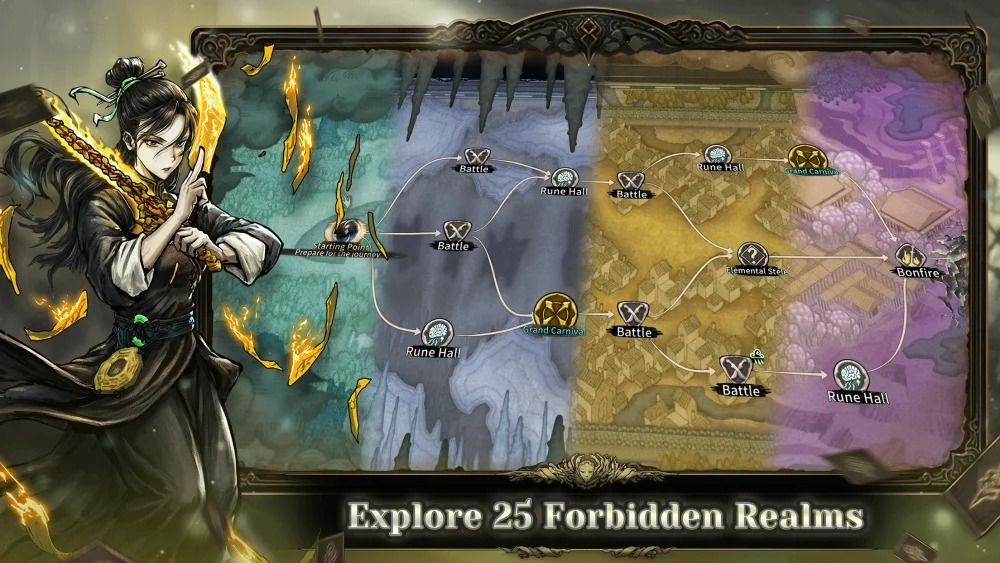
To dominate the most challenging encounters in Abyssal Soul, you must move beyond basic deck-building and embrace the high-risk, high-reward synergy of the Poison Wristguard build. This strategy centers on the "Fearless" specialization, which transforms self-inflicted damage into an endless cycle of card draws and attack refreshes. By balancing your health pool as a resource rather than a limitation, you can achieve a "looping" state that allows you to overwhelm even the most resilient bosses with a relentless barrage of strikes and ticking poison damage.
The Core Mechanic: Fearless Engine and Vitality Pump
The engine of this build is a symbiotic relationship between your deck’s card draw and your equipment’s internal resource management. The Vitality Pump serves as your primary fuel source, providing the necessary energy and stability to execute high-cost card sequences. When paired with the Fearless Engine, your deck gains the ability to "cycle" at high velocity.
In Abyssal Soul, the bottleneck for most players is the "hand empty" state during critical turns. By prioritizing the Vitality Pump early in your run, you ensure that every card played contributes to drawing the next. This creates a state of "flow" where your turn never truly ends, provided you have the health to pay the cost of your aggressive maneuvers.
Triggering Calm Power Through Self-Damage
The "Calm Power" mechanic is the secret weapon of the Fearless specialization. It rewards you for the damage you take from your own cards by instantly refreshing your attack abilities. This allows you to bypass standard action-point limitations, effectively giving you "bonus turns" within a single round of combat.
To execute this effectively, you must understand the hierarchy of your card usage:
- Preparation Phase: Play your Vitality Pump and draw-buffing cards first to ensure your hand is at maximum capacity.
- Self-Damage Trigger: Play your self-damage-focused cards to trigger the Fearless Axe’s passive.
- Refresh Loop: Use the "Calm Power" refresh to replay your primary attack cards. Because these cards are often low-cost or cost-neutral in this specific build, you can repeat this cycle until the enemy’s health bar is depleted.
Expert Insight: Always aim to save your highest-damage attack cards for after you have triggered the Calm Power refresh. Sequencing is everything; if you lead with your big attacks and then trigger the refresh, you often waste the potential of your "free" extra attack windows.
Optimizing the Poison Wristguard Strategy
While the Fearless Engine handles the physical pressure, the Poison Wristguard provides the scaling damage necessary to take down high-armor bosses. Poison in Abyssal Soul is a powerful debuff because it bypasses the physical damage reduction common in late-game enemies.
The build relies on the concept of "Action Volume." Because you are cycling your deck so rapidly, you can apply stacks of poison much faster than a standard build. By the time your enemy moves, they should be dealing with a massive amount of poison damage that ignores their defensive stats. To maximize this, look for relics that increase "Debuff Duration" or "Poison Stacks per Application," as these amplify your passive damage output without requiring you to expend more health.
Balancing Deck Composition and Draw Speed
The most common mistake players make with this build is "deck bloat." To maintain the infinite loop, your deck must be lean. If you have too many "dead" cards—cards that do not draw, do not damage, or do not contribute to the self-damage loop—you will eventually stall.
- Prune Ruthlessly: Use shop visits to remove basic strikes or defensive cards that don't synergize with the Fearless Engine.
- Prioritize Draw: If a card doesn't draw at least one card or replace itself, it must be exceptionally powerful to justify its slot.
- The "Goldilocks" Deck Size: Aim for a deck size of 15–20 cards. This ensures that you see your Vitality Pump and core refresh cards in almost every opening hand.
Managing Risks and Combat Strategy
The primary danger of the Fearless Poison Wristguard build is the "Glass Cannon" effect. Because you are constantly draining your own health to fuel the engine, you are inherently vulnerable to high-burst enemy attacks.
Strategic Decision Making:
- Evaluate Threat Levels: Before committing to a full self-damage cycle, check the enemy's "Intent" icon. If the enemy is preparing a massive attack, prioritize survival over the loop.
- Health Budgeting: Treat your HP as a renewable resource, but keep a "safety floor." If your health drops below 30%, focus on resetting the board or using healing relics before pushing for the finishing blow.
- Silence and Disruption: Be aware that enemies with silence abilities are your greatest counter. If your draw engine is blocked, you lose your ability to refresh, leaving you with a hand full of self-damage cards and no way to survive the fallout.
Why This Build Works
The Fearless Poison Wristguard build is objectively top-tier because it breaks the fundamental rules of Abyssal Soul combat. By turning "cost" (health loss) into "benefit" (attack refresh), you create a feedback loop that outscales almost every other archetype. While it requires a higher skill floor to manage your health and deck pacing, the result is a character that feels unstoppable.
As you progress through the game, look for gear that offers "Lifesteal" or "Damage Reduction per Debuff." These items act as the perfect safety net for this build, allowing you to sustain the self-damage required to keep the Fearless Engine running indefinitely. By mastering this rhythm, you transition from playing the game to dictating the flow of every encounter.

Free Abyssal Soul Codes
Current active codes and how to redeem them.

Sarah Williams
Sarah specializes in RPG and collection games, explaining team building, character growth, and beginner-friendly ways to avoid expensive early mistakes.
COMMUNITY
Player Comments
71 players commented on this guide.
This saved me time in the early game.
The tips are practical and easy to follow.
Good guide for Abyssal Soul players. The strategy part was useful.
The explanation is clear, especially for beginners.