
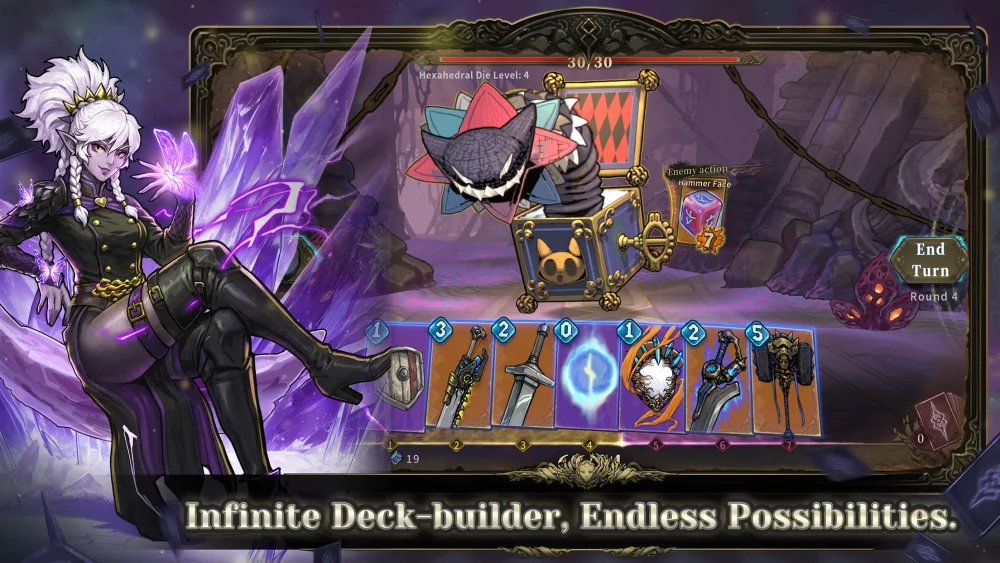
The Outcast Envoy is perhaps the most unconventional archetype in Abyssal Soul. While most roguelike deck-builders reward players for maintaining a razor-thin, highly consistent deck, the Outcast Envoy thrives on the exact opposite. This character turns the "bloated deck" disadvantage into a primary engine for both offense and survivability. By understanding how to manage a high-volume card pool alongside aggressive health-scaling, players can transform the Envoy into a near-invincible juggernaut capable of weathering the most brutal boss encounters in the game.
The "Bloated Deck" Philosophy: Why Quantity Equals Quality
In most card-based RPGs, the standard advice is to prune your deck at every opportunity. For the Outcast Envoy, this is a trap. The character’s internal mechanics scale directly with the variety and volume of cards held in your deck.
When you prioritize card acquisition, you are effectively building a larger "resource buffer." Every card you add increases your adaptability. In Abyssal Soul, the Envoy’s scaling is tied to the total utility available in your hand. By intentionally keeping a large deck, you ensure that you always have an answer for specific enemy mechanics, even if it means sacrificing the statistical probability of drawing your "finisher" cards every turn. To succeed, you must shift your mindset: stop viewing extra cards as clutter and start viewing them as fuel for your scaling passive abilities.
Health-Scaling: Your Primary Offensive Battery
For the Outcast Envoy, health is not just a resource to be managed—it is your primary weapon. The Envoy’s damage output is inextricably linked to your current HP pool. This creates a fascinating gameplay loop: the more punishment you can endure, the harder you hit back.
Key Strategies for HP Management:
- Prioritize HP Scaling Artifacts: When choosing between gear that boosts flat damage and gear that boosts maximum HP, always favor the HP percentage increases. These provide compounding value as you enter the mid and late game.
- Aggressive Damage Tanking: Because your offensive power scales with health, you should not be afraid to take hits early in a fight to preserve your energy for playing more cards. Use your HP pool as a shield that allows you to cycle through your deck without needing to play purely defensive cards.
- The Critical Pivot: Monitor your health closely. While aggressive play is rewarded, once your HP enters the "red zone," you must immediately shift to defensive sustain cards to stabilize. The goal is to remain in the "high health, high damage" bracket for as long as possible.
Mid-Game Consolidation: Turning Bloat into Synergy
The most dangerous period for an Outcast Envoy player is the mid-game. You have likely accumulated a large, diverse deck, but you may lack the synergy to make it function efficiently. If you have many cards but no way to play them, you will find yourself stalling against elite enemies.
To bridge this gap, focus your efforts on:
- Merchant Nodes: Use these to remove absolute "dead weight" cards that do not contribute to your scaling or energy economy. You aren't thinning the deck to make it small; you are thinning it to ensure every card serves a purpose.
- Card Upgrading: Upgrading common cards is often more effective than fishing for rare ones. An upgraded card often gains "Draw" or "Energy Refund," which are the holy grails for a high-volume deck.
- Synergy Mapping: Ensure your deck contains at least one reliable source of energy generation or card draw for every three cards added. This keeps your engine turning, preventing the "dead hand" scenario where you have powerful cards but zero energy to play them.
Handling Trade-offs and Strategic Risks
The primary risk of the Outcast Envoy is variance. With a massive deck, you lose the ability to predict exactly what you will draw next. You must accept that your run will occasionally be dictated by RNG.
Mitigation strategies include:
- Accepting Variance: Learn to play the hand you are dealt rather than the hand you want. The Envoy is designed to be a "toolbox" character; if you don't draw your main damage card, look for secondary synergies like status effect stacking or armor generation to survive the turn.
- Energy Economy Management: The biggest mistake players make is adding high-cost cards without the infrastructure to support them. If you add a "heavy hitter" card, you must pair it with at least two cards that provide energy or draw power. Never increase your deck's average cost without a corresponding increase in your energy income.
Essential Early-Game Decisions
The first three stages of your run in Abyssal Soul define your ultimate potential. Do not rush to the boss; take the time to hunt for specific events that offer permanent HP bonuses. Even a +5 HP bonus early on can be the difference between life and death in the late game.
Your priority list for the early game:
- Defensive Draw Cards: These are your most valuable assets. Cards that provide a small amount of block while also drawing another card are the foundation of your engine. They protect your HP (your damage source) and cycle your deck to find better options.
- Artifact Hunting: If a node offers an artifact that scales with cards in your deck or HP total, take it immediately, even if it seems weak at level one.
- Strategic Skipping: Only skip a card reward if the card offers absolutely zero utility. If a card provides even a minor benefit or a cycle effect, take it.
By following this approach, you will find that the Outcast Envoy is not just a viable character, but one of the most consistent and powerful choices in Abyssal Soul. The key is patience, managing your deck as a resource rather than a burden, and trusting your health pool to carry you through the toughest encounters.

Free Abyssal Soul Codes
Current active codes and how to redeem them.

Sarah Williams
Sarah specializes in RPG and collection games, explaining team building, character growth, and beginner-friendly ways to avoid expensive early mistakes.
COMMUNITY
Player Comments
34 players commented on this guide.
The tips are practical and easy to follow.
This saved me time in the early game.
This helped me understand strategy much better.
Nice guide. I am checking the other Abyssal Soul articles next.