
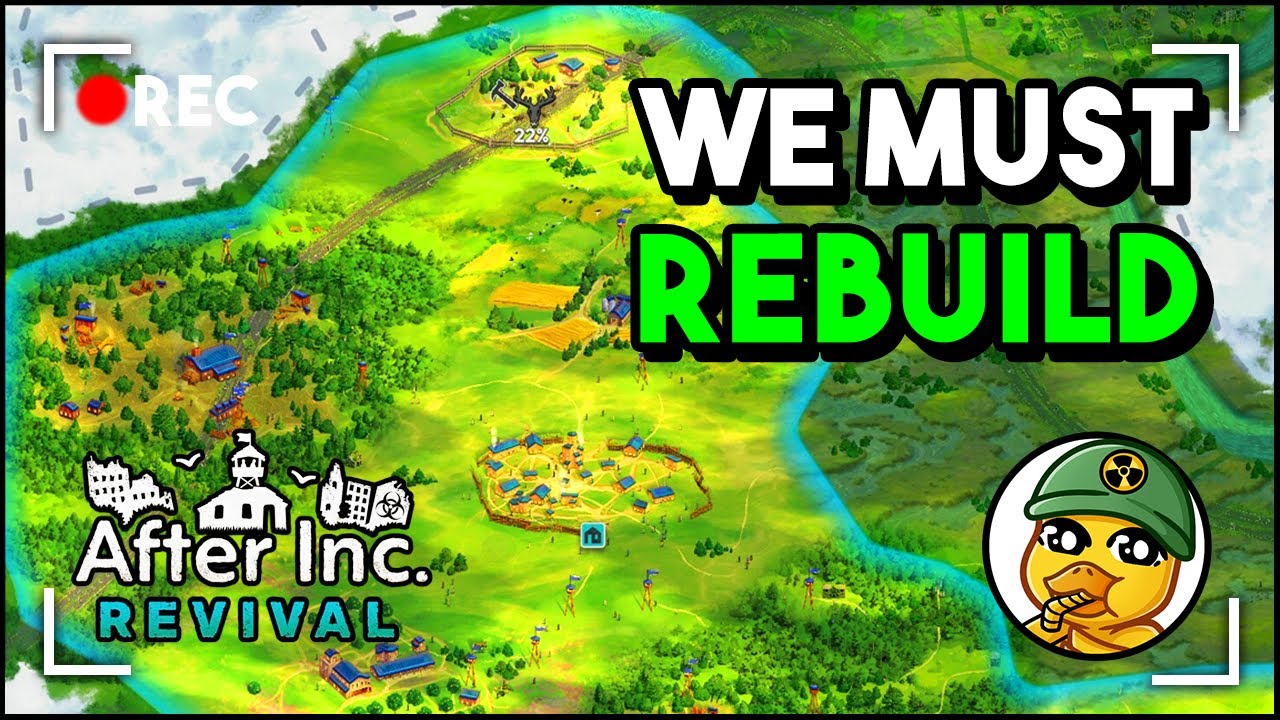
In After Inc., the transition from surviving the initial apocalypse to building a thriving, resilient civilization is a complex challenge of logistics and urban planning. As a city builder with 4X elements, the game demands more than just clicking and building; it requires a deep understanding of how survivor movement, resource proximity, and infrastructure placement dictate your long-term success. If your colony is stagnating or suffering from constant resource shortages, your issue is likely not a lack of effort, but a lack of logistical structure.
Mastering Debris Removal for Territorial Expansion
In After Inc., debris is not merely an aesthetic obstacle; it is a hard cap on your development. Every square meter of your settlement is precious, and uncleared rubble prevents the placement of high-tier production facilities and defensive perimeters.
The Phased Clearing Strategy: Don't clear the entire map at once. Debris removal is labor-intensive and burns through precious man-hours that could be spent on food production or research. Instead, adopt a "Just-in-Time" clearing approach:
- Identify the Goal: Determine the next building you need (e.g., a Greenhouse or an Infirmary).
- Clear the Footprint: Only clear the specific tiles required for the building and a single tile of surrounding pathing.
- Evaluate Efficiency: Check if the area you are clearing provides access to vital resources. If the cleared area isn't facilitating a production goal, shift your laborers elsewhere.
By focusing your workforce on specific expansion zones, you prevent the common trap of "labor dilution," where your survivors spend their entire day walking to and from debris piles at the edge of the map, accomplishing nothing of substance.
Designing High-Efficiency Supply Routes
The most common point of failure for players in After Inc. is "transit time." When your scavenger collects wood from a distant node, the time taken to walk that wood back to the stockpile is time that survivor is not collecting more wood.
To optimize your logistics, you must treat your settlement like a machine:
- The Hub-and-Spoke Model: Place your central storage depots in the geographical center of your active collection zones.
- Pathing Priorities: Prioritize building paved roads or cleared paths between your resource nodes and your storage centers. Survivors move significantly faster on cleared paths than they do on terrain cluttered with urban decay.
- Proximity Clustering: If a resource node (like a scrap pile) is far from your base, build a small, secondary storage unit near the node. This allows survivors to drop off goods locally, letting dedicated transport units move the resources to the central hub in bulk, rather than having every scavenger make the long trek back to the main base.
Survivor Morale and Work Cycle Optimization
Your survivors are your most valuable resource. In After Inc., a demoralized or overworked population is a liability that can lead to settlement collapse during a zombie migration or environmental event.
Effective work-cycle management involves:
- The Rotation System: Do not put your entire population on high-intensity tasks like scavenging. Rotate groups every cycle. Use a "High-Intensity" group for clearing and scavenging, and a "Maintenance" group for building, repairing, and crafting.
- Rest Proximity: Ensure housing is within a short walking distance of both food sources and the workplace. If a survivor has to walk across the map to eat, then across the map to work, they will spend 40% of their day in transit.
- Stress Management: Monitor the "stress" indicators. A survivor who is consistently working in hazardous zones or under-fed will eventually become "Incapacitated," forcing you to divert another survivor to care for them.
Strategic Utility Placement: The "Core-to-Perimeter" Rule
To maximize space and safety, organize your settlement in concentric circles. This is the most effective way to defend your population while keeping productivity high.
- The Inner Core: This is your "Safe Zone." Place your housing, infirmaries, and essential storage here. This area should be the most fortified and the least likely to be breached.
- The Production Ring: Surrounding the core, place your workshops, kitchens, and processing centers. These need to be close enough to the core to be protected but close enough to the outer perimeter to access raw materials.
- The Perimeter: This is your buffer zone. Place your defensive walls, traps, and watchtowers here. Do not build housing near the perimeter, as the noise and proximity to zombie threats will negatively impact survivor morale and safety.
Balancing Growth Against Resource Scarcity
A classic mistake in After Inc. is the "Population Boom." Players often build too much housing, attracting more survivors than their current food and energy infrastructure can support.
The Golden Rules of Growth:
- The 20% Buffer: Never expand your population unless you have at least 20% more food and resource production than your current population consumes. This buffer is your safety net for unexpected events.
- The Pause-and-Stabilize: Every time you reach a new population milestone, stop all new housing construction for three full cycles. Use this time to upgrade existing production buildings and ensure your logistical routes are fully optimized.
- The "Net-Zero" Check: If your resource intake is hovering at zero or dipping into the negative, immediately halt all expansion projects. Reallocate laborers from "Construction" to "Gathering" until your stockpiles are replenished.
Expert Insight: Why "After Inc." Demands Patience
Unlike traditional city builders where speed is often rewarded, After Inc. is a game of attrition. The environment is actively hostile, and the game’s mechanics are designed to punish those who overextend.
The most successful players treat the game as a series of "stabilization phases." Each phase is dedicated to perfecting one aspect of the colony—logistics, production, or defense—before moving to the next. By following these steps and prioritizing infrastructure over raw population numbers, you will find that your colony doesn't just survive the apocalypse; it systematically conquers it. If you ever feel overwhelmed, remember the golden rule: A smaller, well-fed, and efficient colony will always outperform a sprawling, starving one.

Free After Inc. Codes
Current active codes and how to redeem them.

Emily Johnson
Emily writes practical mobile strategy guides with a focus on resource planning, base progression, and the early decisions that shape a long-term account.
COMMUNITY
Player Comments
107 players commented on this guide.
The explanation is clear, especially for beginners.
Can you add more details about base building in a future update?
Nice guide. I am checking the other After Inc. articles next.
I wish I had read this before upgrading the wrong thing.