
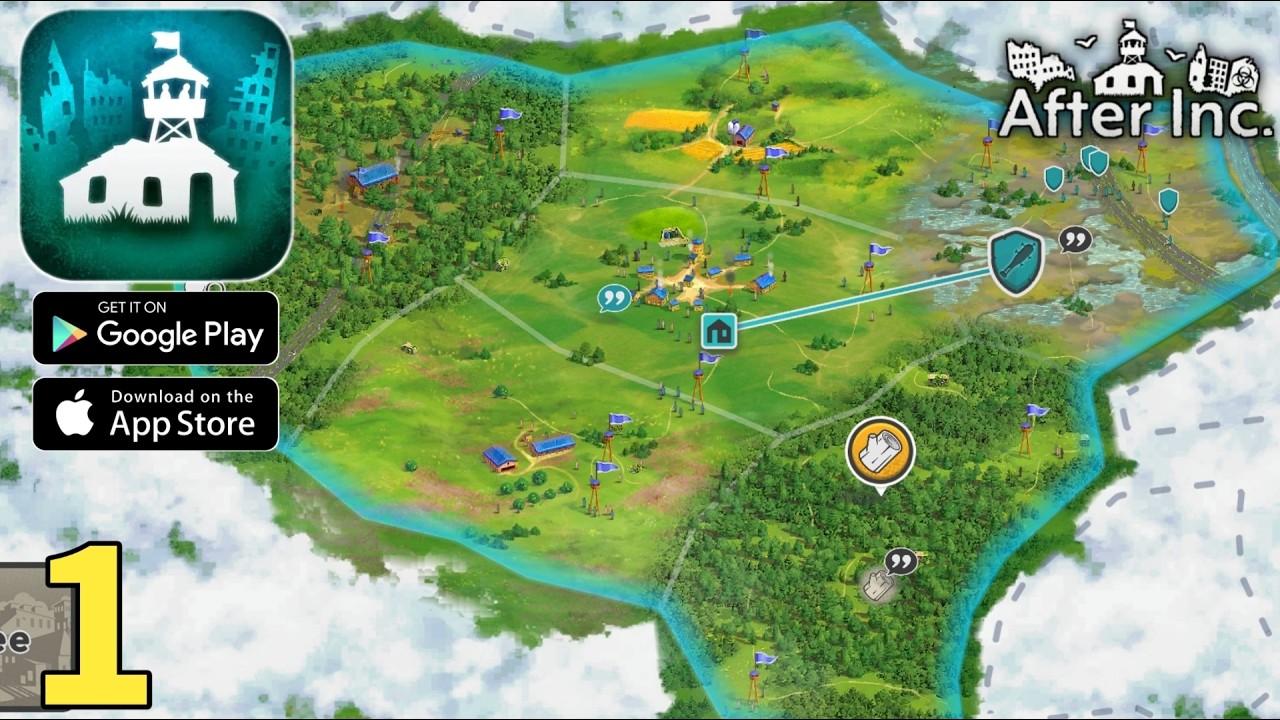
Successfully navigating the opening hours of After Inc. requires a disciplined approach to survivor management, building utility, and logistical planning. Unlike standard city builders, After Inc. emphasizes a fragile balance between population growth and the finite resources of a post-apocalyptic landscape. If you fail to align your survivor count with your production capacity, your settlement will quickly collapse under the weight of its own needs. This guide provides the expert strategies needed to establish a self-sustaining base and prepare for the long-term challenges of the persistent campaign.
Optimizing Initial Survivor Allocation
The most common mistake new players make in After Inc. is failing to achieve "full employment" from the first minute. Every idle survivor is a missed opportunity for progress. Your primary goal is to ensure that every available hand is assigned to a production-heavy role that directly mitigates your immediate resource deficits.
- Prioritize Food and Materials: Your first ten survivors should be exclusively split between food production (to prevent starvation) and basic material harvesting (to fuel construction).
- Avoid Over-Diversification: Do not attempt to staff every building type immediately. It is better to have one fully operational food facility than three half-staffed buildings that fail to meet production quotas.
- The "Zero-Idle" Rule: Periodically check your workforce menu. If you have survivors sitting in the "unemployed" pool, your expansion is stalling. Always assign them to the task currently closest to a zero-balance, even if it is simply hoarding low-tier materials for future upgrades.
Balancing Infrastructure and Resource Output
In After Inc., your infrastructure must be built in layers. As you construct new buildings, you are not just adding utility; you are adding maintenance costs. Every structure increases the baseline energy and material upkeep of your settlement.
To maintain a healthy balance, adopt the "Consumption-to-Yield" check. Before every major build:
- Calculate Net Gain: Subtract your hourly consumption from your hourly production. If your net gain is less than 10% of your total storage, stop building and focus on upgrading your existing resource nodes.
- Infrastructure Scaling: Ensure your storage capacity is at least 30% larger than your daily consumption. This creates a "safety buffer" that allows you to survive temporary production dips caused by random events or task reallocations.
Strategic Expansion via the Build Menu
The build menu is your primary tool for long-term progression. Novice players often build based on availability, but experts build based on spatial and mechanical synergy.
- Cluster Economics: Place production buildings near their relevant storage facilities. While the game logic handles resource movement, grouping your buildings makes the UI easier to monitor, allowing you to identify "bottlenecks" at a glance.
- The Upgrade-First Philosophy: Before constructing a second instance of a building, always consider if upgrading the current building is more efficient. Upgrading usually provides a higher resource-per-survivor yield than constructing a new, low-level building.
- Strategic Staging: Avoid building "luxury" or defensive structures until your core resource intake (food, wood, and scrap) is stabilized. Survival is a math problem; solve the variables of hunger and material scarcity before worrying about advanced, secondary-tier buildings.
Managing Population Growth and Needs
Population growth in After Inc. is a double-edged sword. More survivors mean more hands for gathering, but they also represent an exponential increase in resource demand. Never expand your housing capacity just because you have the materials to do so.
The Golden Ratio of Growth: Only authorize housing expansion when your current resource surplus can sustain the new population count for at least 24 hours without any additional labor input. If your current food production is exactly equal to your current consumption, building a new house will lead directly to a food shortage. Always grow in "waves"—expand production, stabilize, then expand housing.
Mitigating Risks and Avoiding Common Pitfalls
The early game in After Inc. is unforgiving. A single miscalculation in resource expenditure can lead to a "death spiral" where your population starves, leading to lower productivity, which leads to further starvation.
- The Emergency Reserve: Always keep a buffer of 15% of your total storage capacity for each critical resource. Never spend your last unit of food or scrap on a new building.
- Pause and Pivot: If you notice your resource counts trending downward, use the pause function on non-essential construction projects immediately. It is better to have an incomplete building shell than a starving population.
- Proactive Scavenging: Don't wait for your internal production to hit zero before sending out scouts. Exploration is your secondary resource engine. Integrate scouting into your daily workflow to supplement your internal production, ensuring that your settlement has a constant influx of materials from the surrounding environment.
Expert Decision-Making: The Long Game
As you progress, the decisions you make regarding your survivors' skills and abilities will define your success. Focus on developing specialized survivors early. By assigning survivors with high gathering efficiency to your most critical nodes, you maximize the "per-worker" output of your settlement.
Monitor the "Efficiency" metric in your building interface. If a building is running at low efficiency despite being staffed, it is usually a sign that your infrastructure or supply lines are poorly optimized. By refining these workflows now, you create a scalable foundation that will allow your settlement to thrive even as the demands of the After Inc. world become significantly more difficult. Remember: consistency is superior to speed. A steady, predictable growth rate will always outperform a chaotic, rapid expansion that eventually leads to resource depletion.

Free After Inc. Codes
Current active codes and how to redeem them.

James Brown
James focuses on Android gaming on PC, emulator setup, controls, performance tuning, and practical troubleshooting for longer play sessions.
COMMUNITY
Player Comments
79 players commented on this guide.
The explanation is clear, especially for beginners.
I tried this today and it worked better than my old setup.
The tips are practical and easy to follow.
This guide answered the exact question I had.