
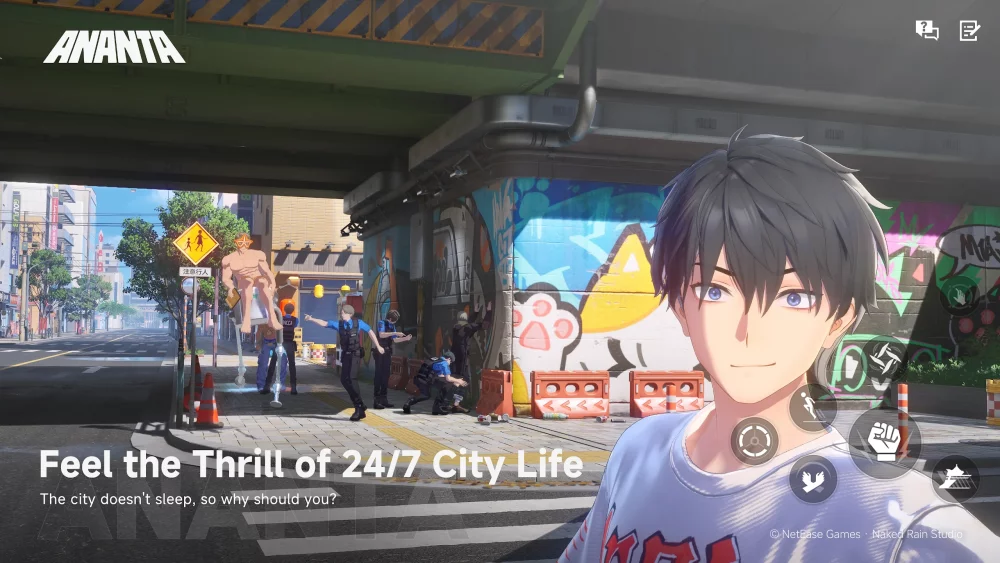
In the strategic simulation and action-oriented world of ANANTA, the environment is your greatest asset. Whether you are navigating the neon-drenched skyscrapers of Eirou or the serene, culture-rich paths of Longqi Village, success is determined by how well you integrate movement, observation, and environmental interaction into your gameplay loop. As we approach the January 15 release, understanding how these distinct zones function is the key to maintaining a competitive edge.
Understanding the ANANTA World Design Philosophy
The world of ANANTA is crafted to reward curiosity and mechanical precision. Rather than treating maps as static backdrops, the developers have designed every district as a puzzle. In Eirou, the focus is on "flow"—the seamless transition between sprint, wall-run, and aerial traversal. In contrast, Longqi Village emphasizes "discovery"—the slowing of pace to uncover lore, resource nodes, and hidden shortcuts.
To excel, you must treat your navigation style as a variable that changes based on your location. A player who attempts to rush through Longqi with the same parkour-heavy approach used in Eirou will likely miss the environmental cues that lead to long-term resource advantages.
Mastering Traversal in Eirou’s Vertical Landscape
Eirou represents the pinnacle of ANANTA’s movement systems. To navigate this dense, high-tech urban environment effectively, you must stop viewing the streets as your primary path.
- The Vertical Advantage: The city is built in layers. Rooftops are not just for aesthetic appeal; they are highways. By utilizing high-speed traversal tools, you can avoid the "clutter" of street-level NPC traffic and lower-tier objectives, reaching mission clusters significantly faster.
- Chaining Momentum: ANANTA rewards players who maintain momentum. Practice your "jump-dash-wall-run" loops in open areas of the city before attempting complex navigation. Success in Eirou depends on your ability to maintain a high-speed state, which often triggers specific traversal-based resource bonuses or shortcuts.
- Tactical Scouting: Use the height of Eirou’s skyscrapers to perform aerial reconnaissance. Before dropping into a combat encounter, scout the perimeter for explosive barrels or destructible cover that can be utilized to gain an early advantage.
Uncovering Secrets in Longqi Village
While Eirou tests your reflexes, Longqi Village tests your perception. This zone is designed to contrast with the modern metropolis, offering a more grounded experience that rewards "slow play."
- Environmental Storytelling: Longqi is dense with lore. Pay close attention to NPC dialogue and the placement of objects in the environment. These are often indicators of high-value resource caches that are not marked on your HUD.
- Hidden Pathways: Unlike the open verticality of the city, Longqi features subtle, hidden paths often tucked behind traditional architecture or dense vegetation. If you see a cluster of interactable objects, look for a non-obvious path leading behind or above them.
- Resource Management: Because Longqi lacks the high-speed transit of the city, your time is a valuable resource. Plan your routes in the village to hit multiple lore or resource points in a single loop to minimize backtracking.
Optimizing Environmental Interaction and Combat Flow
In ANANTA, combat and exploration are inextricably linked. The most successful players are those who treat the environment as an extension of their character's ability kit.
Tactical Use of Terrain
- Urban Combat (Eirou): Utilize the narrow alleys to funnel enemies, allowing you to use area-of-effect abilities to maximum efficiency. If the battle turns against you, use the verticality of the buildings to escape and reset the encounter.
- Rural Combat (Longqi): The more open spaces of the village require a different tactical approach. Use natural cover like stone walls or wooden structures to mitigate incoming fire. Because of the lower density of buildings, mobility-based defensive maneuvers are often more effective than static cover here.
Interactive Elements
Look for environmental hazards that can be triggered during combat. In Eirou, this might include electrical panels or signage that can be dropped on enemies. In Longqi, look for environmental traps or structural weaknesses in the older buildings that can be collapsed to control the flow of the battlefield.
Launch Strategy: Preparing for January 15
With the full release on the horizon, your primary goal should be to build "mechanical muscle memory." Preparation is not just about hoarding resources; it is about knowing how to interact with the game’s systems the moment you log in.
The Three-Phase Preparation Strategy
- Traversal Calibration: Spend your first few hours post-launch solely focusing on movement. If you can navigate the city without hitting a wall or losing your flow, you will have more mental bandwidth to focus on combat and resource management later.
- Zone Mapping: Identify your favorite "loop" in both Eirou and Longqi. A loop is a path that takes you through high-density resource areas and back to a central hub or merchant. Memorizing these routes will make your daily progression significantly more efficient than players who wander aimlessly.
- Ability-Environment Synthesis: Every time you unlock a new character or ability, test it in different architectural settings. Does your primary attack clear a path in the tight corridors of Eirou? Does it provide enough range for the open fields of Longqi? Understanding these interactions early prevents you from getting stuck in late-game encounters that require specific movement or range.
Strategic Decision-Making: Why It Matters
In ANANTA, your choices regarding how you spend your time in these hubs dictate your progression speed. Players who focus too much on combat and ignore the navigational nuances of the world will find themselves resource-starved. Conversely, those who ignore the combat-environment synergy will struggle to complete high-difficulty missions.
By mastering the traversal mechanics of Eirou and the observational requirements of Longqi Village, you are not just learning where to go—you are learning how to dominate the game’s core loops. As you prepare for the January 15 launch, remember that the most successful ANANTA players are those who see the world as a tool to be manipulated, not just a map to be traversed. Focus on your movement, observe your surroundings, and stay adaptable; these habits will serve as the foundation for your long-term success in the world of ANANTA.

Free ANANTA Codes
Current active codes and how to redeem them.

Michael Smith
Michael covers live-service games, events, reward systems, and efficient daily routines, turning frequent updates into clear actions for players.
COMMUNITY
Player Comments
36 players commented on this guide.
Nice guide. I am checking the other ANANTA articles next.
This helped me understand strategy much better.
The explanation is clear, especially for beginners.
I tried this today and it worked better than my old setup.