
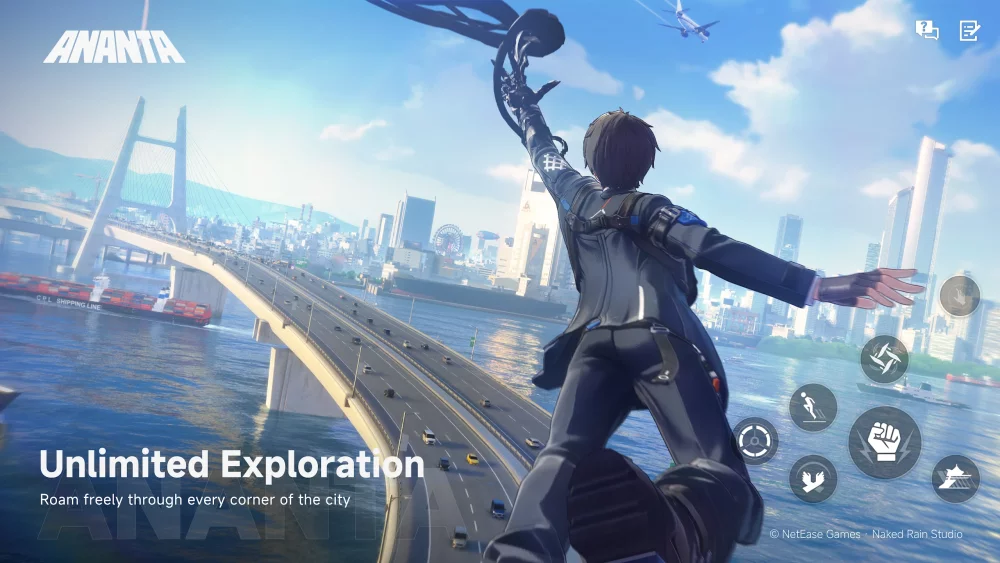
If you are approaching Ananta with the expectation of a sprawling, content-heavy MMORPG, you are likely to be disappointed. The most important takeaway for any player is that Ananta is not a traditional massive multiplayer game; it is a curated, high-fidelity interactive experience. To get the most out of your time, you must stop looking for traditional leveling loops and start viewing the game as a digital showcase of visual design and atmospheric exploration.
Distinguishing Visual Presentation from Mechanical Depth
The primary source of confusion for players stems from the game’s high-fidelity graphics. When developers invest heavily in lighting engines, character textures, and environmental models, players naturally assume that this visual polish is supported by equally complex gameplay systems. In Ananta, however, the visuals are the primary product.
When you enter the world, you will immediately notice that the environments are largely static. While you can walk through them and admire the art style, you cannot interact with the vast majority of objects. These are not "living" sandboxes where you can manipulate the environment, craft items, or engage in meaningful, system-driven quests.
Expert Insight: Treat the world as a museum rather than a playground. If you approach Ananta as an interactive art installation, the lack of "deep" mechanics becomes a design choice rather than a failure of development. The game is designed to be looked at, not to be broken, exploited, or mastered through complex theory-crafting.
The Reality of Social and Interactive Systems
In a typical MMO, social systems act as the glue that holds the community together—guilds, player-run economies, and team-based raid groups. In Ananta, these systems are either missing or intentionally stripped down to basic proximity-based interactions.
Because the architecture of the game is focused on the individual’s visual experience, social hubs do not function as centers for complex player-driven economies. You might find other players, but you will not find the structured social hierarchies that define titles like World of Warcraft or Final Fantasy XIV.
- Why this matters: Without integrated, meaningful social mechanics, your interactions with others will be brief and casual.
- What to expect: Do not go into Ananta looking for a long-term social home or a competitive environment. The game lacks the infrastructure for deep, cooperative gameplay, making it unsuitable for players whose primary motivation is team-based progression or social status within a virtual world.
Navigating the Limited Progression Loop
If you are a player motivated by "number go up"—the dopamine hit of leveling, unlocking skill tiers, or maxing out gear stats—Ananta will feel empty within minutes. The game lacks a functional progression loop. There is no endgame to reach, no talent trees to optimize, and no gear treadmill to climb.
Your "progression" in Ananta is entirely subjective. It is measured by the zones you have walked through and the visual assets you have seen. Once you have explored the map and familiarized yourself with the aesthetic, there are no milestones that provide a sense of mastery.
Strategic Tip: Avoid the trap of "searching for content" where none exists. Many players spend hours trying to trigger events or find "hidden" mechanics that aren't there. If you don't find a progression mechanic in the first thirty minutes, it is because there isn't one. Accept this limitation early to prevent unnecessary frustration.
Evaluating Personal Investment: Is Ananta for You?
Before downloading or committing significant time to Ananta, ask yourself what you want from your gaming sessions. The value proposition of this title is binary: it is either a breath of fresh air for those who want a low-stress, beautiful environment, or a hollow experience for those who need agency and progression.
The "Stay" Checklist
Consider the following before settling into Ananta:
- Are you a fan of digital art and lighting design? If yes, the experience is worth your time as a visual showcase.
- Do you have high-end hardware? The game’s assets are designed to shine on modern rigs; if you enjoy benchmarking your system, Ananta is an excellent testing ground.
- Are you looking for a casual "walk-around" experience? If you want to decompress without the pressure of leaderboards or skill checks, this fits the bill.
The "Pass" Checklist
Look elsewhere if:
- You want complex combat systems: Ananta does not offer the depth required for meaningful mechanical combat.
- You need a social community: The lack of guild, trade, and party systems makes deep social integration impossible.
- You are seeking a long-term RPG journey: The game is a static experience, not a growing world that evolves through player input or patch-based progression.
Conclusion: Managing Expectations
The confusion surrounding Ananta is largely a result of marketing that leans into the "MMO" label, which carries specific baggage for veteran gamers. By framing the game as a high-fidelity digital art experience, you shift from a mindset of "searching for missing features" to "appreciating existing assets."
If you approach Ananta with the correct mindset, you can enjoy it for exactly what it is: a beautiful, short-term distraction. When the novelty of the visuals fades, do not feel pressured to "grind" or "find the endgame"—there is none. Acknowledging these limitations allows you to enjoy the polish of the world without the burden of trying to force it into a genre it was never intended to inhabit. Ultimately, your time in Ananta is best spent as a brief, aesthetic excursion rather than a permanent home for your gaming life.

Free ANANTA Codes
Current active codes and how to redeem them.

Sarah Williams
Sarah specializes in RPG and collection games, explaining team building, character growth, and beginner-friendly ways to avoid expensive early mistakes.
COMMUNITY
Player Comments
100 players commented on this guide.
I tried this today and it worked better than my old setup.
Can you add more details about strategy in a future update?
The tips are practical and easy to follow.
This saved me time in the early game.