
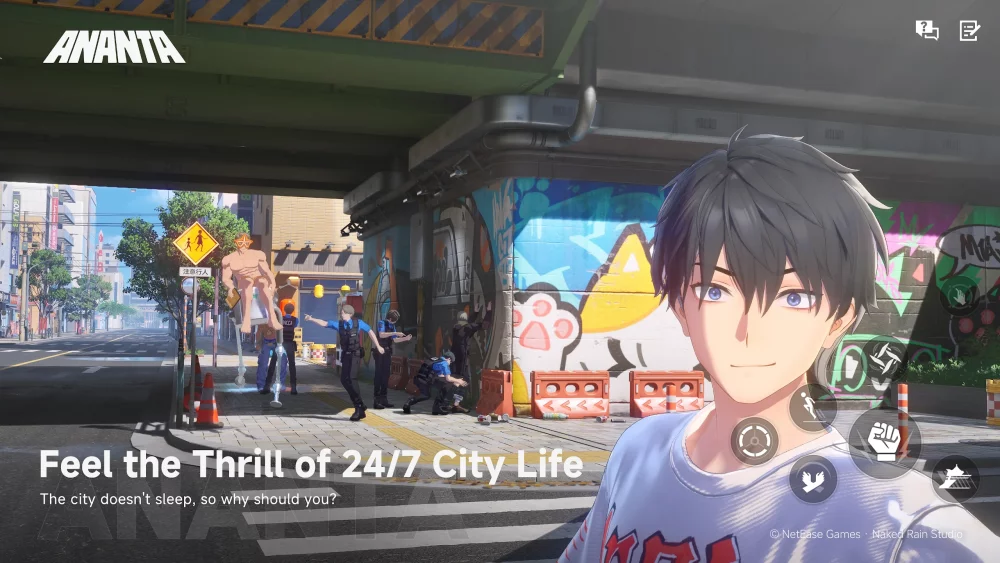
In the high-intensity world of ANANTA, victory is rarely decided by raw damage output alone; it is dictated by the rhythm, timing, and execution of your character’s tactical animation sequences. Much like the precision found in high-level professional choreography—such as the NouerA performance sequences—every move in ANANTA relies on a specific flow of wind-up, active, and recovery frames. To reach the top tier of play, you must stop viewing your character as a collection of stats and start viewing them as a rhythmic instrument. This guide breaks down the mechanics of animation cancelling, spatial synchronization, and squad-based synergy to help you master the tactical flow of ANANTA.
Analyzing Animation Frames for Tactical Precision
The foundation of ANANTA’s combat system is the "frame-window." Every ability, dash, and attack possesses a three-stage animation lifecycle that you must internalize to remain competitive:
- The Wind-up (Start-up): The initial animation frames before the attack hits. During this phase, your character is locked into a trajectory and is highly vulnerable to interruption or displacement.
- The Active Window: The frames where your ability actually deals damage or exerts control. This is the "apex" of the movement.
- The Recovery (End-lag): The final frames where the character returns to a neutral stance.
To improve your performance, you must master "Animation Cancelling." This involves inputting a secondary command—such as a dodge or a secondary ability—during the final frames of an attack’s recovery. By doing this, you cut the dead-time, allowing you to transition into your next move before the game’s default animation cycle finishes. If you feel "sluggish," you are likely waiting for the full recovery animation to finish; stop waiting, and start layering your inputs.
Synchronizing Movement with Combat Flow
Combat in ANANTA is a dynamic, spatial puzzle. If your movement is predictable, you are an easy target. Professional performers use "weight shifting" to keep their momentum fluid, and you should apply this same logic to your traversal.
- Stutter-Stepping: Never move in a straight line. Interrupt your movement animations with rapid, short-distance tactical shifts. This forces the opponent to constantly re-adjust their targeting reticles.
- Momentum Conservation: Treat your character’s movement as a physical object. If you initiate a jump or dash, your transition into the next ability should feel continuous. Avoid "hard stops" where your character comes to a complete standstill, as these are the moments when your hit-box is most vulnerable.
- Environmental Integration: Use the geometry of the map to "hide" your recovery frames. If you are finishing a high-commitment ability, ensure your character is moving behind cover or through a narrow corridor so that the animation end-lag is protected from enemy line-of-sight.
The Rhythm of Squad Synergy
In team-based ANANTA encounters, individual mastery is only the beginning. True competitive dominance comes from "Squad Choreography," where your team’s abilities hit with the same timing as a synchronized performance group.
When multiple players chain their crowd-control (CC) abilities, they create a "stacking" effect. For example, if one player initiates with a stun, the rest of the team should have their damage-heavy animations queued to land exactly at the moment the stun connects.
The "Beat" Strategy:
- The Initiator: Designate one player to lead the engagement. Their movement is the "beat" that the rest of the squad follows.
- The Gap-Fill: While the initiator is in their long-animation "wind-up," support players must provide covering fire or defensive buffs to protect them.
- The Reset: When the initiator’s ability cycle ends, the team should rotate to a defensive or repositioning formation to allow the initiator’s stamina and cooldowns to recover. This creates a "pulse" of aggression followed by a "pulse" of safety.
Managing Animation Fatigue and Stamina
ANANTA includes an internal balancing mechanic: animation fatigue. Every action has a stamina cost, and chaining too many complex animations—even if they are perfectly timed—will lead to a stamina deficit.
A common mistake is "Over-Choreographing." Players often try to execute long, flashy combos that serve no tactical purpose. In ANANTA, the most efficient combo is the one that achieves the result with the minimum number of frames. If your stamina drops below 30%, your character’s movement speed and attack start-up times will slow down, making you susceptible to being caught out of position.
Pro-Tip: Learn the "Bail-out" animation for your character. Every character has a defensive move that resets their stance faster than a standard movement. If you find yourself over-committed, trigger this move to regain control of your character’s positioning immediately.
Implementing Performance-Based Training Drills
To turn these concepts into muscle memory, you must isolate them in the training room. Do not practice full combat; practice the "edges" of your animations.
- The Transition Drill: Practice alternating between your primary attack and a movement ability. Focus on how quickly you can initiate the movement after the attack hits. Aim for a seamless transition where the attack animation feels like it "flows" into the movement.
- The Obstacle Navigation Drill: Navigate through a complex area of the map while maintaining a 360-degree awareness. Practice "stutter-stepping" around corners to ensure your character never enters a full stop.
- The Sync Drill: If playing with a team, practice landing three consecutive abilities on a training dummy within a 0.5-second window. This builds the team’s "rhythm" and helps you understand the timing of your teammates' animations.
By viewing ANANTA through the lens of rhythm and animation flow, you stop reacting to the game and start controlling it. Success in ANANTA is not just about the gear you wear, but the elegance and tactical efficiency of your movement. When you treat the battlefield as your stage, you gain a level of control that most players simply cannot match.

Free ANANTA Codes
Current active codes and how to redeem them.

Emily Johnson
Emily writes practical mobile strategy guides with a focus on resource planning, base progression, and the early decisions that shape a long-term account.
COMMUNITY
Player Comments
78 players commented on this guide.
The explanation is clear, especially for beginners.
I tried this today and it worked better than my old setup.
This helped me understand strategy much better.
The tips are practical and easy to follow.