
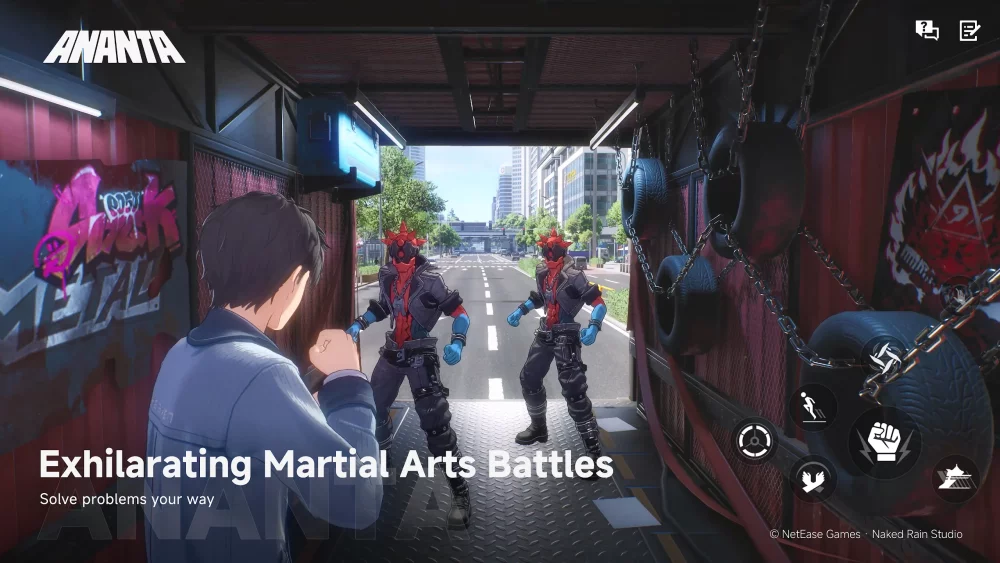
To excel in ANANTA, players must transition from a standard exploration mindset to a focus on aggressive mobility and responsive combat execution. The game demands high-level mechanical precision, specifically regarding how characters navigate 3D environments while engaging targets. By prioritizing movement speed and utilizing dash-based evasion, you can maintain constant offensive pressure while minimizing damage intake—a requirement for surviving the game’s more demanding combat scenarios and high-mobility enemy archetypes.
Mastering Momentum and Dash Mechanics
Success in ANANTA relies heavily on your ability to maintain momentum during combat. Movement is not merely a method of traversal; it is your primary tool for defensive positioning and offensive setup. The game features a distinct physics-based movement system that rewards players who can chain dashes together, allowing for rapid repositioning that enemies struggle to track.
To utilize this effectively, you should map your dash inputs to a layout that allows for simultaneous camera control and movement. When navigating the open-world environments of ANANTA, treat your movement as a continuous flow. Stopping to stand still in high-intensity combat will leave you vulnerable to area-of-effect (AoE) attacks and focused fire, significantly reducing your survivability.
Pro-Tip: Practice "dash-canceling" animations. Many character attacks have a recovery window that can be shortened by triggering a dash the moment the damage registers. This keeps your character in a state of perpetual motion, making you a difficult target for projectile-based enemies.
Tactical Advantages of Verticality
Verticality in ANANTA provides a significant strategic edge when facing grounded enemies. The map design encourages players to utilize elevation to reset combat encounters or gain a superior vantage point for targeting enemy weak spots. By jumping or scaling structures, you can force AI enemies to re-calculate their pathing, granting you a few critical seconds to reload or deploy abilities.
When engaging in combat, look for environmental elements such as platforms, ledges, or pillars that allow for a "hit-and-run" approach. Players who ignore verticality often find themselves cornered by enemy formations. By maintaining a height advantage, you simplify the aiming process and keep a clearer view of incoming projectiles, which is vital for maintaining a consistent damage output throughout longer fights.
Managing Combat Flow and Enemy Aggression
Managing the rhythm of combat is vital for long-term progression in ANANTA. You must learn to read the "tells" of enemy units, which often telegraph their attacks through specific animations or visual cues. Once you identify these patterns, you can use your dash mechanics to move laterally, avoiding damage while remaining within range to counter-attack.
Do not attempt to trade blows with elite enemies while standing still. Instead, focus on a "strike-and-retreat" cadence. By engaging for short bursts and retreating to reposition, you prevent the enemy from overwhelming your defenses. This strategy is particularly effective against larger groups, where crowd control is difficult to maintain without constant, deliberate movement.
Optimizing Character Skill Usage
Effective skill usage in ANANTA is tied directly to your positioning. Many character abilities have specific AoE ranges that require precise placement to maximize impact. Using your skills while mid-dash or immediately after a high-speed traversal can catch enemies off-guard and prevent them from dodging your primary damage output.
Consider the following approach for skill optimization:
- Cooldown Awareness: Never commit your movement-based skills if your primary damage ability is on cooldown. Your movement is your shield; if it is on cooldown, play conservatively.
- Synergy Chaining: Combine short-range dashes with rapid-fire abilities to create a "burst window" that forces enemies into a defensive state.
- Environmental Interaction: Utilize character skills that interact with the terrain to create obstacles between you and the enemy force, effectively funneling them into your line of fire.
Limitations and Environmental Trade-offs
While high mobility is the core of ANANTA, it does come with trade-offs. Over-extending into tight corridors or complex architectural clusters can sometimes lead to getting stuck on geometry, which momentarily halts your movement and exposes you to heavy damage. Awareness of your surroundings is just as important as your reflex speed.
Furthermore, some character kits are designed for stability rather than speed. Before committing to a high-speed playstyle, ensure your chosen character’s stats support it. Attempting to force a high-mobility playstyle on a character designed for defensive anchoring—or "tanking"—may lead to inefficient resource management and unnecessary deaths.
Strategic Decision Checklist
Before every major encounter in ANANTA, evaluate the following:
- Character Archetype: Is your character built for mobility or sustained defense? Adapt your playstyle to their kit, not the other way around.
- Arena Geometry: Is the area open (good for dashing) or cramped (good for AoE and defensive anchoring)?
- Enemy Type: Does the enemy rely on tracking attacks (requires constant dashing) or static, predictable AoE (requires vertical positioning)?
By analyzing these three factors, you can preemptively decide whether to adopt an aggressive, high-speed approach or a calculated, defensive stance. Mastery of ANANTA is not just about having fast reflexes; it is about knowing when to use that speed and when to hold your ground to turn the tide of battle.

Free ANANTA Codes
Current active codes and how to redeem them.

Sarah Williams
Sarah specializes in RPG and collection games, explaining team building, character growth, and beginner-friendly ways to avoid expensive early mistakes.
COMMUNITY
Player Comments
147 players commented on this guide.
Good guide for ANANTA players. The heroes part was useful.
I tried this today and it worked better than my old setup.
This guide answered the exact question I had.
This helped me understand heroes much better.