
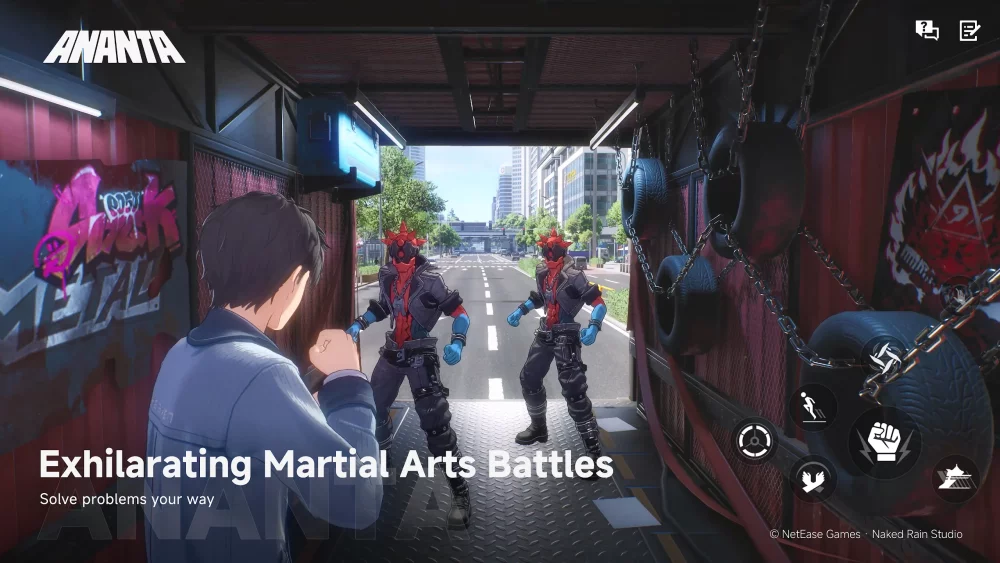
Success in ANANTA is not determined by how much damage you can absorb, but by how effectively you can dictate the rhythm of the battlefield. Following the highly anticipated reveal at Gamescom, it is clear that ANANTA prioritizes high-octane mobility, environmental interaction, and a unique "Yeet Master" mechanic that separates casual players from tactical experts. To dominate upon launch, you must stop viewing combat as a series of exchanges and start viewing it as a physics-based playground where your positioning is the most powerful weapon in your arsenal.
Understanding the Yeet Master Mechanic
The Yeet Master ability is the defining feature of ANANTA. At its core, it is a displacement tool that allows you to grab, toss, and reposition enemies with precision. While many action games relegate crowd control to secondary status, ANANTA makes it central to your offensive output.
Environmental Synergy
The most efficient way to use the Yeet Master ability is to treat the environment as an extension of your character. Do not simply throw enemies away from you; throw them into hazards.
- Ledge Management: If a platform has a drop-off, prioritize tossing enemies into the void. This is often an instant-kill or a significant health reduction that saves you from wasting resources on tanky mobs.
- Hazard Utilization: Look for environmental traps, spikes, or explosive barrels. A well-timed throw into a hazard often triggers chain reactions that can clear an entire room of lesser enemies.
- Crowd Fragmentation: Use the Yeet Master mechanic to isolate "elite" enemies. By grabbing a low-level mob and throwing it into a group, you can create a "bowling ball" effect that staggers multiple opponents, giving you a safe window to dash in and focus on the primary target.
Optimizing Combat Flow and Mobility
ANANTA follows a "move or die" philosophy. Standing still during an encounter is a guaranteed way to lose health, as enemy AI is programmed to surround and pressure stationary targets. Fluidity is your primary defense.
The Dash-Strike Cycle
To master the combat flow, you must adopt a rhythmic cycle of movement and offense:
- Engage: Close the distance with a dash.
- Displace: Use the Yeet Master ability to disrupt the enemy’s immediate positioning.
- Strike: Unleash your standard combat combos while the enemy is recovering from the displacement.
- Exit: Dash out of the cluster before the enemy recovery animation finishes.
This cycle ensures you are never in the same place long enough for an enemy to land a heavy strike. By keeping your character in constant motion, you force the AI to constantly reset its targeting parameters, effectively "stuttering" their offense.
Leveraging Whimsy in Tactical Engagements
The "whimsical" aesthetic of ANANTA is a masterclass in visual communication. Every bright, colorful effect and exaggerated movement animation is designed to serve as a clear telegraph for enemy behavior.
Reading Visual Tells
In ANANTA, if an enemy is about to unleash a massive, unavoidable attack, the game will signal this through distinct color shifts or particle effects.
- The Build-up: When you see a glowing aura or a specific winding animation, stop your current combo immediately. Do not attempt to "greed" for one last hit.
- Counter-Flow: Use these moments to shift from an aggressive stance to a defensive repositioning dash. Because the game is so fast-paced, these visual cues are your only warning. Ignoring them in favor of dealing more damage is the most common cause of early-game failure.
The Strategy of Positional Dominance
Combat in ANANTA is a game of geometry. You are not just fighting the enemies on screen; you are fighting the space they occupy.
Decision-Making Under Pressure
When faced with a large group of enemies, your decision-making should follow this priority list:
- Identify the Threat: Find the enemy with the most annoying projectile or AOE attack.
- Isolate/Eliminate: Use your Yeet Master ability to throw this unit into the rest of the group, causing a ripple effect of disruption.
- Clean Up: Once the formation is broken, use your high-mobility dashes to pick off the remaining enemies one by one.
If you find yourself surrounded, never try to jump over the group to escape—this often leaves you vulnerable in the air. Instead, use a dash to break the line of the formation, essentially creating a "gap" you can exploit to retreat to a better vantage point.
Preparing for Launch Day Progression
As ANANTA approaches its official release, the most important preparation you can make is building muscle memory. Since the game relies on frame-perfect reactions and spatial awareness, your mechanical skill will far outweigh any gear or character level progression you might acquire early on.
Practice Habits for New Players
- Experiment with Weights: Not all enemies react to the Yeet Master ability in the same way. Smaller enemies are easy to toss, while larger, armored enemies may only be staggered. Learn the "weight" of each enemy type early so you don’t waste cooldowns trying to throw an immovable object.
- Master the Camera: In high-speed combat, your camera is your most important tool. Keep it unlocked and oriented to maintain a view of the entire battlefield. If you lose track of the group, you lose control of the fight.
- Avoid "Trading" Hits: Because there is no traditional "tanking" mechanic, trading hits with enemies is mathematically inefficient. If you find yourself losing health, you are playing the game wrong. Use your mobility to ensure that you are the only one dealing damage.
By focusing on these core pillars—spatial awareness, fluid mobility, and the tactical use of the Yeet Master mechanic—you will be well-prepared to navigate the whimsical but punishing world of ANANTA from the moment the servers go live. Focus on the mechanics first, and the wins will follow.

Free ANANTA Codes
Current active codes and how to redeem them.

Sarah Williams
Sarah specializes in RPG and collection games, explaining team building, character growth, and beginner-friendly ways to avoid expensive early mistakes.
COMMUNITY
Player Comments
159 players commented on this guide.
The tips are practical and easy to follow.
The explanation is clear, especially for beginners.
This saved me time in the early game.
This helped me understand strategy much better.