
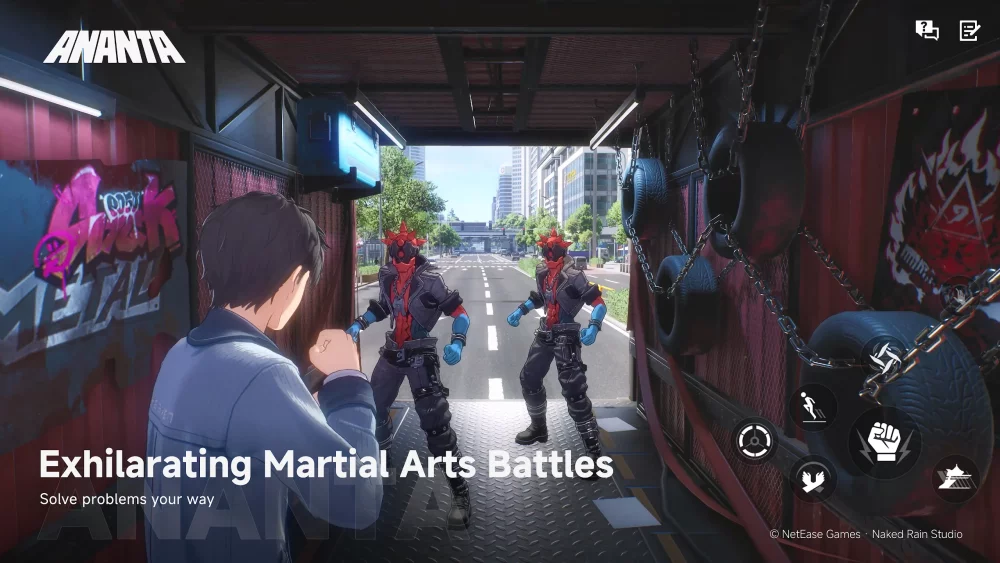
In ANANTA, movement is not merely a method of getting from point A to point B; it is the fundamental pillar of your combat effectiveness. Unlike traditional shooters that reward static, cover-based play, ANANTA leverages a sophisticated physics engine that turns every wall, slope, and piece of debris into an extension of your arsenal. To succeed, players must transition from a "point-and-click" mentality to a "flow-state" approach where velocity equals survival. This guide breaks down the mechanics of momentum, environmental traversal, and combat physics to help you dominate the arenas of ANANTA.
Understanding Momentum as a Primary Combat Mechanic
In ANANTA, your character’s velocity is a defensive resource. The game’s physics engine makes it difficult for enemies—and AI—to track targets moving at high speeds with unpredictable trajectories. When you maintain a high velocity, you effectively decrease the amount of time an opponent has to land a clean shot on you.
The Flow State
To master momentum, you must treat your character’s movement as a rhythmic loop rather than a series of disjointed actions.
- Chain Your Inputs: Avoid "dead stops." Every time you stop moving, you reset your momentum and become a stationary target. Instead, chain your slides, jumps, and dashes into a continuous loop.
- The Physics Buffer: The engine calculates your trajectory based on your current velocity. By maintaining speed, you can "drift" around corners or carry momentum through a vault, allowing you to reposition faster than the game’s default turn speeds might suggest.
- Target Manipulation: High-speed movement forces enemies to compensate for lead-time. By weaving in and out of cover while maintaining a sprint, you manipulate the enemy’s targeting reticle, creating "flicker" windows where you are nearly impossible to track effectively.
Exploiting Environmental Traversal Mechanics
The environment in ANANTA is a dynamic participant in every fight. Experienced players view the architecture of a map not as a backdrop, but as a series of acceleration pads and flanking vectors.
Key Traversal Techniques
| Traversal Action | Strategic Benefit | Tactical Use Case |
|---|---|---|
| Wall-Sliding | Retains speed during turns | Perfect for navigating tight urban corridors without losing pace. |
| Kinetic Vaulting | Clears low cover instantly | Use this when closing the distance on an entrenched opponent. |
| Surface Bouncing | Redirects momentum | Essential for escaping focus fire by ricocheting off walls. |
| Verticality Leaps | Rapid elevation change | Breaks line of sight and forces enemies to look upward. |
When you utilize these mechanics, you aren't just moving; you are pathing through the environment to create angles that opponents cannot cover. If you find yourself in an open area, look for vertical surfaces to "wall-run" or graze; this adds a directional shift to your movement that is notoriously difficult for other players to predict.
Managing Physics-Based Combat Interactions
ANANTA features a robust physics engine that governs how projectiles and objects interact. This is your most powerful tool for crowd control and defensive manipulation.
Using the Environment as a Shield
If a firefight turns against you, do not just retreat—rearrange the battlefield. Certain objects in the environment are physics-enabled, meaning they can be displaced by your abilities or explosive impacts.
- Dynamic Cover: If you encounter heavy debris, use your character’s abilities to shift it into a choke point. This creates a physical barrier that enemies must navigate around or destroy, buying you precious seconds to reload or flank.
- Environmental Triggers: Always look for structural weaknesses in the map. Some areas feature supports or hanging objects that, when triggered, can collapse to block paths or deal area-of-effect damage to enemies.
Why Physics Matter in Duels
When engaging an enemy, consider the "Physics Exit Strategy." Before you commit to a fight, identify the nearest ledge or high-traction surface. If your health drops, your exit strategy should involve using that surface to gain a boost in speed, effectively launching yourself into safety rather than just running away.
Transitioning from Exploration to Combat
The hallmark of an elite ANANTA player is the ability to maintain "combat fluidity." Many players fall into the trap of stopping to scout or observe before engaging. In ANANTA, the scout phase should happen while you are in motion.
The "Shoot-and-Flow" Methodology
- Continuous Scouting: Use your traversal abilities (like sliding or jumping) to peek around corners rather than walking. This keeps your momentum high and your hitbox moving.
- Mid-Motion Accuracy: Practice your aim while in the air or sliding. The game is designed to support shooting during these maneuvers, and mastering this is the primary skill gap between average and top-tier players.
- The Combat Reset: If a skirmish goes south, do not stop to heal in the open. Use your momentum to "re-engage" from a different vertical plane. By the time the enemy turns to track your new position, you should already be halfway through a second traversal chain.
Common Mistakes to Avoid
Even experienced gamers often struggle when transitioning to a physics-heavy title like ANANTA. Avoid these common pitfalls to stay ahead of the curve:
- The "Static Aim" Trap: Do not stop moving just to line up a perfect shot. If you find yourself standing still for more than a second, you are losing the battle. Learn to lead your shots while moving rather than relying on a stationary stance.
- Over-relying on Default Pathing: Players often follow the obvious floor paths. Use your verticality options to take the high road or the wall-path. The element of surprise in ANANTA is almost entirely vertical.
- Ignoring Physics Cues: If you see debris shifting or a physics object near an enemy, prioritize interacting with it. A well-timed push or explosive impact can turn a losing 1v2 into a clean wipe.
Final Decision-Making Strategy
When you are in the heat of a high-stakes match, your decision-making should be binary: Am I maintaining speed, or am I a target?
If you are not actively navigating the environment to create a new angle or maintain your momentum, you are effectively choosing to lose. ANANTA is a game of constant adjustment. The map is not a static container; it is a tool. By internalizing the physics of your movement and the reactivity of your environment, you will find that the game rewards aggressive, fluid playstyles that completely bypass traditional combat constraints. Focus on the flow, keep your momentum, and always look for the next surface to use.

Free ANANTA Codes
Current active codes and how to redeem them.

Emily Johnson
Emily writes practical mobile strategy guides with a focus on resource planning, base progression, and the early decisions that shape a long-term account.
COMMUNITY
Player Comments
107 players commented on this guide.
Nice guide. I am checking the other ANANTA articles next.
I tried this today and it worked better than my old setup.
This saved me time in the early game.
The tips are practical and easy to follow.