
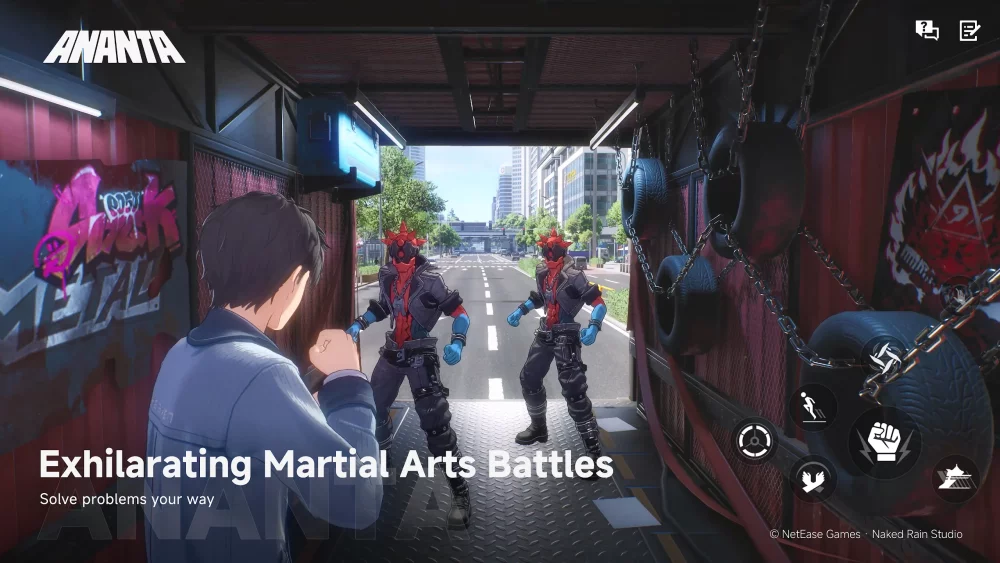
In the strategic simulation environment of ANANTA, your ability to manage resources extends far beyond currency and infrastructure; it encompasses the intangible, high-stakes realm of social interaction. Mastering rapid-fire dialogue is not merely about choosing the right words—it is about controlling the rhythm of the game’s "tiki-taka" interaction system. When you successfully navigate these fast-paced exchanges, you unlock exclusive rapport bonuses, hidden narrative paths, and significant resource advantages that slower players often miss.
This guide provides the expert framework required to transition from a reactive participant to a master of conversational flow, ensuring you maintain a competitive edge in every high-pressure dialogue sequence ANANTA throws your way.
The Mechanics of Reactive Dialogue Timing
Success in ANANTA’s social encounters is dictated by your reaction threshold. The game utilizes a proprietary input window system that demands split-second decision-making. To excel, you must move beyond reading every character of text and instead practice "anticipatory listening."
Anticipatory listening involves identifying the core intent of an NPC’s statement within the first few words of their delivery. By analyzing the tone, keywords, and character archetype, you can often predict the necessary response before the game’s UI even highlights your options.
- Visual Cues: Watch for character animations—a slight lean forward or a change in facial expression often precedes a dialogue prompt.
- Audio Triggers: Pay attention to the cadence of the NPC’s voice; a shift in pitch or speed is a reliable indicator that an interaction window is opening.
- Pre-loading Input: Keep your cursor or selection key hovering over the center of the UI. If you are playing on a controller, maintain a light touch on the directional inputs to ensure immediate execution as soon as the prompt appears.
Maintaining Conversational Momentum
Momentum is a hidden, critical mechanic in ANANTA. When you chain high-speed responses consecutively, you trigger "Flow Bonuses." These bonuses serve as a multiplier for your rapport growth and significantly increase the success rate of persuasion attempts. If you hesitate, the "flow" breaks, resetting your bonus and potentially forcing the NPC into a defensive or impatient state.
To sustain this momentum, adopt these professional strategies:
- Reduce Decision Fatigue: In low-to-mid stakes conversations, do not agonize over the "perfect" response. Choose the option that aligns with your current character build (e.g., Diplomatic vs. Aggressive) and commit immediately.
- Pattern Recognition: NPC dialogue trees in ANANTA are structured. After a few encounters, you will recognize that specific NPCs favor certain response styles. Memorizing these patterns allows you to automate your responses, freeing your cognitive load for more complex strategy.
- The Buffer Strategy: If you find yourself losing rhythm, use the millisecond gap between the NPC finishing their sentence and the UI prompt appearing to mentally categorize the next likely response.
Utilizing Verbal Counters as Tactical Weapons
In advanced ANANTA gameplay, dialogue options are essentially tactical abilities. You must treat them with the same consideration you would apply to resource allocation or project management. A "Verbal Counter" is a specific response designed to dismantle an NPC’s argument or emotional stance, immediately granting you the upper hand.
- Emotional Mirroring: If an NPC approaches you with aggression, a "conciliatory" response acts as a soft-counter, lowering their hostility and opening up more favorable trade options.
- Logical Rebuttal: When facing NPCs with high intellectual stats, avoid emotional appeals. Use precise, evidence-based responses to counter their arguments.
- Humorous Deflection: Use this to break the tension in high-stakes negotiation scenes. It is particularly effective against NPCs who are stuck in a "rigid" or "authoritative" state, as it forces them to reset their conversational path.
Managing Trade-offs and Avoiding Impulse Failure
The danger of a high-speed playstyle is "impulse failure." Because ANANTA is highly reactive, selecting an option based purely on speed can lead to narrative pitfalls or irreparable damage to your faction reputation.
The Golden Rule of Speed vs. Context:
- Use Speed When: The UI displays a countdown timer, a "social pressure" indicator, or when you are dealing with known repetitive NPCs where the outcome is predictable.
- Use Deliberation When: You are in a "Major Story Node." These are identifiable by unique background music changes or the absence of a time-limited prompt. In these instances, the game is checking for your ability to synthesize information rather than your raw reaction time.
If you ever feel the urge to rush a conversation that feels "heavy" or unique, stop. Taking an extra two seconds to read the text in these instances prevents you from being locked out of critical late-game alliances.
Optimizing for Late-Game Social Progression
As you reach the mid-to-late stages of ANANTA, NPC responses become layered with subtext. You can no longer rely on simple reaction speed; you must invest in your character’s social stats.
- Dialogue Clarity Buffs: Seek out gear or upgrades that extend the "response window." These items provide an extra buffer, allowing you to maintain a high-speed playstyle even when the game increases the difficulty of the prompts.
- Social Analytics Perks: Some late-game skills allow you to "preview" the intent of a response before selecting it. This is the ultimate tool for high-level play, as it removes the risk of impulse failure entirely.
Consistency is your primary goal. Use every interaction—even with minor NPCs—as a training ground for your reaction timing. By internalizing these habits, you transform the social layer of ANANTA from a potential obstacle into a powerful resource that accelerates your overall progression. Remember: in the world of ANANTA, the person who controls the conversation controls the outcome.

Free ANANTA Codes
Current active codes and how to redeem them.

Michael Smith
Michael covers live-service games, events, reward systems, and efficient daily routines, turning frequent updates into clear actions for players.
COMMUNITY
Player Comments
97 players commented on this guide.
Nice guide. I am checking the other ANANTA articles next.
Good guide for ANANTA players. The strategy part was useful.
I wish I had read this before upgrading the wrong thing.
The tips are practical and easy to follow.