
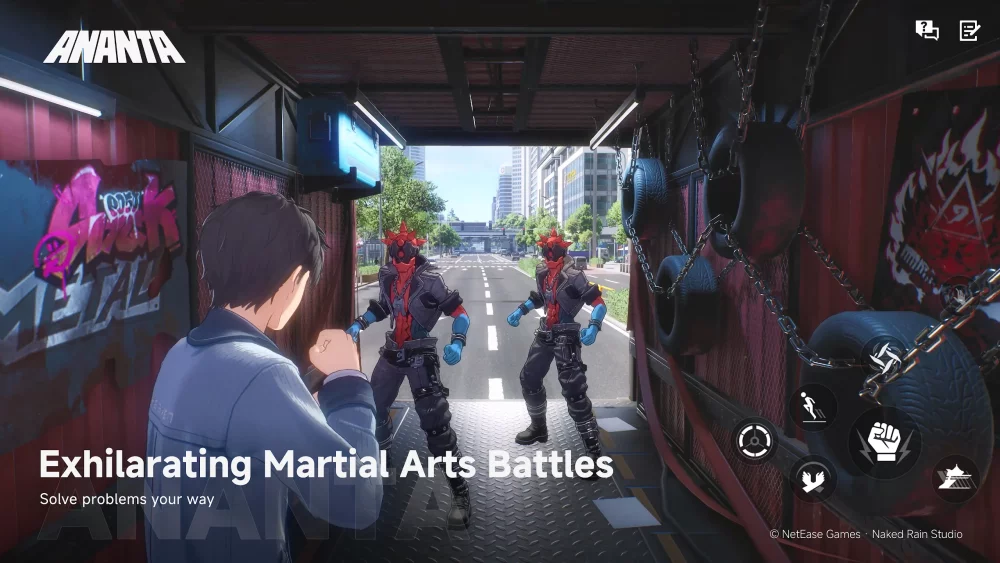
Transitioning into the secondary city of ANANTA represents a significant shift in gameplay. Unlike the introductory zones, which are designed to teach foundational mechanics, the second city introduces a dense, high-fidelity urban environment where navigation, NPC density, and strategic prioritization become the primary drivers of success. For players aiming to maintain a competitive edge, understanding how to parse this complexity is not just an advantage—it is a necessity for efficient progression.
Navigating Dense Urban Complexity
The secondary city in ANANTA is defined by its verticality and structural density. Players who rely solely on ground-level traversal will find themselves hampered by heavy NPC traffic and cluttered storefronts, which often obscure quest-critical paths. To master this, you must treat the city like a three-dimensional puzzle.
- Verticality as a Tool: Always look for fire escapes, construction scaffolding, and rooftop access points. These elevated pathways act as "high-speed transit lanes," allowing you to bypass ground-level congestion and gain a clear view of the surrounding architecture.
- Architectural Cues: Developers have placed subtle visual signals—such as specific color-coded piping, lighting patterns, or worn textures—to indicate climbable surfaces. If you see a persistent light source on a wall or a path of debris leading upward, it is almost certainly a designed shortcut.
- The Vantage Point Strategy: Before committing to a deep dive into a new district, spend the first few minutes of your arrival scouting from the highest accessible point. Mapping major transit corridors in your mind before entering the "streets" significantly reduces the cognitive load caused by the city’s high-density design.
Decoding the NPC Ecosystem
The population in the second city of ANANTA is significantly more interactive and "eccentric" than in previous zones. These NPCs are not merely window dressing; they are the primary conduits for lore, side-quest acquisition, and regional secrets.
Categorizing NPC Interactions
Not all NPCs are created equal. To manage your time effectively, categorize them based on their visual presentation and behavior:
- Fixed Informants: These NPCs typically occupy specific, high-traffic corners or market hubs. They often provide information on district-specific events or hidden resource caches.
- Dynamic Walkers: These characters move along set paths. Observing their patrol patterns can reveal shortcuts or hidden entrances to locked buildings.
- Reactive NPCs: These characters respond to your movement and proximity. If an NPC follows you with their gaze or reacts to your presence, they are likely tied to a specific quest chain.
Always observe before interacting. The game features a deep reactive system where your timing—such as approaching during a shop's closing hours versus peak market hours—can influence the dialogue options and rewards you receive.
Prioritizing Environmental Observability
"First-time confusion" is a common hurdle for players in ANANTA. The sheer volume of visual data in the second city can lead to sensory overload. To mitigate this, adopt a "Sector-Based Exploration" approach. Do not attempt to explore the entire city at once. Instead, divide the map into distinct visual zones based on architecture (e.g., the Industrial District, the Neon Market, the Residential Spires).
The Urban Exploration Checklist
When entering a new district, run through this mental checklist to maintain your focus:
- Triangulation: Identify at least three permanent landmarks (towers, statues, or major structures) to maintain your orientation without relying on the mini-map.
- Density Mapping: Note where NPC density is highest. In ANANTA, high density usually correlates with high-value trade zones or social hubs.
- Hazard Assessment: Identify areas where environmental physics or debris limit your movement speed, and mark these as "avoid" zones for future high-speed travel.
Strategic Trade-offs: Immersion vs. Efficiency
The tension between deep world-building and rapid progression is a core theme of ANANTA. Because the second city is so dense, it is easy to lose hours to optional conversations and atmospheric exploration.
- For Fast Progression: If your goal is to hit financial or story milestones, focus exclusively on NPCs with unique dialogue markers or those positioned near your primary objective paths. Ignore the "background" population; their dialogue is flavor text and will not yield mechanical advantages.
- For Resource Optimization: If you are struggling with performance on lower-end systems, move away from the high-density NPC hubs. Use rooftops to navigate between points. The game’s engine often renders street-level NPC AI with higher priority; by staying elevated, you can maintain a more stable frame rate while traversing the city.
Overcoming Common Beginner Mistakes
Many players fall into the trap of "map-chasing," or attempting to clear every icon on the screen as they appear. In the second city of ANANTA, this is a recipe for burnout.
- Ignoring Verticality: The biggest mistake is staying on the streets. You are fighting the city's design by doing so. If you feel "stuck" or "lost," look up.
- Over-Interaction: Do not engage every NPC. Learn to identify the "anchor NPCs" who provide the most value. If an NPC’s dialogue feels repetitive or generic, move on immediately.
- Ignoring Time-of-Day: Certain NPCs or shortcuts are only available during specific in-game time cycles. If a path or door is locked, it may not be a bug; check your game clock and return at a different hour.
Conclusion: Mastering the Flow
Mastering the second city in ANANTA is about managing flow. Whether you are choosing between a rooftop shortcut to save time or engaging in a deep conversation to unlock a faction quest, every decision should be measured against your current objective. By utilizing the verticality of the environment, categorizing your NPC interactions, and focusing your efforts on specific districts at a time, you will turn the chaotic, dense landscape of the city into your greatest advantage. Stay focused, look upward, and prioritize the encounters that matter to your long-term success.

Free ANANTA Codes
Current active codes and how to redeem them.

Michael Smith
Michael covers live-service games, events, reward systems, and efficient daily routines, turning frequent updates into clear actions for players.
COMMUNITY
Player Comments
157 players commented on this guide.
This saved me time in the early game.
The explanation is clear, especially for beginners.
Can you add more details about strategy in a future update?
Nice guide. I am checking the other ANANTA articles next.