
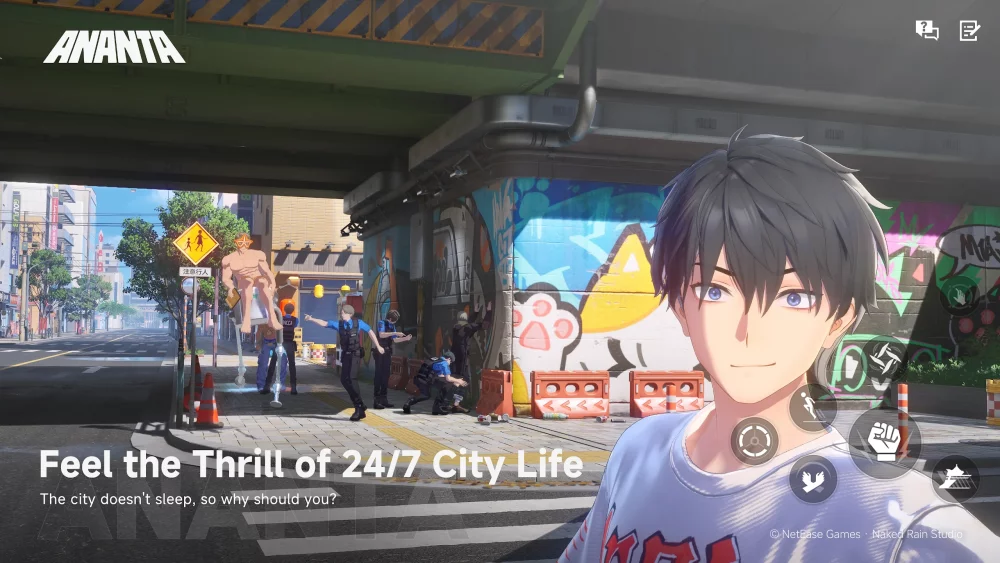
Mastering the environment in ANANTA is the single most important skill for players looking to transition from novice to elite status. Unlike standard simulation or action titles, ANANTA features a dynamic, high-fidelity urban landscape that reacts to your presence, movement, and reality-warping inputs in real-time. Success is not found in static planning, but in the fluid synchronization of your movement abilities with the shifting geometry of the city. By leveraging structural distortion, managing your cooldowns, and identifying high-value interaction zones, you can turn the world itself into your greatest weapon.
Decoding the Mechanics of Structural Distortion
The core of navigation in ANANTA lies in understanding that the urban environment is "reactive." Rather than searching for pre-built paths, you must learn to trigger structural distortions to generate your own routes.
These distortions occur when the game’s reality-warping engine detects specific player inputs near unstable architectural nodes. To master this, you must treat traversal as a rhythmic exercise. When approaching a sector, observe the "pulsing" frequency of nearby structures. Surfaces that emit a faint, rhythmic glow are nodes that can be manipulated.
Pro Tip for Traversal: Never stop moving when initiating a distortion. If you stand still while a surface begins to shift, you trigger a "transition lock" animation that leaves you stationary and vulnerable. Instead, maintain forward momentum—chain your dashes and jumps into the moment of impact with the distortion point. This ensures you are already transitioning to the new geometry the instant it snaps into place.
Advanced Cooldown Management: Utility vs. Combat
One of the most common mistakes players make in ANANTA is conflating navigation tools with combat utilities. Your reality-warping abilities share a singular cooldown pool. If you exhaust your charges to bypass a simple platforming gap, you will find yourself defenseless during a sudden enemy ambush.
To maintain a competitive edge, adopt the "30% Rule":
- The 30% Rule: Never dip below 30% of your total reality-warping capacity unless you are in a guaranteed safe zone.
- Navigation Priority: If a path can be traversed through traditional parkour or standard movement, reserve your warping abilities for vertical shortcuts or emergency escapes only.
- Combat Priority: In combat, use your charges to "collapse" cover for enemies or to create instant sightline barriers. Altering the geometry of a room during a firefight can force enemies to reposition, exposing them to your flank.
Identifying and Utilizing Interaction Zones
Not every inch of ANANTA is malleable. The world is built with "Interaction Zones"—specific architectural clusters that hold the weight of the city’s physics. Learning to identify these zones early in your exploration phase is the key to efficient progression.
- Visual Signatures: Look for structural seams where the textures appear slightly disjointed or "jittery." These are high-density interaction nodes.
- Tactical Anchors: When entering a new arena, immediately identify the central pillars or floor segments that can be warped. In a losing engagement, these are your "reset buttons." A well-timed collapse of an arena floor can split an enemy squad, allowing you to pick them off one by one.
- Peripheral Scanning: Focus your attention on the edges of combat arenas. Developers have placed the most potent environmental assets—such as volatile structural nodes—along the perimeter to reward players who utilize the full scope of the battlefield rather than standing in the center.
Performance Optimization for High-Level Play
The visual complexity of ANANTA is intense. When you trigger multiple reality-warping events in rapid succession, you risk performance "stutter," which can be fatal in precision-heavy platforming segments.
To maintain peak performance:
- Pace Your Inputs: Avoid "spamming" your abilities. Instead, execute one high-impact, deliberate change at a time. This allows the game engine to stabilize the geometry shift before you initiate the next movement.
- Density Awareness: In highly active urban zones where the game is already processing significant environmental background shifts, limit your personal manipulation to non-essential movements. If the area is already chaotic, focus on movement over environmental alteration to keep your frame rate fluid and your inputs responsive.
Strategic Decision Making: When to Warp
The decision to warp should always be based on your current objective. Use this hierarchy to guide your decisions:
- Escape & Survival: If your health is critical, use environmental manipulation to create an immediate LOS (line-of-sight) break. Creating a wall between you and the enemy is more important than traversing to the high ground.
- Aggressive Positioning: Use distortion to create verticality where none exists. If you can force the terrain to elevate you above the enemy, you gain a massive accuracy bonus and a wider field of view.
- Resource Efficiency: If you are exploring for loot or mission objectives, prioritize pathfinding that requires the least amount of warping. Save your "Reality Charges" for the combat encounters that occur at the end of these routes.
Mastering ANANTA: Summary Checklist
- Scan for Pulses: Always identify interactive geometry before starting a mission.
- Maintain Momentum: Never hesitate during a shift; chain your movement abilities to avoid lock-animations.
- Save Your Charges: Keep your reality-warping energy for combat resets and emergency cover.
- Optimize for Hardware: Don't overload the engine with rapid-fire inputs in high-density areas; prioritize steady, deliberate changes.
By following these strategies, you will find that the urban landscape of ANANTA ceases to be an obstacle and becomes an extension of your own tactical kit. Mastery comes not just from knowing the world, but from knowing exactly when to change it to suit your needs.

Free ANANTA Codes
Current active codes and how to redeem them.

Emily Johnson
Emily writes practical mobile strategy guides with a focus on resource planning, base progression, and the early decisions that shape a long-term account.
COMMUNITY
Player Comments
51 players commented on this guide.
The explanation is clear, especially for beginners.
Good guide for ANANTA players. The strategy part was useful.
Can you add more details about strategy in a future update?
I tried this today and it worked better than my old setup.