
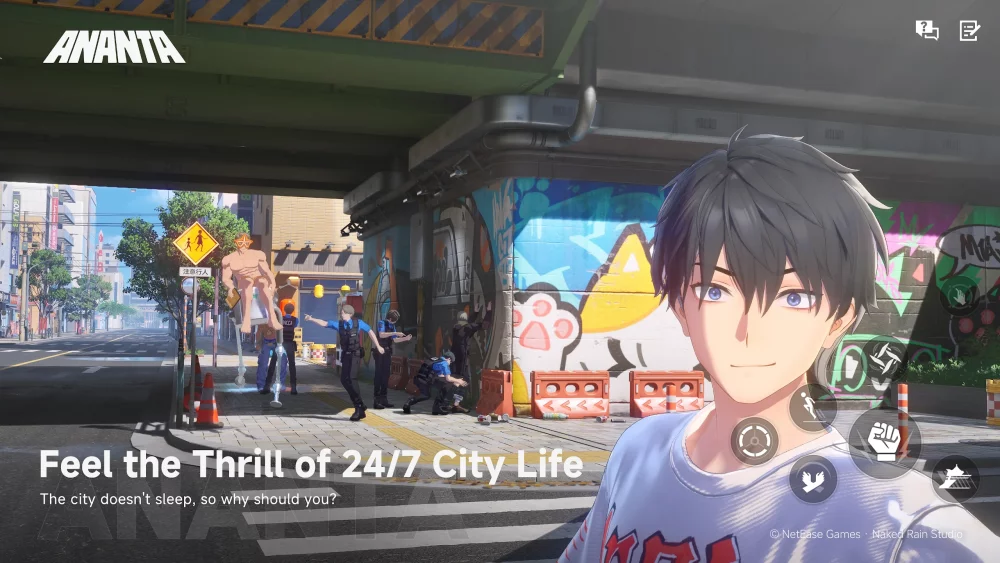
In the strategic simulation world of ANANTA, movement is more than just getting from point A to point B—it is a core mechanical skill that dictates your efficiency, project delivery speed, and overall competitive edge. Because ANANTA features dense, multi-tiered urban environments, players who master the fluidity of their character’s traversal can bypass bottlenecks, reach hidden resource nodes, and maintain the momentum necessary for high-level play.
This guide provides an authoritative breakdown of the movement systems in ANANTA, offering strategies to turn the city’s complex geometry into your greatest asset.
Mastering Momentum and Rhythmic Movement
Fluidity is the foundation of efficient exploration in ANANTA. The game’s engine rewards players who view movement as a continuous loop rather than a series of disjointed actions. To maximize your speed, you must move beyond basic sprinting and learn to chain your animations.
- Dash Canceling: By initiating a dash at the tail end of a standard movement cycle, you can bypass minor obstacles without losing your velocity. This is essential for navigating narrow corridors where traditional turning is sluggish.
- The Velocity Arc: When jumping, aim to time your subsequent actions at the apex of the arc. Chaining jumps at this peak allows you to cover significantly more ground than jumping from a stationary or low-velocity position.
- Animation Synchronization: Pay close attention to your character’s footwork. ANANTA features subtle visual cues that indicate when your character is ready for a momentum-boosting dash or a wall-run transition. Aligning your inputs with these frames prevents "stutter" and ensures smooth travel.
Verticality: Navigating the Multi-Tiered City
The architecture in ANANTA is layered, with high-value points and hidden shortcuts frequently tucked away above the street level. Relying solely on ground-level movement is the most common mistake for new players, as it forces you through congested main thoroughfares.
Identifying Vertical Indicators
Look for structural markers such as lighting patterns, scaffolding, or protruding signage. These are not merely aesthetic; they are designed as anchor points for vertical traversal. If you find yourself blocked by an obstacle, scan the immediate vertical space rather than looking for a way around; the game is designed to reward vertical exploration with easier access to restricted areas.
The Physics of Landing
ANANTA uses a physics-based movement model, meaning your descent matters as much as your ascent. When dropping from a great height:
- Look for Sloped Surfaces: Landing on a slope can mitigate landing recovery animations, allowing you to maintain your momentum immediately upon impact.
- Edge Precision: If you are targeting a narrow ledge, ensure you are not sprinting at the moment of contact, as high-velocity collisions can cause your character to "bounce" off the geometry.
Strategic Pathing Through Urban Density
To maintain a competitive pace in ANANTA, you must treat your pathing as a strategic decision rather than a reactive one. The shortest distance between two points is rarely a straight line on the map; it is usually the route with the fewest interruptions.
- Rooftop Dominance: Whenever a mission or resource node allows, transition to the rooftops. This removes you from the "traffic" of ground-level entities and provides a superior vantage point to scout for potential hazards or secondary objectives.
- Alleyway Shortcuts: Many of the game’s most efficient routes are hidden in the service corridors between main city sectors. These alleys are often ignored by less experienced players, making them ideal for avoiding competition or crowded zones.
- Map-Based Verticality: When using your map, prioritize routes that indicate elevation changes. If your target is in a different sector, check if a rooftop or elevated rail system provides a direct line of sight rather than a winding path through the streets.
Managing Risks and Traversal Limitations
While speed is critical, over-extending your traversal capabilities is a common trap. ANANTA’s movement systems are governed by energy and stamina constraints that dictate how long you can perform high-intensity maneuvers.
Energy Management
Sustained wall-running and consecutive dashing consume your energy bar rapidly. If your energy hits zero while you are in a precarious position, you will be forced into a standard movement state, leaving you vulnerable to delays or environmental hazards. Always plan your "landing zones" before committing to a long-distance jump or a complex traversal maneuver.
Hard Barriers and "Dead Zones"
Not every surface in ANANTA is intended to be climbed. Attempting to navigate non-traversable geometry can result in a sudden loss of momentum, forcing a complete restart of your movement sequence. Spend time in low-stakes areas to "map" the physical limits of the environment. Understanding which textures are solid versus which are climbable will save you significant time during high-pressure scenarios.
Expert Strategies for Competitive Advantage
The true masters of ANANTA differentiate themselves through "Proactive Positioning." This means choosing a route that not only gets you to your destination quickly but also leaves you in a position of strength once you arrive.
- The Vantage Advantage: If you are moving toward a project development site, try to arrive from an elevated position. This gives you a broader field of view, allowing you to spot potential issues or resource fluctuations before you commit to your landing.
- Predictive Pathing: Study the flow of the city during different phases of the game. Certain high-traffic areas become bottlenecks during specific project cycles. Use this knowledge to develop "off-peak" routes that allow you to traverse these zones without interference.
By mastering these mechanics—rhythmic movement, vertical awareness, and strategic pathing—you will significantly reduce your transit times and maximize your efficiency in ANANTA. Remember that in a simulation-heavy title, your ability to move through the world is a direct reflection of your ability to manage your objectives. Practice these techniques in the game's open areas, and you will soon find that the urban sprawl of ANANTA is no longer an obstacle, but a tool for your success.

Free ANANTA Codes
Current active codes and how to redeem them.

Michael Smith
Michael covers live-service games, events, reward systems, and efficient daily routines, turning frequent updates into clear actions for players.
COMMUNITY
Player Comments
40 players commented on this guide.
This helped me understand strategy much better.
Nice guide. I am checking the other ANANTA articles next.
I wish I had read this before upgrading the wrong thing.
Good guide for ANANTA players. The strategy part was useful.