
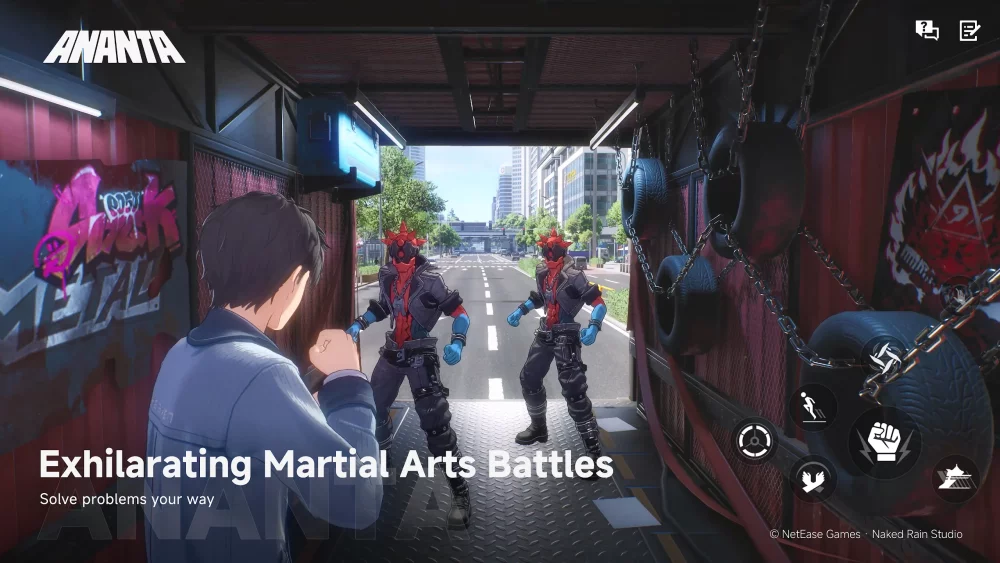
Success in ANANTA is not merely about mechanical skill or combat prowess; it is defined by your ability to interpret the game’s sophisticated visual language and manage long-term resources effectively. Unlike many simulation-heavy titles that rely on cluttered user interfaces, ANANTA uses high-fidelity environmental design to guide your decision-making. By learning to decode the game’s artistic direction, you can identify interactive elements, anticipate combat encounters, and streamline your resource collection, granting you a significant competitive advantage from the moment you begin.
Decoding the Visual Language of ANANTA
The core design philosophy of ANANTA centers on "visual priority." The developers have moved away from excessive UI markers in favor of environmental storytelling, where the world itself tells you what is important.
To master this, you must train yourself to look past the surface-level beauty and focus on three key visual indicators:
- Lighting Contrast: High-importance interactables are often bathed in specific light temperatures or shadows that contrast with the surrounding architecture. If a door or a terminal looks slightly "brighter" or "sharper" than the rest of the wall, it is almost certainly a progression node.
- Texture Density: Objects that you can manipulate or loot often feature a higher texture density or a distinct material finish (such as metallic or reflective surfaces) compared to the static background assets.
- Movement Anchors: The environment is engineered to guide the eye. Look for structural lines—cables, pipes, or building ledges—that lead toward objectives. These are not merely decorative; they serve as silent navigational beacons.
Leveraging High-Fidelity Environmental Cues
In ANANTA, the environment is your primary navigation tool. The game’s rendering techniques distinguish between traversable terrain and purely cosmetic geometry. Understanding this distinction is the difference between fluid movement and getting stuck on invisible walls.
When navigating vertical or complex urban spaces, watch for "environmental wear." Surfaces that are intended for climbing or traversal often exhibit signs of interaction—scuff marks, different color palettes, or specific placement of debris. By identifying these "pathway markers," you can navigate high-detail environments with speed and precision, bypassing the need to check your map constantly. This spatial awareness is particularly useful during high-pressure scenarios where efficient movement can save your mission.
Identifying Key Character Design Elements
ANANTA utilizes a "silhouette-based" design system for NPCs and enemies. Because the game focuses on strategic simulation, understanding the threat level or role of an entity before combat begins is vital. Every character model is built with specific visual cues that dictate their behavioral patterns:
- Bulk and Silhouette: Heavy, blocky armor silhouettes almost always signify high-HP, slow-moving units. These enemies usually act as anchors for a group.
- Mobility Gear: Characters with exposed limbs or streamlined, slender silhouettes are typically high-speed, glass-cannon units. These should be your primary targets to prevent them from flanking your position.
- Tactical Accents: Pay attention to color-coded gear. If an enemy has glowing components, that is often a visual indicator of an elemental affinity or a weak point. Targeting these specific highlighted areas during the first few seconds of an engagement will significantly reduce your resource expenditure on ammunition and health kits.
Adapting to the Game’s Atmospheric Pacing
The pacing of ANANTA is intentionally rhythmic, oscillating between intense, high-speed encounters and periods of methodical exploration. The art team uses "visual density" to control this flow.
When you enter a zone with dense, complex visual clutter, the game is signaling you to slow down. These areas are usually designed for investigation, puzzle-solving, or resource gathering. Conversely, when the environment opens up and visual density drops, this is a clear cue that the game expects high-speed traversal or combat.
Pro Tip: Do not fight the environment. If you find yourself struggling to navigate, you are likely rushing through an area designed for discovery. Shift your perspective, scan the environment for the high-priority visual cues mentioned above, and adjust your pace to match the design of the district.
Strategic Resource Management and Progression
Resource management in ANANTA is tied directly to your ability to recognize high-value assets within the world. Because the game rewards efficiency, players who spend time "visual looting"—identifying the most valuable resources without needing to interact with every single container—will progress significantly faster.
The Efficiency Hierarchy:
- High-Visibility Assets: These are items that stand out through lighting or unique texture. Prioritize these, as they are almost always tied to mid-to-late-game project development.
- Structural Components: Found near industrial-looking architecture. These are essential for long-term base building.
- Consumables: Often hidden in low-light, secondary areas. Only seek these out when your health or tactical supplies are low to avoid wasting time.
By focusing on these tiers, you avoid the common trap of inventory bloat, where players fill their limited slots with low-value junk. Managing your inventory based on "visual importance" ensures that you are always prepared for the next major project milestone.
Common Mistakes to Avoid
Even experienced simulation players often falter by falling into these habits:
- Over-reliance on the UI: Players who stare at the map markers miss the subtle cues the environment provides. Trust the game's world-building; it is more accurate than any icon.
- Ignoring Lighting Cues: Many players treat lighting as "flavor." In ANANTA, lighting is information. If a room looks different from the previous one, it is because the game is signaling a shift in gameplay mechanics.
- Static Playstyles: Trying to force a "tank" playstyle in a high-mobility environment will lead to inefficiency. Always evaluate the enemy silhouettes upon entering a new zone and adjust your loadout accordingly.
Final Thoughts for Competitive Edge
To maintain a competitive edge in ANANTA, treat the game's visuals as a language. The more fluent you become in this language, the less cognitive load you place on yourself during complex missions. By mastering the environmental cues, you reduce the time required for decision-making, allowing you to focus your energy on long-term resource management and strategic planning. Start your journey by observing, not just playing; the world of ANANTA is designed to reward the observant player above all else.

Free ANANTA Codes
Current active codes and how to redeem them.

James Brown
James focuses on Android gaming on PC, emulator setup, controls, performance tuning, and practical troubleshooting for longer play sessions.
COMMUNITY
Player Comments
147 players commented on this guide.
This helped me understand early game much better.
Nice guide. I am checking the other ANANTA articles next.
Good guide for ANANTA players. The early game part was useful.
Can you add more details about early game in a future update?