
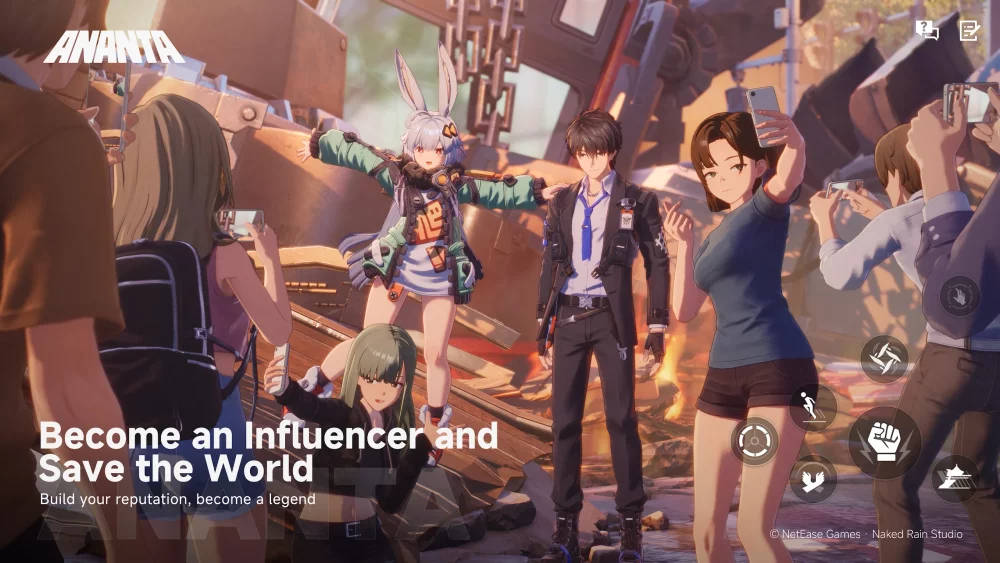
In ANANTA, visual fidelity is not merely a cosmetic choice; it is a fundamental gameplay mechanic. The game’s design philosophy relies on "stylized realism," where every character silhouette, lighting shift, and particle effect serves as a critical feedback mechanism for the player. By learning to decode the visual language of ANANTA, you can transition from reactive play to proactive, high-level tactical execution. Whether you are managing long-term resource projects or engaging in fast-paced urban combat, understanding how the game communicates data through its visuals is the key to maintaining a competitive edge.
Decoding the Visual Language of Character Design
ANANTA utilizes distinct character silhouettes and high-contrast color palettes to ensure that players can identify unit roles at a glance. In a game that prioritizes strategic simulation, being able to distinguish between a support-oriented unit and a front-line damage dealer in a cluttered, neon-lit urban environment is essential.
- Silhouette Differentiation: Developers have utilized distinct, exaggerated character profiles to ensure that players never mistake a high-mobility character for a tank. When you are managing a squad in the heat of a mission, these shapes act as an immediate "at-a-glance" status report for your team’s capabilities.
- Color Palette Synergy: Characters are often grouped by thematic color schemes that mirror their elemental or functional affinity. Players who build squads with aesthetic synergy—matching color patterns—often find that their team’s tactical synergy follows suit, as these groupings typically share compatible cooldown and resource-cost structures.
- Tactical Legibility: The use of sharp lines and vibrant, high-contrast lighting ensures that, regardless of how complex the background textures become, your units remain the primary focus. This legibility allows for precise positioning, preventing the "visual noise" that plagues many lesser-optimized titles.
Evaluating Fidelity in Combat and Exploration
The promotional material for ANANTA highlights an engine capable of rendering complex lighting, which directly impacts how you interact with the world. This is most apparent in the interplay between shadows and neon-drenched urban sectors.
In combat, the game uses animation weight to communicate the mechanical impact of an ability. A heavy, slow attack will feature distinct wind-up frames and secondary particle effects that differ significantly from rapid-fire, low-impact abilities. By observing these animations, you can predict enemy attack patterns long before the damage numbers appear on screen. This allows for superior dodging and timing-based counter-attacks, which are critical for survival in the game’s more punishing difficulty tiers.
Leveraging Aesthetic Cues for Strategic Advantage
One of the most distinctive features of ANANTA is its reliance on environmental feedback rather than an intrusive heads-up display (HUD). The game encourages immersion by signaling opportunities through the environment itself.
- Environmental Signaling: When an area is ready for interaction or a specific objective becomes available, the game often shifts the local lighting or increases the intensity of ambient particles. Seasoned players learn to scan for these subtle shifts instead of constantly checking the map or objective trackers.
- Reducing HUD Dependence: By shifting the focus to visual cues, the developers have created a more "organic" gameplay loop. Players who master these cues will find they have more screen real estate and mental bandwidth to focus on squad placement and resource management, as the "clutter" of standard UI elements is minimized.
- Timing-Based Feedback: The animation quality for abilities provides immediate confirmation of successful inputs. In a strategic simulation, this feedback is essential for understanding if a complex command sequence has been processed by the engine, allowing you to queue your next move without hesitation.
Managing Hardware and Performance for Competitive Play
High-fidelity graphics come with a cost, and ANANTA is no exception. To remain competitive, players must balance visual quality with the performance requirements of their specific hardware.
- Frame Rate vs. Visual Fidelity: In fast-paced encounters, a high and consistent frame rate is vastly superior to high-resolution textures. If you find your inputs feeling "mushy" or delayed, prioritize lowering your post-processing and shadow settings to stabilize your frame rate.
- Visual Noise Management: In the most chaotic combat sequences, the sheer amount of detail can be overwhelming. If you struggle to track enemy movements, consider adjusting the "bloom" and "particle density" settings in the graphics menu. Reducing these creates a cleaner, more legible picture that makes it easier to track threats.
- The "Stylized Realism" Trade-off: Understand that the developers intentionally designed the game to be dense. Learning to "filter" this information—ignoring the background aesthetic to focus solely on the high-contrast movement of enemy silhouettes—is a skill that differentiates casual players from power users.
Adapting to the Evolving Artistic Roadmap
ANANTA is built on a long-term development cycle, meaning the game’s artistic language will grow as new zones and character classes are introduced. As the game expands, expect to see new, recurring visual themes that define specific factions or regions.
- Future-Proofing Your Strategy: When a new update drops, spend time in the training mode observing the animations of new units. Don’t just look at the damage numbers; observe the "weight" of their movements and their color profiles. This will help you integrate them into your existing meta-strategies without disrupting your current flow.
- Consistency in Evolution: While the visual language may evolve, the core design philosophy—legibility and tactical feedback—remains the anchor. By mastering the fundamental visual language today, you ensure that you are prepared for the more complex, visually demanding content that will be added in future patches.
Conclusion: Mastering the Visual Flow
ANANTA rewards players who treat the screen as a source of vital information rather than just a window to a pretty game. By internalizing the relationship between character silhouette, environmental lighting, and animation timing, you remove the guesswork from your decision-making process. Focus on optimizing your hardware for a stable experience, learn to ignore the visual "fluff" in favor of critical combat cues, and stay flexible as the game’s aesthetic evolves. In ANANTA, seeing clearly is the first step toward total strategic victory.

Free ANANTA Codes
Current active codes and how to redeem them.

James Brown
James focuses on Android gaming on PC, emulator setup, controls, performance tuning, and practical troubleshooting for longer play sessions.
COMMUNITY
Player Comments
130 players commented on this guide.
Nice guide. I am checking the other ANANTA articles next.
The explanation is clear, especially for beginners.
This helped me understand resources much better.
This guide answered the exact question I had.