
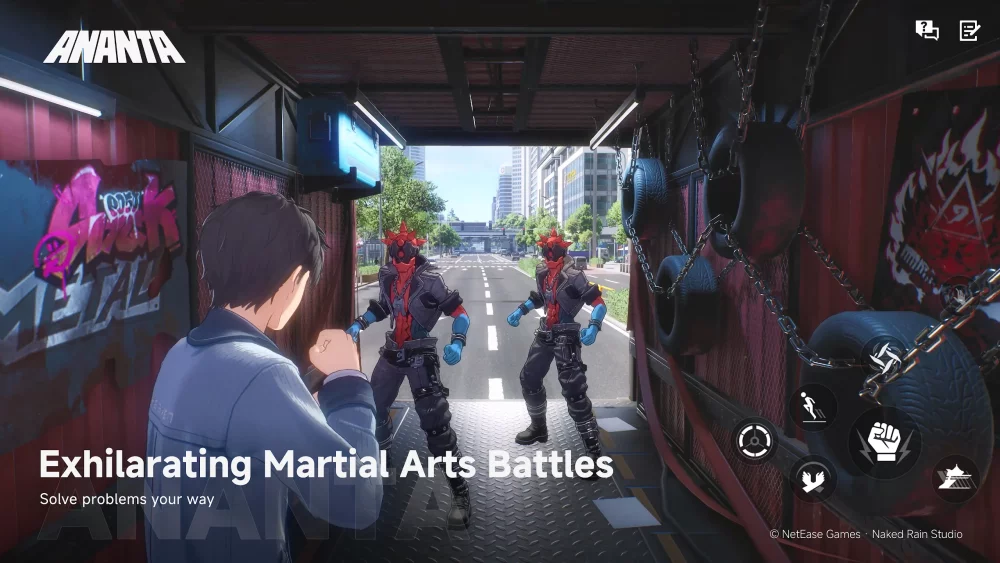
Success in ANANTA is rarely determined by raw combat power alone; instead, it is forged through the strength of the bonds you build with your specialized task force. As the new captain in the sprawling, neon-lit landscape of Nova City, your ability to manage the delicate social dynamics of your crew is the primary engine for progress. In ANANTA, your squad members are not merely tactical units but complex individuals with histories, fears, and personal motivations that dictate their performance in the field.
To excel, you must transition from a commander who simply issues orders to a leader who understands the human element. This guide breaks down how to navigate the hierarchy of Nova City, manage your limited resources, and build a cohesive, loyal team that can handle any threat.
The Mechanics of Social Progression in ANANTA
In ANANTA, social interaction is a core gameplay pillar, not a secondary feature. The game utilizes a "Bond System" that tracks your relationship level with each member of your task force. These levels are influenced by your dialogue choices, the support you provide during downtime, and the decisions you make during high-stakes missions.
- Dialogue Depth: Engaging in meaningful conversations unlocks "Character Arcs." These sequences reveal the backstory of your team members and often provide permanent stat boosts or unique tactical abilities.
- The Trust Gauge: This visual indicator represents how much your team relies on your judgment. High trust levels lead to better performance in combat, as squad members are more likely to execute coordinated strikes without explicit commands.
- Interpersonal Dynamics: Some characters in ANANTA have pre-existing conflicts. Managing these rivalries is a crucial part of your role. Ignoring an argument between two subordinates can lead to "Squad Friction," which actively debuffs your team's accuracy and defense during missions.
Step-by-Step: Cultivating Your Task Force
If you are struggling to move the needle on your narrative progression, you are likely neglecting your interpersonal duties. Follow this cycle to ensure your team remains at peak performance:
- Monitor the Briefing Room: After every major mission, check in with your squad. Look for characters who are visibly distressed or distracted. These cues are your primary indicator that a "Relationship Event" is available.
- Prioritize Downtime: Spending time in the various sectors of Nova City is the only way to trigger random, character-specific dialogue. Do not skip these moments; they are the most effective way to raise your Bond Level quickly.
- Validate Decisions: When a squad member brings a personal issue to you, listen. Even if their request seems trivial compared to the mission, the long-term loyalty gain far outweighs the minor time investment.
- Analyze Feedback: After combat, debrief your team. If a member performed well, acknowledge their contribution. Positive reinforcement in ANANTA is a powerful tool to prevent burnout and desertion.
Navigating the Hierarchy and Leadership Challenges
As captain, you occupy a unique position in ANANTA. You are simultaneously a superior officer, a mediator, and a confidant. You must maintain the chain of command while ensuring your team feels heard.
The game’s AI-driven emotional system means that your squad is constantly evaluating your leadership style. If you are consistently aggressive or dismissive, your team will become guarded, limiting the information they share with you. Conversely, being too lenient can lead to a lack of discipline, causing subordinates to question your orders during critical combat segments.
Expert Tip: Always aim for a "Balanced Approach." When a conflict arises, act as a neutral arbiter. By gathering perspectives from both sides of an argument before making a decision, you increase the overall trust of the unit, even if the party you rule against is temporarily disappointed.
Balancing Tactical Missions and Social Energy
A common mistake for new players in ANANTA is over-committing to combat operations while ignoring the base. This leads to a "Resource Deficit" where you have high tactical capability but low team cohesion, making late-game missions exponentially more difficult.
To avoid this, treat "Social Energy" as a finite resource, much like ammunition or medical supplies. Allocate your time using the 60/40 rule: 60% of your time should be dedicated to active missions and training, while 40% must be reserved for social interaction and team maintenance.
Key Indicators to Monitor:
- The "Huddle" Prompt: If you see team members gathering in the mess hall or briefing room, approach them. These group interactions are the best way to resolve multiple conflicts simultaneously.
- Mission Prep Nuance: During the mission selection screen, look for characters who have a "Ready" tag. This indicates they are physically and emotionally prepared. If a character is absent or shows a "Stressed" icon, they are not ready for deployment and will perform poorly.
- The Narrative Wall: If you find a story path is locked, it is almost always because you have not reached the required "Trust Threshold" with a specific lieutenant. When this happens, stop taking missions and focus entirely on social activities for one cycle.
Common Mistakes to Avoid
- Ignoring "Flavor" Dialogue: Every interaction in ANANTA contributes to your total progress. Skipping dialogue to get back to the shooting gallery will result in missed clues and failed character sub-plots.
- One-Sided Favoritism: It is tempting to focus only on the strongest combatants, but in ANANTA, the weakest members often have the most critical utility abilities. Building a balanced team is safer than relying on a single "super-soldier."
- Failing to Adapt: If a character’s personality is abrasive, do not force them into a role they hate. ANANTA rewards players who put the right person in the right role, based on both their combat stats and their emotional state.
Conclusion: Why Relationships Matter in ANANTA
In ANANTA, your team is the mirror of your leadership. If you treat them as assets, you will find yourself alone when the pressure mounts in Nova City. If you treat them as a unit, you will gain access to specialized tactical maneuvers, secret narrative endings, and a crew that fights with unwavering loyalty.
Remember that Nova City is a place of complex social webs. Every conversation is a building block for your eventual victory. By prioritizing these interactions, you ensure that when the time comes to face the game’s toughest challenges, you are not just a captain with a squad—you are the leader of a unified, elite force. Keep your ears open, your empathy high, and your focus on the people who make your command possible.

Free ANANTA Codes
Current active codes and how to redeem them.

Michael Smith
Michael covers live-service games, events, reward systems, and efficient daily routines, turning frequent updates into clear actions for players.
COMMUNITY
Player Comments
128 players commented on this guide.
This guide answered the exact question I had.
I wish I had read this before upgrading the wrong thing.
This saved me time in the early game.
Nice guide. I am checking the other ANANTA articles next.