
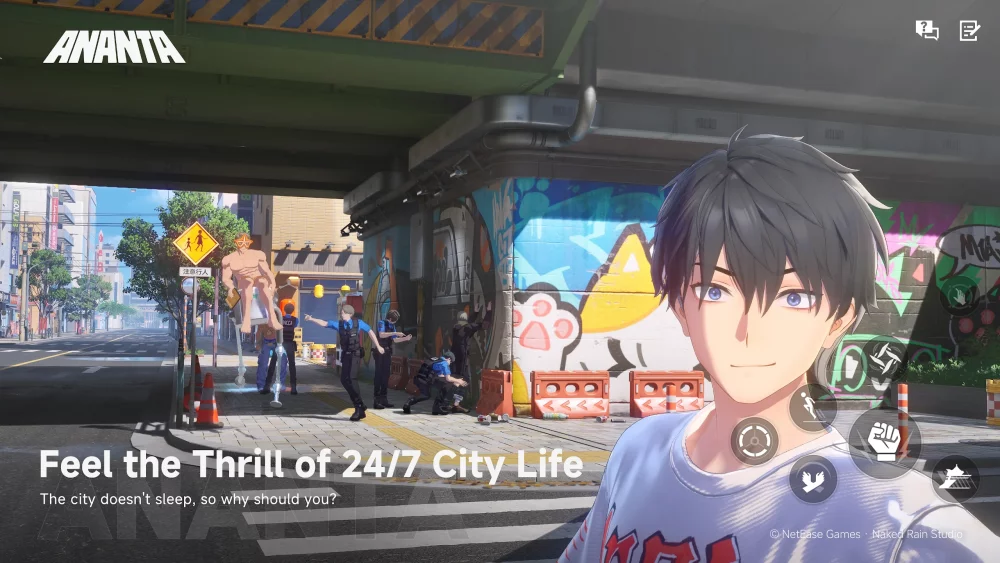
ANANTA presents a unique blend of high-concept urban aesthetics and strategic simulation mechanics that demand careful scrutiny from prospective players. While the visual direction and atmospheric world-building are immediately striking, early testing reveals significant nuance regarding combat responsiveness, movement physics, and systemic depth. This guide helps players assess the current state of the project, focusing on how technical limitations and mechanical pacing directly impact the viability of high-intensity encounters and long-term engagement with the game’s core systems.
Identifying Core Technical Bottlenecks
The most critical takeaway from current testing is the discrepancy between the game’s visual ambition and its mechanical execution. While the environment is dense and stylistically cohesive, players often experience a "heavy" feel during standard traversal and combat. This suggests that the internal physics engine may be struggling to keep pace with complex character animations, leading to a disconnect between user input and onscreen action.
To evaluate if the current state of ANANTA fits your expectations, pay close attention to the following:
- Input Latency: Note any delay between triggering a dodge or attack and the character’s actual response. In competitive simulation, frame-perfect execution is vital.
- Animation Lock: Observe whether high-damage abilities force the player into uncancelable animations. If these are too long, they become a liability in fast-paced encounters.
- Environmental Clipping: Monitor how character hitboxes interact with detailed urban architecture. Complex geometry often leads to erratic movement behavior that can break immersion or ruin tactical positioning.
Evaluating Combat Feedback and Impact
Combat in ANANTA relies heavily on visual flair, but the "weight" of the hits remains a point of contention. Experienced players should look past the flashy screen effects and particle systems to judge the actual impact mechanics. If the feedback loop—the subtle visual and haptic cues that confirm a successful hit—is inconsistent, it creates a frustrating experience during boss encounters or mob clearing.
When testing or viewing combat footage, focus on the "hit stop" and camera shake mechanics. Effective action games use these to provide tactile satisfaction. If ANANTA’s combat feels like it is "sliding" through enemies rather than connecting with them, it indicates that the development team still has significant tuning ahead regarding collision detection and weapon-enemy synergy. A satisfying hit requires a brief pause in animation (hit stop) to convey force; without this, combat often feels hollow regardless of how good the animations look.
The Trade-off Between Aesthetics and Function
ANANTA excels at creating an immersive "vibe," but this comes at the cost of functional clarity. The intricate UI and high-fidelity textures often clutter the screen, making it difficult to track enemy telegraphs during intense moments. Players who prioritize performance and survival over cinematic presentation may find the current visual density to be a hindrance.
This trade-off is particularly noticeable in crowded urban environments. While the visual noise serves the game's theme, it complicates the identification of incoming threats. If the game launches with these visibility issues, players may need to adjust their hardware settings or rely heavily on audio cues to compensate for the visual information overload during combat. Look for settings that allow you to decrease particle density or adjust UI transparency, as these are hallmark features of a player-friendly interface.
Managing Expectations for Content Depth
One of the primary concerns for the community is whether the current build represents a polished foundation or a proof-of-concept. The presence of high-quality assets is undeniable, yet the underlying systems—such as resource management, character progression, and enemy AI—appear to be in flux. Before committing to long-term investment or pre-launch hype, evaluate the consistency of the enemy patterns you observe.
If enemy AI behaves predictably or exhibits repetitive "leashing" behaviors, this suggests that the tactical depth of ANANTA may be limited at release. Focus your observation on whether the game provides multiple solutions to a single problem or if it forces players into a narrow, scripted path. A game with a strong visual identity but shallow mechanical variety will struggle to maintain interest once the initial novelty of the urban setting wears off. True strategic longevity comes from emergent gameplay, not just static assets.
Strategic Decision-Making for Prospective Players
Given the current stage of development, the best strategy is to maintain a "wait and see" approach. Instead of focusing on early-game progression or meta-building, prioritize analyzing how the developers address community feedback regarding responsiveness. If the developers prioritize mechanical refinement over adding new assets in future updates, it will be a positive indicator of the game's long-term health.
Focus your evaluation on these three indicators of a healthy project:
- Optimization Patches: Are the developers improving frame consistency in dense areas? Stable framerates are the bedrock of reliable input.
- Combat Tuning: Is there visible improvement in how abilities connect and execute? Look for adjustments to animation frames and hit detection.
- UI Customization: Does the game allow players to scale or hide redundant visual elements? The ability to prioritize information is key for high-level play.
Balancing Your Investment
Players often fall into the trap of over-investing in a title based solely on its aesthetic "promise." In ANANTA, the core simulation systems must support the long-term project development loop to justify your time. If the resource management aspect feels disconnected from the combat mechanics, you will likely find the late-game experience disjointed.
As you navigate the pre-launch phase, track the developers' roadmap against these mechanical requirements. A game that balances its urban aesthetic with tight, responsive control and deep, meaningful progression is a rarity. By monitoring these specific indicators, you can make an informed decision on whether ANANTA is worth your time and resources, ensuring you don't get caught up in the hype at the expense of gameplay quality. If the developers maintain transparency regarding their technical fixes, it is a strong sign that the project is built to last.

Free ANANTA Codes
Current active codes and how to redeem them.

Michael Smith
Michael covers live-service games, events, reward systems, and efficient daily routines, turning frequent updates into clear actions for players.
COMMUNITY
Player Comments
33 players commented on this guide.
The tips are practical and easy to follow.
The explanation is clear, especially for beginners.
I tried this today and it worked better than my old setup.
This helped me understand strategy much better.