
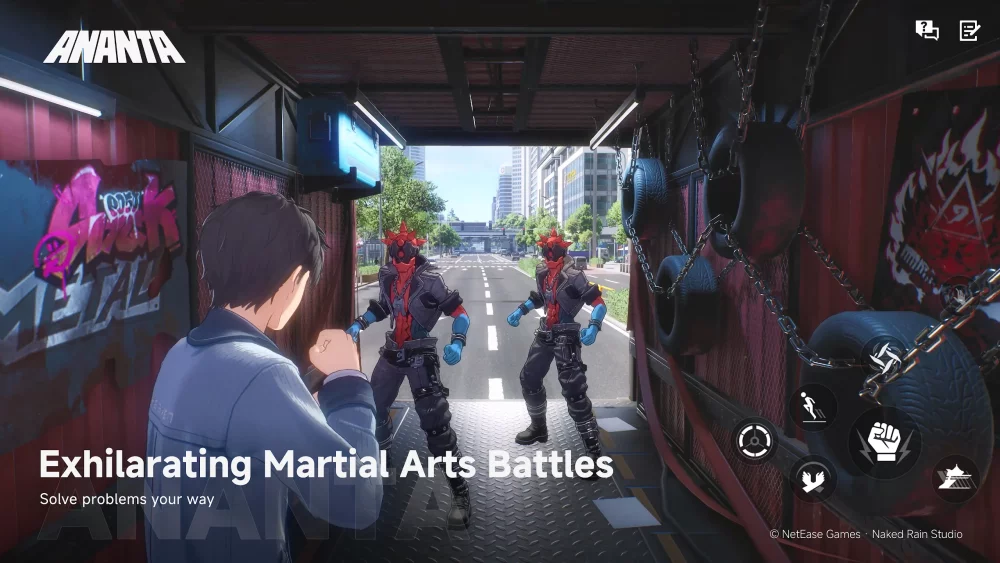
ANANTA is an ambitious open-world action title that redefines player movement and squad-based combat within a sprawling, hyper-modern urban landscape. With its launch scheduled for January 15, players are preparing to step into a world where the city itself—its verticality, architecture, and flow—is as vital to success as your character's combat prowess.
This guide provides an authoritative breakdown of what to expect, how the core systems function, and the strategies you need to dominate Nova City from day one.
The Core Identity of ANANTA
ANANTA is not a standard action RPG; it is a movement-centric experience. The game’s design philosophy centers on "constant motion." In most open-world games, navigation is a bridge between combat encounters; in ANANTA, navigation is an extension of the combat system.
The game demands that you view the environment as a continuous path. Whether you are scaling skyscrapers, sliding across transit rails, or parkouring through dense alleyways, the momentum you maintain determines your effectiveness in navigating objectives and engaging with the game's unique narrative structure.
Mastering Urban Traversal Mechanics
High-speed traversal is the heartbeat of ANANTA. To excel, you must look past the street-level view and embrace the verticality of the city.
- Momentum Conservation: Similar to advanced movement shooters, maintaining speed allows you to execute longer jumps and smoother transitions. Avoid stopping at corners; use your movement abilities to "swing" around obstacles.
- Verticality as a Tool: Most resources and hidden collectibles are located on rooftops or elevated platforms. If you find yourself stuck at street level, look for air vents, fire escapes, or structural ledges that facilitate upward movement.
- The Flow State: The game rewards players who chain movement inputs together. Practice linking your dash, wall-run, and jump abilities. This is not just for speed; it is your primary way to dodge enemy attacks in open-world skirmishes.
Fluid Combat and Tactical Squad Synergy
Combat in ANANTA is designed to be as fluid as the exploration. You are rarely standing still, and your squad management is the key to surviving the more intense encounters.
The Squad System
You will manage a squad where characters function as specialized tools. Instead of just "DPS" or "Healers," think in terms of "Traversal Utility" and "Combat Synergy."
- Synergy Chains: Success relies on swapping characters mid-combo. If one character launches an enemy into the air, follow up immediately with a character who has a long-range or area-of-effect (AoE) ability that triggers upon aerial contact.
- Positional Advantage: Use your squad to control the battlefield. If you are surrounded, use a character with crowd-control abilities to create space, then switch to a high-mobility character to reposition on higher ground before re-engaging.
Preparing for the January 15 Launch
As you approach the release date, your goal is to transition your mindset from "static combat" to "dynamic engagement."
- Prioritize Movement Upgrades: When you start your journey, focus on character talents or gear that enhance stamina recovery and mobility speed. These upgrades offer the highest return on investment early on.
- Mapping the City: Spend your first few hours simply exploring. Identifying major transit routes and "high-ground" zones will make mission completion significantly faster during the mid-game.
- Avoid the "Stat-Trap": It is tempting to chase pure attack power, but in ANANTA, a character who cannot keep up with the team’s movement speed will effectively be dead weight in high-level missions. Always favor gear that complements your movement speed.
Common Mistakes to Avoid
New players often fall into the trap of treating the game like a traditional cover-based shooter. Avoid these common pitfalls to stay ahead of the curve:
- Over-relying on Street Level: The streets are for transit, but the rooftops are for strategy. Staying on the ground makes you vulnerable to being pinned down by enemy reinforcements.
- Ignoring Team Swap Cooldowns: Combat in ANANTA is meant to be rhythmic. If you find your flow breaking, you are likely not timing your character swaps correctly. Practice your "swap rotation" on weak mob groups before taking on bosses.
- Ignoring Environmental Interactivity: The city is full of interactive objects—barrels, signs, and ledges. Use these as part of your combat repertoire to disrupt enemy formations.
Strategic Decision-Making: Mobility vs. Power
When building your team for specific missions, you will face a constant tug-of-war between high-mobility characters and high-damage specialists.
The General Rule:
- Exploration/Retrieval Missions: Prioritize characters with movement buffs (dash resets, jump height, wall-run efficiency).
- Combat/Boss Encounters: Prioritize characters with high burst-damage and crowd-control abilities.
A balanced squad should have at least one "anchor" character who can hold a position and two "roamers" who can maintain the high-speed, fluid combat loop. By mastering this balance, you ensure that you are never caught out of position, regardless of the objective.
Final Thoughts for Nova City Explorers
ANANTA offers a level of freedom rarely seen in urban action games. The key to mastering this experience is patience with the learning curve of the movement system. Once the traversal becomes muscle memory, the combat will feel significantly more intuitive.
As you prepare for the January 15 launch, remember: in Nova City, speed is your armor, and the skyline is your playground. Focus on fluidity, build your squad for synergy rather than raw numbers, and always prioritize the high ground. Welcome to the future of urban action.

Free ANANTA Codes
Current active codes and how to redeem them.

Emily Johnson
Emily writes practical mobile strategy guides with a focus on resource planning, base progression, and the early decisions that shape a long-term account.
COMMUNITY
Player Comments
155 players commented on this guide.
This guide answered the exact question I had.
Good guide for ANANTA players. The base building part was useful.
The tips are practical and easy to follow.
Nice guide. I am checking the other ANANTA articles next.