
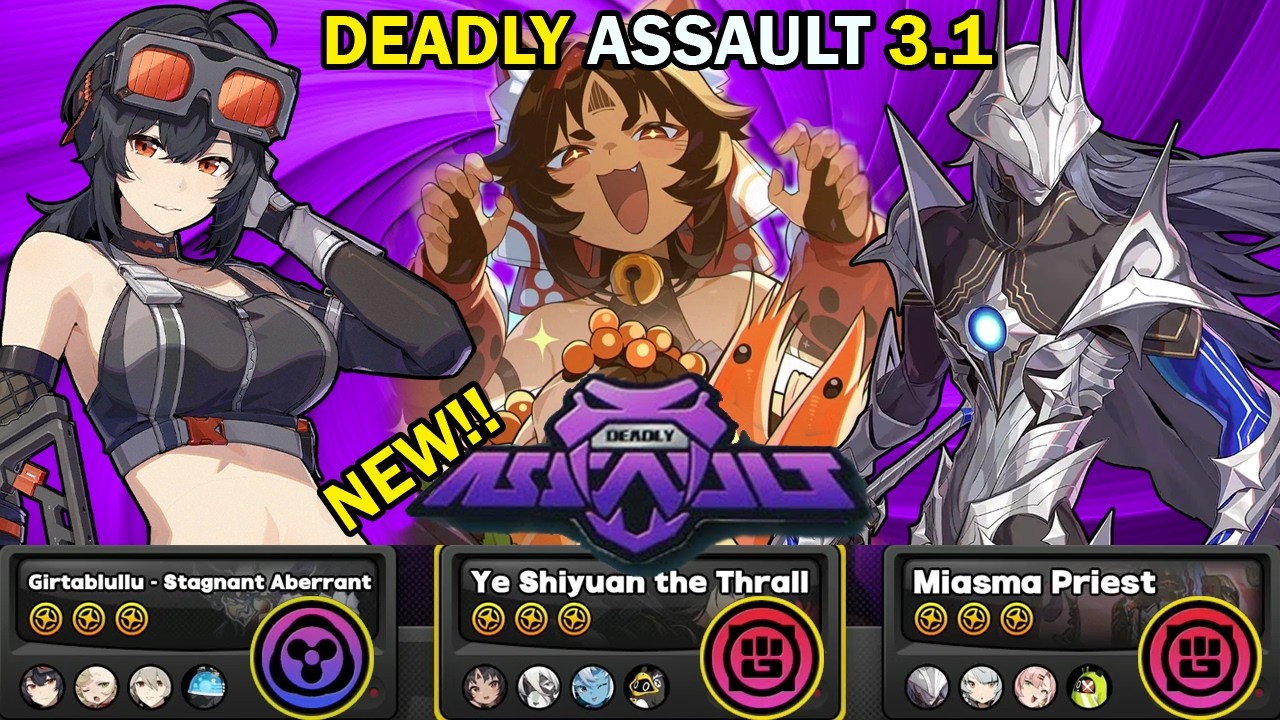
Achieving a 9-star clear in the Deadly Assault mode of Astra Squad is entirely possible using only A-Rank characters and standard gear, provided you master specific evasion windows and switch-timing. This strategy focuses on maximizing your limited roster's potential by exploiting the inherent mechanics of the Adversity system. By prioritizing character synergy and precise input execution rather than relying on high-tier pulls, you can consistently clear top-level content even with restricted team compositions.
Understanding the Adversity Scaling
The core challenge in the Deadly Assault mode is the scaling difficulty, often referred to as "Adversity." This system punishes hesitation and inefficient combat rotations. When running A-Rank units, your margin for error regarding incoming damage is significantly lower than with S-Rank counterparts. You must treat every encounter as a test of your ability to maintain combat uptime while navigating complex enemy telegraphs.
Success depends on recognizing that A-Rank characters in Astra Squad often possess shorter invulnerability frames (i-frames) compared to higher tiers. To compensate, you should focus on "chaining" your character switches to reset combat momentum. By rotating between your squad members during enemy attack wind-ups, you mitigate damage while keeping your offensive pressure constant. This rotation ensures you reach the 9-star threshold before the strict time limit expires.
Optimizing A-Rank Team Synergy
While A-Rank units may lack the raw stat ceiling of elite rosters, they shine when their passive abilities and elemental synergies are fully utilized. Focus on pairing characters that provide consistent buff uptime for your primary damage dealer. In a 9-star run, you cannot afford to have "dead weight" on your team; every unit must contribute to either shield-breaking or damage-over-time (DoT) application.
- Elemental Resonance: Ensure your team composition triggers consistent elemental reactions. Even with standard equipment, these reactions provide the necessary burst damage to bypass high-health enemy phases.
- Skill Cycle Priority: Use your support units to apply debuffs or grouping effects immediately before switching to your main DPS. This creates a tight, high-damage window that is essential when your units are not over-leveled for the stage.
- Resource Allocation: Since you are not relying on high-tier characters, you must ensure your A-Rank units are fully ascended to their current tier limit to maximize base stats.
Executing Precise Evasion Mechanics
Survival in Deadly Assault is fundamentally tied to perfect dodging. When using A-Rank units, you are frequently forced to play closer to the enemy than you would with tankier heroes. Mastery of the "Perfect Dodge" mechanic is non-negotiable here; triggering this state not only prevents damage but often initiates a slow-motion window that allows you to reposition for a full rotation of your abilities.
When the enemy initiates a red-telegraph attack, prioritize the evasion over continuing your attack string. Because your A-Rank units have less health, a single mistake during a high-adversity wave can result in a character knockout, which drastically reduces your team's total damage output and makes a 9-star clear impossible. Practice the timing for the boss’s multi-hit combos to ensure you don't get caught in a hit-stun cycle. If you find yourself consistently failing, record your gameplay to identify which specific telegraphs are causing the most damage.
Managing the Time Limit for 9-Star Clears
The 9-star clear requirement for Deadly Assault is as much a damage check as it is a survival challenge. If you find your clear times are consistently exceeding the limit, re-examine your weapon and equipment investment. Even with A-Rank characters, your weapons should be leveled to the maximum permitted tier for your current account progression.
Focus your limited resources on one or two high-impact "Standard" items that benefit the entire squad. By ensuring your gear is optimized for critical hit rate or elemental damage, you can effectively bridge the gap between A-Rank base stats and the requirements of end-game content. Always aim to finish the first phase of the encounter with at least 70% of the time remaining to provide a buffer for the final, more aggressive boss phases where movement becomes more restricted.
Strategic Trade-offs and Limitations
It is important to acknowledge that running A-Rank squads in high-difficulty Astra Squad content requires more "player effort" than using top-tier units. The primary trade-off is the lack of "panic buttons"—abilities that provide massive healing or shields. You are effectively trading safety for the tactical depth provided by strict adherence to rotation cycles.
Common Mistakes to Avoid
- Over-committing to combos: Do not finish a long attack animation if an enemy telegraph appears. It is always better to dodge and lose a fraction of a second than to take damage and lose your DPS window to a recovery animation.
- Ignoring Elemental Weaknesses: Even the strongest A-Rank squad will fail if they are hitting an enemy with a resistant damage type. Always check the stage modifiers before entering.
- Neglecting Support Gear: Do not focus only on your main DPS. A support unit with high energy regeneration or cooldown reduction gear allows you to trigger your main DPS’s buffs much more frequently, which is the secret to high-score clears.
Recognize that this playstyle is highly sensitive to input lag or connection stability. If you are struggling with a specific boss, verify that your gear is not just leveled, but that the secondary stats are optimized for the specific elemental weakness of the stage. Following these steps allows you to clear high-difficulty content while conserving premium resources for units you truly want to pull in the future, proving that player skill is the ultimate asset in Astra Squad.

Free Astra Squad Codes
Current active codes and how to redeem them.

Emily Johnson
Emily writes practical mobile strategy guides with a focus on resource planning, base progression, and the early decisions that shape a long-term account.
COMMUNITY
Player Comments
70 players commented on this guide.
The explanation is clear, especially for beginners.
This helped me understand strategy much better.
This guide answered the exact question I had.
The tips are practical and easy to follow.