
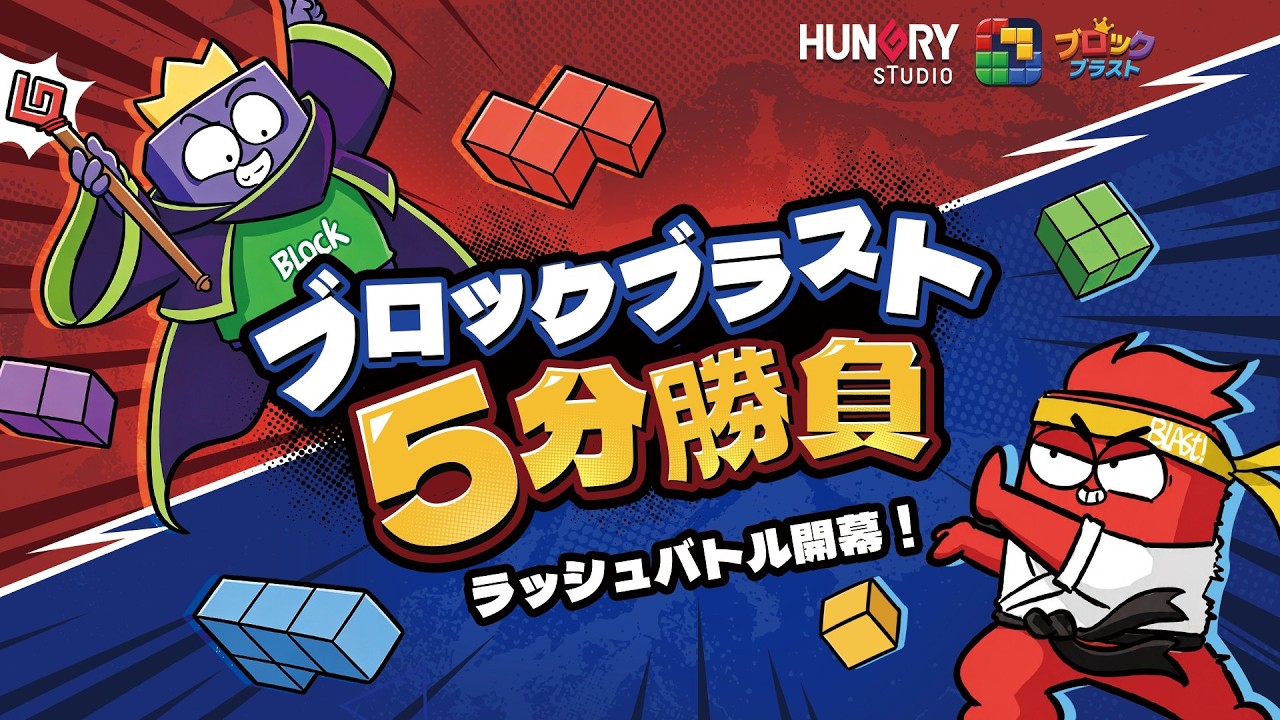
To avoid premature game overs in Block Blast!, you must shift your mindset from chasing immediate line clears to long-term spatial management. In this game, your board is your most limited resource; once it becomes fragmented, even the most skilled player will eventually run out of legal moves. By prioritizing corner maintenance, keeping the center flexible, and planning for combos rather than single-line clears, you can transition from a casual player to a high-score record holder.
The Philosophy of Spatial Efficiency
The primary reason players lose in Block Blast! is not a lack of points, but a lack of space. As your score climbs, the game does not necessarily provide "harder" pieces, but it does punish "messy" boards more severely. A messy board is defined by scattered, isolated blocks that create holes—small, single-square gaps that are notoriously difficult to fill.
To master the game, you must view every placement as a commitment to the future of your board. Ask yourself: "Does this move create a hole that I cannot easily fill?" If the answer is yes, you are effectively shrinking your playable area. Efficiency in Block Blast! is about keeping the largest possible contiguous surface area available at all times.
Strategy 1: Prioritize Clearing Corners and Edges
The corners are the "graveyard" of Block Blast! runs. Because a corner only shares two sides with the rest of the board, it requires very specific block shapes to clear. If you leave a corner blocked off by a random piece early in the game, that space effectively becomes dead weight.
- The Perimeter Rule: Always attempt to build along the outer walls first. By keeping the edges flush, you ensure that you don't end up with "islands" of empty space that are impossible to reach.
- Corner-First Thinking: If you have a piece that can clear a line along the edge or corner, take it. Clearing these areas early prevents them from becoming restricted zones that later force you into sub-optimal placements.
Strategy 2: Maintain a Flexible Central Grid
While the edges should be kept clean, the center of your board is your "buffer zone." This is the most flexible area because it is accessible by almost every shape in the game.
- Avoid Central Clutter: Do not use the center for small, low-value line clears if it forces you to break the board into disconnected segments.
- The 3x3 Buffer: Aim to keep the center of the board as empty as possible for as long as possible. When you must place blocks in the center, try to arrange them into straight lines or solid blocks that don't leave jagged edges. A "flat" central stack is much easier to clear later than a "staircase" pattern, which creates tiny, unusable gaps.
Strategy 3: Mastering Combo Potential
High scores in Block Blast! are rarely achieved by clearing single lines. They are achieved through combos—clearing multiple rows or columns in a single turn.
- Wait for the Setup: Don't feel pressured to clear a line the moment it appears. If you have the space, wait for a piece that allows you to clear two or three lines simultaneously.
- Visualization: Before placing a piece, look at the potential state of the board after the lines disappear. If clearing those lines leaves behind a clean, flat surface, it is a good move. If it leaves behind a jagged, fragmented mess, the score gain might not be worth the loss of board integrity.
- The "Combo-First" Approach: Always prioritize moves that clear multiple lines, as these moves provide the most "breathing room" by removing the maximum number of blocks while awarding a score multiplier.
Strategy 4: Avoiding "Blind" Moves in Late Progression
As the game progresses, the pressure to place blocks quickly can lead to "blind moves"—placing a piece simply because it fits, without considering the ripple effect.
- The "Look-Ahead" Technique: Every time you receive a set of three pieces, evaluate them before placing the first one. Determine which piece is the most "difficult" (usually large L-shapes or 3x3 squares) and place that one first. If you place the easy, small pieces first, you may find yourself with a board state that cannot accommodate the larger, more awkward pieces.
- Respect the "Impossible" Shapes: When you see a 3x3 square or a long 5-block line coming up, prepare your board to receive it. Don't let your board get to a state where there isn't a single 3x3 or 5-row opening.
Common Mistakes and How to Fix Them
Even experienced Block Blast! players fall into these traps. Awareness is the first step toward breaking these habits:
- The "Line-Clearing Addiction": Clearing lines is good, but clearing them at the expense of your board layout is bad. If you are clearing one line but creating two new holes, you are losing the game.
- Neglecting the "Queue": Players often forget to look at the next available pieces. If you have an "L" piece in your queue, make sure you aren't filling up the corners where that "L" piece would have been perfectly placed.
- Panic Placing: When the board gets full, the instinct is to place pieces as fast as possible. This is when the most mistakes happen. Take a breath, scan the board, and remember: Block Blast! is not a timed game. You have as much time as you need to find the optimal spot.
Final Expert Insights
To reach the top of the Block Blast! leaderboards, you must embrace the "slow and steady" approach. Treat your board like a puzzle that needs to be kept as flat as possible. A flat, uniform board is always easier to manage than a tall, jagged one.
By keeping your edges clean, your center open, and prioritizing multi-line combos over isolated clears, you will find that you can sustain your runs significantly longer. The goal isn't to play fast; the goal is to play efficiently until the game leaves you no choice but to win.
Free Block Blast! Codes
Current active codes and how to redeem them.

James Brown
James focuses on Android gaming on PC, emulator setup, controls, performance tuning, and practical troubleshooting for longer play sessions.
COMMUNITY
Player Comments
76 players commented on this guide.
Nice guide. I am checking the other Block Blast! articles next.
The tips are practical and easy to follow.
This helped me understand early game much better.
The explanation is clear, especially for beginners.