
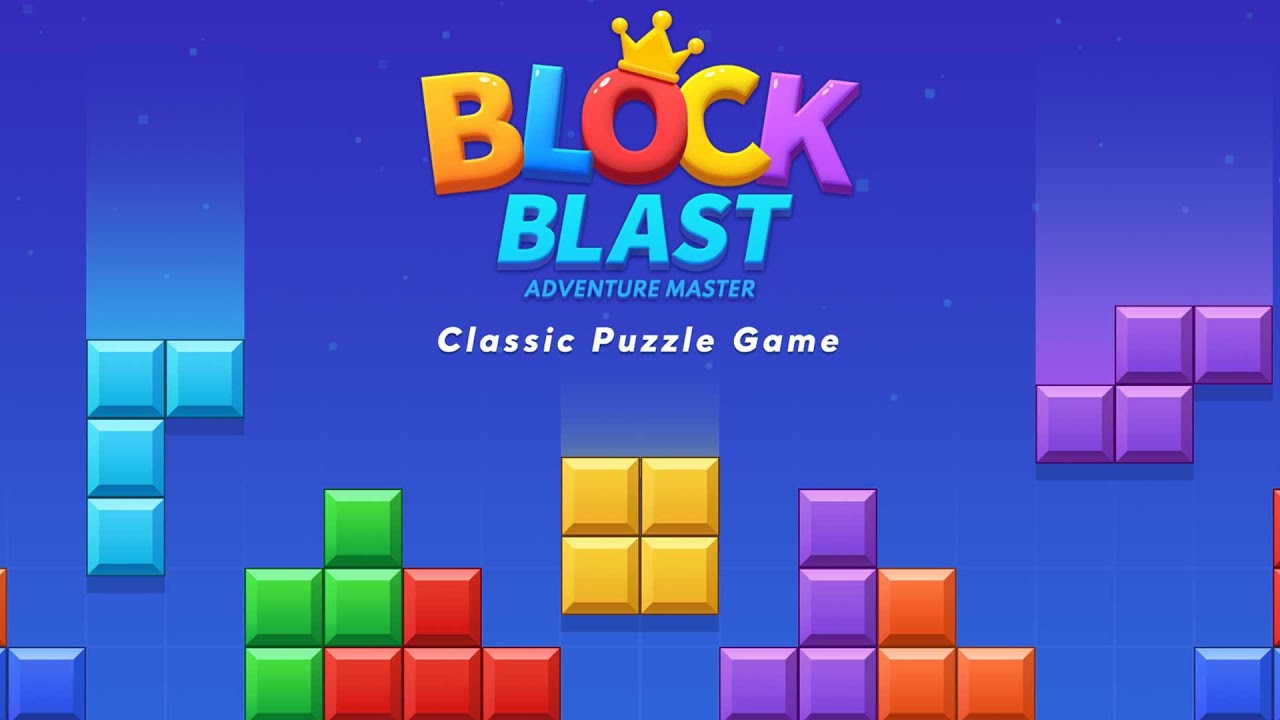
Achieving a high score in Block Blast! is less about speed and more about meticulous spatial planning. While the game’s relaxing aesthetic might encourage quick, impulsive moves, the core mechanics reward players who treat the 8x8 grid as a puzzle to be solved rather than a race to be won. To consistently climb the leaderboards, you must move beyond clearing single rows and start managing the board as a long-term resource.
The Core Philosophy: Grid Preservation
In Block Blast!, your board is your lifeblood. The moment you run out of space to place your required shapes, the game ends. Therefore, your primary goal is not just to clear lines, but to maintain grid fluidity.
Grid fluidity refers to the availability of open, contiguous space. Beginners often fall into the trap of placing blocks wherever they fit, creating a "checkerboard" pattern of isolated holes. These holes are the single greatest threat to a high score because they are incredibly difficult to fill. When you have a single empty square surrounded by filled tiles, you are essentially wasting space that could have been used to complete a larger, high-value combo.
Pro Tip: Always prioritize "filling the edges." Large, complex shapes are easier to tuck into the perimeter of the grid. If you keep your corners and edges flush, you preserve the center of the board—the most versatile area—for the smaller pieces that appear when you are in a tight spot.
Mastering Combo Chaining
The scoring system in Block Blast! heavily favors combos. A combo occurs when you clear two or more lines (horizontal or vertical) in a single turn. These moves provide an exponential score increase compared to clearing lines one by one.
To effectively chain combos, adopt a "stack and clear" strategy:
- Build a Foundation: Begin by building up a 3x3 or 4x4 section of your board. Do not worry about clearing lines immediately.
- Identify the Weak Link: Once you have a dense area, identify a single horizontal or vertical row that is nearly full.
- The Finisher: Keep a specific piece in your queue that can complete that row. When you have multiple lines ready to be cleared at once, drop the finisher piece to trigger the combo.
This method requires patience. It is often better to leave a line nearly complete for several turns while you wait for the specific shape that allows you to clear two lines simultaneously.
Navigating the Queue and Predicting Shapes
Many players ignore the queue, but it is your most powerful tool. The queue shows you the next pieces, allowing you to plan your moves two or three turns in advance.
If you see a large, cross-shaped block or a long straight line coming up, you must prepare the board to receive it. If your board is cluttered with small, scattered blocks, you might find that the upcoming piece has no valid placement, leading to an immediate Game Over.
- Look ahead: Before every move, glance at the next three shapes in your queue.
- Reserve space: If you see a large piece, avoid placing small blocks in a way that breaks up the 3x3 area that the large piece will likely require.
- The "Safety Net" rule: Always ensure there is at least one 2x2 or 3x3 empty square on your board at all times. This acts as a safety net for any awkward, large shapes that might be forced upon you.
Eliminating Bottlenecks (The "Dead Zone" Problem)
A "bottleneck" occurs when you create a configuration that requires an extremely specific, rare piece to clear. For example, if you leave a single empty column with a height of four, you are praying for a 1x4 vertical piece. If that piece doesn't appear for several turns, that column is effectively dead.
How to fix bottlenecks:
- Avoid L-shapes in the center: L-shapes are notorious for creating odd gaps. Try to orient them so the "arm" of the L points toward a wall or a corner.
- Use the "Fill-in" priority: If you have a choice between clearing a line and filling a hole that prevents a bottleneck, prioritize filling the hole. It is better to survive for another ten turns by sacrificing a single line clear than to lose the game by chasing an immediate, low-point clear.
The Mental Checklist for Every Turn
To play at a high level, you should turn your decision-making process into a repeatable habit. Before you drag and drop a block, run through this mental checklist:
- The "Fit" Check: Does this piece fit without leaving an isolated, single-tile hole?
- The "Combo" Check: Can I clear this line in conjunction with another line on the board?
- The "Queue" Check: Does this move leave enough space for the next two pieces in my queue?
- The "Edge" Check: Am I keeping the center of the board as open as possible?
Avoiding Common Mistakes
- The Panic Placement: When the board gets crowded, players tend to drag pieces quickly. This is where most games end. Slow down. The game does not have a timer; take as much time as you need to scan the grid.
- Over-Focusing on One Side: Don't just clear rows on the left side of the board. If you neglect the right side, you will eventually find yourself unable to place pieces there, creating a lopsided board that is impossible to recover from. Keep your board balanced.
- Ignoring Vertical Clears: Many players focus exclusively on horizontal rows. Remember that vertical columns are just as valuable. Often, clearing a vertical column is easier because the pieces flow down from the top.
Final Thoughts on Consistency
Mastering Block Blast! is a journey of pattern recognition. Over time, you will begin to "see" the grid in terms of shapes rather than just tiles. You will start to instinctively know which pieces belong in which corners. By focusing on board control, managing your queue, and refusing to settle for small, inefficient clears, you will find your high scores rising significantly. Remember: the board is a resource. Use it wisely, clear with intent, and you will become a master of the grid.
Free Block Blast! Codes
Current active codes and how to redeem them.

James Brown
James focuses on Android gaming on PC, emulator setup, controls, performance tuning, and practical troubleshooting for longer play sessions.
COMMUNITY
Player Comments
140 players commented on this guide.
This helped me understand strategy much better.
I wish I had read this before upgrading the wrong thing.
I tried this today and it worked better than my old setup.
This guide answered the exact question I had.