
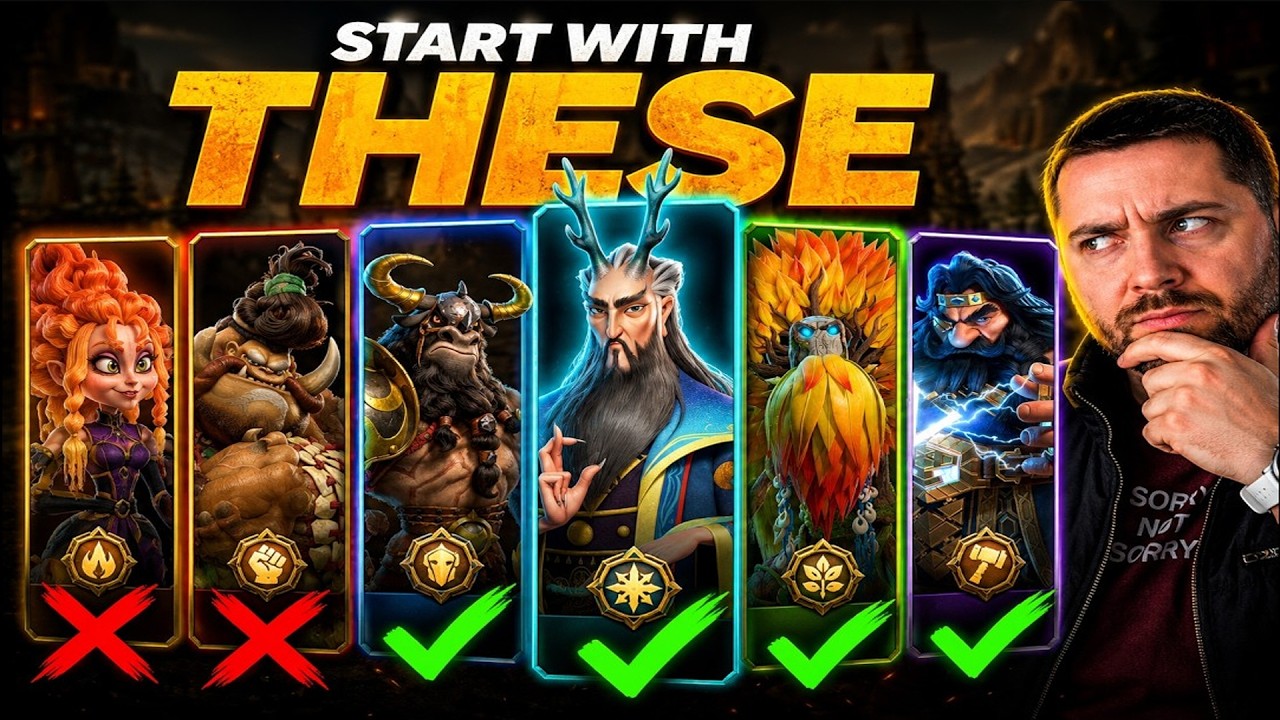
In Call of Dragons, the most common pitfall for both new and veteran players is the "Power Trap." Many believe that a higher total power rating equates to a stronger account, leading them to spread their resources thin across too many heroes. However, in high-stakes PvP and challenging PvE encounters, combat effectiveness is determined by synergy, specialized talent trees, and precise skill thresholds.
To dominate the battlefield, you must shift your focus from superficial power numbers to the strategic optimization of your primary marches. This guide breaks down the core mechanics of hero investment, ensuring your resources are spent on long-term assets that offer the highest return on investment.
Avoid the "Max Power" Trap
In Call of Dragons, power is a vanity metric. It accounts for base stats, troop quantity, and technology, but it does not account for the tactical reality of how your heroes perform in a 3D tactical environment. A player with 10 million power focused into two highly optimized, specialized marches will consistently defeat a player with 15 million power who has spread their tokens across six mediocre heroes.
When you rush to upgrade every hero you unlock, you dilute your ability to reach the "Expertise" level (5/5/5/5) for your top-tier units. A hero at 5/1/1/1 is often vastly inferior to a lower-level hero that has been fully maxed. Focus your universal tokens on one "primary" march at a time. By concentrating your resources, you ensure that your heroes have the necessary skill levels to compete with the current season's meta.
The Importance of Skill Thresholds
Not every skill on a hero is created equal. Understanding the "sweet spot" for each hero is essential for efficient resource management. Many heroes reach their maximum utility long before they are fully maxed out.
- The First Skill Priority: In almost every scenario, a hero's first skill is their most powerful combat tool. When starting a new hero, your goal should be to get that first skill to level 5 before even considering unlocking others.
- Identify Critical Nodes: Some heroes provide massive utility at 5/5/1/1 or 5/5/5/1. Research your heroes before dumping universal tokens. If a hero’s fourth skill is purely defensive but you are using them for burst DPS, you might be able to stop your investment early, saving those precious tokens for a hero that provides more impactful bonuses.
- The "Expertise" Decision: Only push a hero to 5/5/5/5 (Expertise) if they are a "staple" hero—one that will remain relevant across multiple seasons. Avoid maxing out heroes that are considered "bridge" units meant only for early-game progression.
Specializing Talent Trees for Combat Roles
Talent trees are the defining factor of a hero’s identity. A "one-size-fits-all" talent build is a recipe for failure. You must build your heroes to serve a specific purpose: open-field warfare, rally leading, garrison defense, or gathering.
- Themed Specialization: If you are running a Mage march, every single talent point should contribute to Magic damage, Skill Haste, or survivability specific to Magic units. Mixing stats—such as taking physical damage nodes on a Mage hero—is a waste of your limited points.
- Utility vs. Combat: Never take "gathering" or "speed" nodes on a combat hero. Conversely, never take "combat" nodes on a dedicated gathering hero.
- The 3D Terrain Factor: Call of Dragons features complex 3D terrain and flying units. If you are building a scout or a high-mobility march, prioritize talents that increase march speed or allow for terrain traversal. A hero optimized for speed can dictate the engagement, choosing when to fight and when to retreat, which is often more valuable than raw damage output.
Synergizing Heroes and Troop Types
The most effective marches in Call of Dragons are those that focus on a single troop type. When you mix troop types (e.g., Infantry with Archers), you lose the ability to maximize the specific equipment and talent bonuses that apply to those units.
The Golden Rules of March Synergy:
- Uniformity: Your primary and secondary heroes should always focus on the same troop type. If your primary hero has a talent tree focused on Infantry, your secondary hero should also be an Infantry specialist.
- Skill Interaction: Look for "Skill Cycles." If your primary hero deals massive burst damage but has a long cooldown, pair them with a secondary hero who provides crowd control (CC) or damage mitigation. This allows your primary hero to survive long enough to fire off their second or third skill cycle.
- Artifact Alignment: Your artifact is effectively a "fifth skill." Pair artifacts that complement your hero’s role. A defensive hero should carry a shielding or healing artifact, while a DPS hero should carry an artifact that boosts their primary damage type.
Strategic Resource Allocation
The difference between a top-tier player and an average player is the discipline to save resources. In a game with seasonal rotations, the "Meta" shifts constantly. Heroes that dominate in Season 1 may be sidelined in Season 3.
- Wait for the Meta: If you are unsure about a hero’s longevity, hold onto your universal tokens. Waiting two weeks to see how a new hero performs in the hands of the community can save you from wasting months of progress on a hero that gets nerfed or replaced.
- Focus on Season-Proof Heroes: Certain heroes provide utility—such as healing, movement speed, or crowd control—that remains valuable regardless of damage numbers. Investing in these "utility" heroes is a safer long-term bet than investing in "glass cannon" DPS heroes who rely on raw damage output to stay relevant.
- Evaluate Before Spending: Before committing, ask yourself: Does this hero fill a specific gap in my current roster? If you already have two strong Infantry marches, investing in a third Infantry hero is less efficient than building a strong Mage or Archer march to counter enemy compositions.
By focusing on these strategic pillars, you ensure that your account remains lean, mean, and ready for the challenges of Call of Dragons. Remember: high power is a number, but a perfectly optimized march is a weapon.

Free Call of Dragons Codes
Current active codes and how to redeem them.

James Brown
James focuses on Android gaming on PC, emulator setup, controls, performance tuning, and practical troubleshooting for longer play sessions.
COMMUNITY
Player Comments
74 players commented on this guide.
I tried this today and it worked better than my old setup.
The explanation is clear, especially for beginners.
Can you add more details about heroes in a future update?
This saved me time in the early game.