
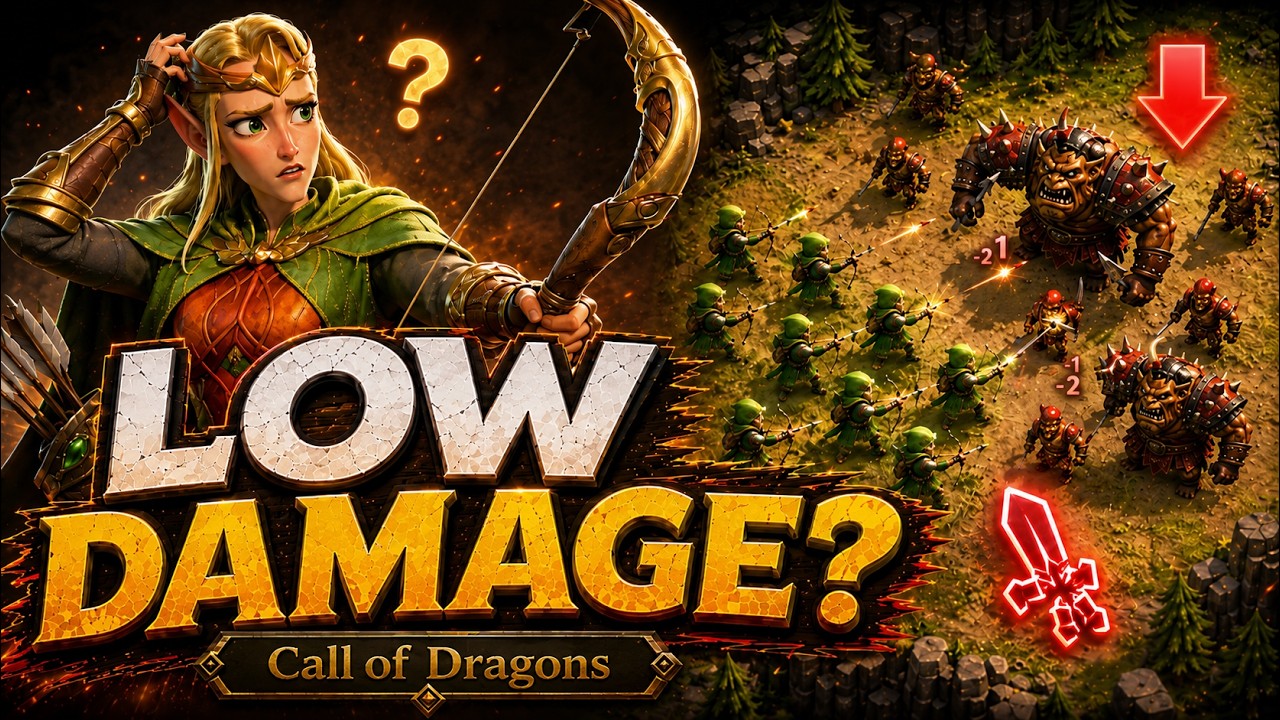
If your legions are consistently underperforming in Call of Dragons, the culprit is rarely your troop tier alone; it is almost always a failure to optimize the complex synergy between your hero skills, gear, and combat mechanics. To stop dealing "low damage," you must move away from general leveling and toward specialized, high-impact builds that prioritize Rage generation and damage modifiers.
This guide outlines the precise steps required to analyze your current legion setup and rectify the damage plateaus that hold back both mid-game and veteran players.
The Hierarchy of Damage: Why Your Hero Skills Matter
In Call of Dragons, damage is gated by your hero’s skill levels. Many players fall into the trap of leveling a commander to 50 or 60 while keeping their skills at a 5-1-1-1 configuration. This is a critical mistake. A hero’s active skill and key passives provide the percentage-based damage multipliers that define your combat ceiling.
- Prioritize the First Skill: Your primary commander’s first skill should almost always be maxed out first. This skill is your most frequent source of burst damage.
- Avoid "Spread" Leveling: Do not waste skill tokens on secondary commanders until your primary commander is fully "expertised" or at least carries a high-tier skill level (5-5-1-1 or 5-5-5-1).
- Skill Cycle Synergy: Understand the combat rhythm. If your hero relies on high skill damage, ensure you aren't pairing them with a secondary hero who interferes with their specific damage type (e.g., pairing a Magic-focused hero with a Physical-focused secondary).
Optimizing Artifact Synergy for Maximum Burst
Artifacts in Call of Dragons are not just stat sticks; they are your primary "Rage batteries" and burst tools. An under-leveled or mismatched artifact can effectively cut your damage output in half.
Choosing the Right Artifact
- Match the Role: If your hero specializes in Magic units, you must equip a Magic-focused artifact. The passive stat bonuses on artifacts often grant percentage increases to unit attack—these are multiplicative, not additive, making them vital for scaling.
- Rage Generation: Any artifact that increases Rage regeneration is top-tier. Because active skills deal the bulk of your damage, the faster you can trigger your skill, the higher your damage-per-second (DPS) will be.
- Active Skill Timing: Do not fire your artifact skill at the same time as your hero's active skill if the artifact provides a debuff to the enemy. Instead, use the artifact to "weaken" the target before your hero’s high-damage skill lands to maximize the total output.
Mastering the Talent Tree: The "Nuke" vs. "Sustain" Debate
The talent tree is where players most frequently "sabotage" their own damage. Spreading points across multiple branches leads to a lack of specialization. You must commit to one path to reach the "Tier 5" or "Ultimate" nodes that provide massive percentage gains.
- The Nuker Build: If your hero is a skill-damage dealer, focus exclusively on the "Skill" tree. Prioritize nodes that grant Rage on normal attacks. The more Rage you generate, the more often your skills fire.
- The Sustain Build: For sustained DPS, focus on "Attack" and "Unit-specific" trees. These nodes provide flat attack speed bonuses and raw damage increases that stabilize your output over the duration of a long fight.
- The Reset Strategy: Do not be afraid to use a Talent Reset item. As you gain more levels, your optimal path changes. If you are struggling with damage, reallocate points away from "March Speed" or "Gathering" nodes and move them into "Damage Dealt" or "Crit Rate" nodes.
Troop Composition and Technology Scaling
Even a perfect hero setup will fail if your troops are not supported by your account’s technological foundation.
The Foundation of Damage
- Alliance Technology: Ensure you are contributing to Alliance Tech. The passive boosts to unit attack and defense provided by your alliance are the "hidden" multipliers that separate top-tier players from the rest.
- Legion Tiering: Always train the highest-tier units available. Even if your hero is maxed, using Tier 2 or Tier 3 troops against an opponent using Tier 4 or 5 units will result in significantly lower damage due to the base-stat disparity.
- Research Focus: Prioritize your Military Tech in the Academy. Specifically, focus on the research paths that increase "Legion Attack" and "Unit Damage." These are permanent upgrades that apply to every march you send into battle.
Avoiding Common Scaling Pitfalls
A major limitation in Call of Dragons is "Power Inflation," where a player levels their hero quickly but neglects the supporting infrastructure.
Three Common Mistakes to Avoid
- The "Jack of All Trades" Trap: Having five mediocre marches is significantly worse than having one "death squad" march. Focus all your experience books, skill tokens, and artifact upgrades into a single, high-impact march first. Once that march is optimized, move to the second.
- Ignoring War Pets: War Pets provide significant stat boosts and active combat utility. Ensure your pets are leveled and have talents that complement the hero they are assigned to. A pet with a "Skill Damage" boost can be the difference between a victory and a loss.
- Neglecting Buff Items: In major skirmishes or large-scale warfare, always use "Attack Bonus" items. These temporary buffs are multiplicative and can push your damage output above the threshold needed to break through an enemy's healing or shielding.
Final Verdict: How to Audit Your Damage
If you find your damage is still low after these adjustments, perform this simple audit:
- Check your Battle Log: Identify how much damage your Active Skill is doing versus your Normal Attacks. If your skill damage is low, prioritize Rage generation and Skill Damage nodes.
- Check your Artifact: Is it the right type? Is it leveled?
- Check your Hero Pairing: Is your secondary commander actually contributing, or are they a "dead weight" that doesn't share the same unit type?
By focusing on these pillars—Skill levels, Artifact synergy, Talent specialization, and Tech research—you will see a tangible increase in your combat performance in Call of Dragons. Stop fighting "blind" and start building for efficiency.

Free Call of Dragons Codes
Current active codes and how to redeem them.

Michael Smith
Michael covers live-service games, events, reward systems, and efficient daily routines, turning frequent updates into clear actions for players.
COMMUNITY
Player Comments
63 players commented on this guide.
This saved me time in the early game.
Good guide for Call of Dragons players. The heroes part was useful.
Can you add more details about heroes in a future update?
This guide answered the exact question I had.