
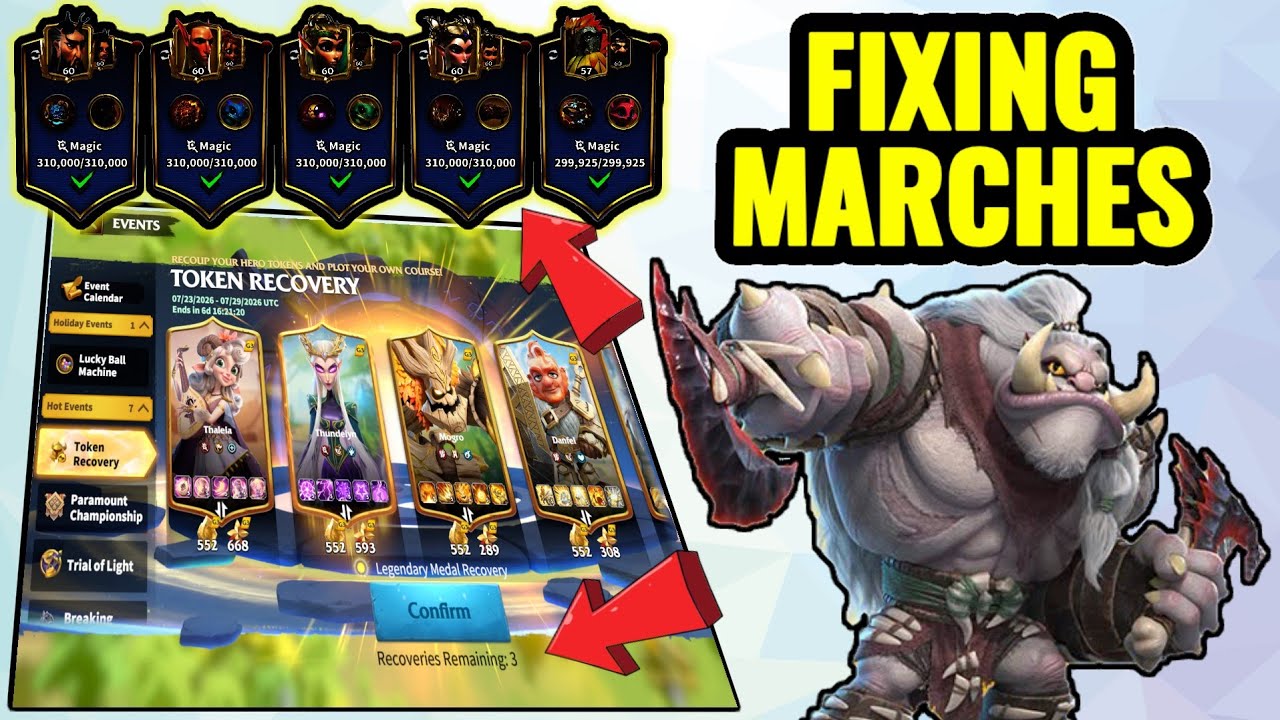
In Call of Dragons, the constant shift in the meta can turn once-dominant commanders into benchwarmers. The G3 Token Recovery event is a game-changing mechanic that allows you to "undo" past investments, reclaiming legendary hero tokens and experience materials from commanders that no longer serve your front-line needs. By strategically dismantling these outdated investments, you can reinvest those resources into top-tier commanders, ensuring your marches remain lethal and competitive in large-scale seasonal warfare.
Understanding the Mechanics of Token Recovery
The G3 Token Recovery event functions as a financial reset for your account’s progression. In Call of Dragons, power creep is an inevitable part of the lifecycle; as new generations of heroes are released, older units often lose their viability in open-field skirmishes or rallies.
When you participate in the recovery event, the game allows you to revert specific heroes to a lower level or reset their skill tree, refunding a significant portion of the hero medals (tokens) and experience items you previously spent. This effectively "liquefies" your frozen assets. Instead of having thousands of tokens trapped in a hero you rarely use, you regain the ability to apply those resources to the current generation of commanders, which often provide superior stat scaling, stronger faction buffs, and more impactful active skills.
How to Audit Your Roster for Recovery
Before you initiate a recovery, you must perform a cold, calculated audit of your current marches. Not every hero that has fallen out of the S-tier should be recovered. Follow this checklist to identify the right candidates:
- Assess Active Deployment: Is the hero currently part of your top five march compositions? If a hero is relegated to city defense, gathering, or secondary support, they are the primary candidates for recovery.
- Analyze Power Creep: Compare the hero’s skill kit to current-meta units. If a newer hero performs the same role (e.g., AOE mage, tank, or cavalry commander) with significantly higher damage multipliers or utility, the old hero is likely a dead asset.
- Evaluate Skill Investment: Focus on commanders where you invested universal legendary tokens to reach 5/5/5/5 or higher. Reclaiming tokens from a hero that only has a few levels invested yields a lower return on investment than dismantling a fully skilled, outdated commander.
- Confirm Immediate Reinvestment: Never recover tokens unless you have a clear plan for where they are going. You want to move power from "Point A" (the useless hero) to "Point B" (the hero currently carrying your march) immediately.
Strategic Reinvestment: Where to Put Your Tokens
Once you have reclaimed your tokens, the goal is to create "Hyper-Carries." In Call of Dragons, a single maxed-out hero with high-level skills is almost always more effective than two or three heroes with mediocre, mid-tier skill levels.
- Focus on Core Marches: Prioritize the commanders that lead your primary march. Whether your specialty is Infantry durability, Mage-based AOE, or Cavalry mobility, put your recovered tokens into the primary damage dealers or the primary "tank" heroes that anchor your formation.
- Synergy Over Raw Stats: When reinvesting, look for heroes that synergize with your current artifacts and pets. Even if a hero has high stats, they are useless if their skill trigger conditions don't align with your existing march composition.
- The "One-at-a-Time" Rule: Avoid spreading your reclaimed tokens across multiple heroes. It is better to have one fully maxed-out "God Tier" march that can trade favorably in open-field battles than three average marches that get wiped instantly.
Balancing Trade-offs and Risks
The recovery process is powerful, but it is not without risks. You must consider the "utility cost" of removing a hero.
- Niche Roles: Some heroes are excellent for specific scenarios like Behemoth hunting or defending structures, even if they aren't top-tier in open-field combat. If you recover a hero that is essential for a specific event or strategy your alliance uses, you might find yourself struggling during that event.
- The Opportunity Cost of Flexibility: Having five functional marches is often better than having two incredible ones and three useless ones. If you recover too many heroes, you may find that you lack the commanders to fill your march slots during large-scale alliance wars.
- Resource Efficiency: Ensure you are accounting for the total investment. Sometimes, the cost of leveling a new hero back up from zero can be a drain on your stamina and time. Ensure you have the experience books and gold ready to power-level your new target immediately after the recovery.
Long-Term Account Health and Meta Adaptation
The G3 Token Recovery event is ultimately about maintaining a high-efficiency account. As Call of Dragons evolves, your ability to adapt determines your influence on the map.
Treat your account like a business: your tokens are your capital. If that capital is tied up in "inventory" that isn't moving (outdated heroes), your "revenue" (battle reports and combat efficiency) will drop. By regularly cleaning up your roster during these events, you ensure that you aren't wasting potential. This is the hallmark of a veteran player; they don't get sentimental about past investments. Instead, they look at the current meta, identify the most efficient path to combat dominance, and pivot their resources accordingly.
By mastering the G3 Token Recovery system, you prevent yourself from being locked into a cycle of stagnation. You become capable of shifting your entire playstyle in a single event, keeping your enemies guessing and ensuring that your marches are always optimized for the specific challenges of the current season. This discipline is what separates casual players from the leaders who dominate the battlefield in Call of Dragons.

Free Call of Dragons Codes
Current active codes and how to redeem them.

Emily Johnson
Emily writes practical mobile strategy guides with a focus on resource planning, base progression, and the early decisions that shape a long-term account.
COMMUNITY
Player Comments
29 players commented on this guide.
Good guide for Call of Dragons players. The heroes part was useful.
I tried this today and it worked better than my old setup.
This guide answered the exact question I had.
The tips are practical and easy to follow.