
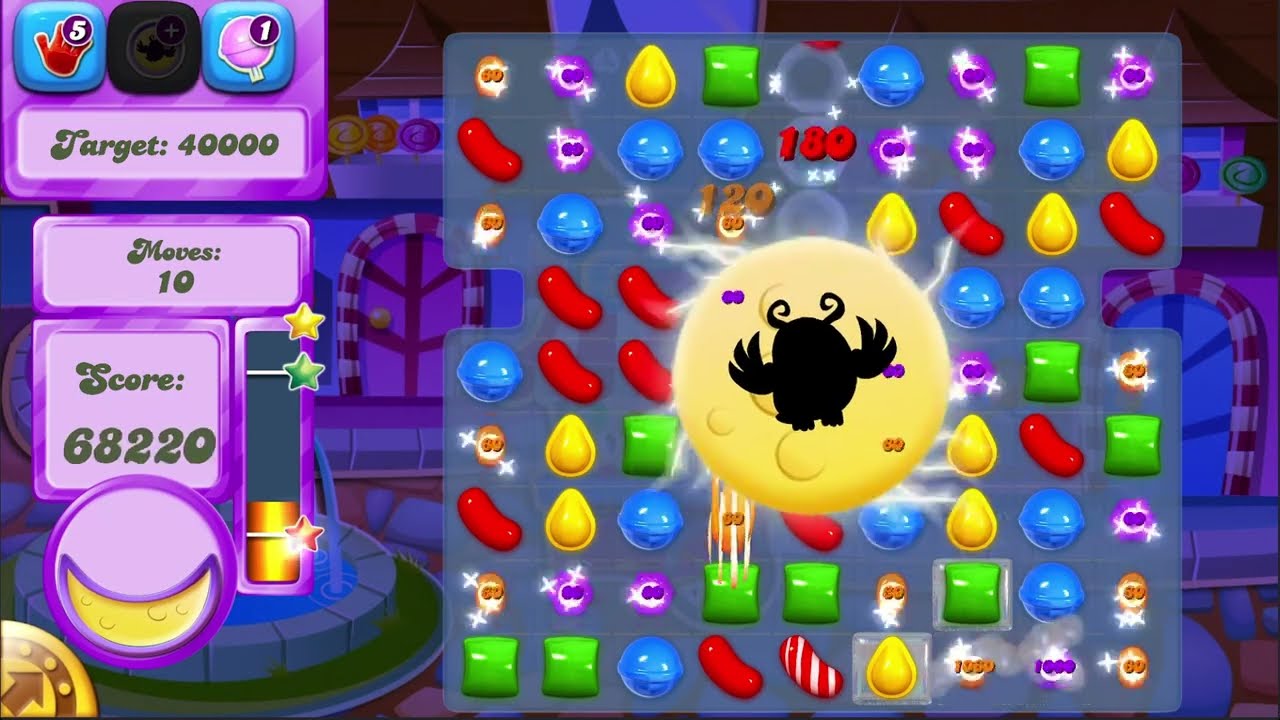
To succeed in the Dream World of Candy Crush Saga, you must master the Moon Scale mechanic. The core secret to winning these levels is simple: prioritize the stability of Odus the Owl over aggressive board clearing. By treating every move as a weight-based decision rather than just a match-3 opportunity, you can prevent the sudden failures that define this challenging game mode.
Understanding the Moon Scale Mechanic
The Moon Scale is the defining feature of Dream World levels. It acts as a live, visual tracker of the color distribution of the candies you have cleared. If you remove too many candies of one color without balancing them with another, the scale tilts too far, and Odus the Owl falls off his perch, ending your game instantly.
Think of the Moon Scale as a seesaw. Every color in the game has a specific "weight" in the eyes of the scale. When you clear a match, the scale shifts. Your primary goal is to keep the scale as close to the center as possible.
- Visual Cues: Watch Odus closely. He will begin to wobble and lean toward the side of the scale that is tipping. This is your cue to switch tactics immediately.
- Color Tracking: Before making a move, look at the colors currently on the scale. If the scale is leaning to the left, look for matches involving the colors on the right side of the board to pull the balance back to center.
Strategic Color Management and Cascade Control
In standard levels, cascades are your best friend. In the Dream World, they are often a death sentence. A massive combo that clears half the board can accidentally remove a high volume of one specific color, causing the Moon Scale to plummet instantly before you even have a chance to react.
To mitigate this risk:
- Avoid Bottom-Heavy Play: Cascades occur most frequently when you clear candies at the bottom of the board. Only make bottom-row matches when the Moon Scale is perfectly centered.
- The Buffer Zone: If the scale is perfectly balanced, you have a small "buffer." This allows for minor, incidental cascades during your move without triggering an immediate failure. Always aim to restore this buffer after any major board disruption.
- Single-Color Awareness: If a specific color is dominating the board, avoid clearing it unless you absolutely must. Leaving those candies for a later turn keeps your options open for when you need to "weigh down" the opposite side of the scale.
Mastering Odus the Owl’s Perch
Odus the Owl is not just a mascot; he is the game's way of telling you that you are playing too aggressively. If you find yourself frequently losing in the Dream World, you are likely treating the mode like a standard level.
Effective players prioritize Odus’s safety. When you see Odus looking unstable, stop chasing your objective. Even if you are one candy away from a goal, if the scale is red-lined, you must take a "neutral" move. A neutral move is any match that helps re-balance the scale, even if it does nothing to advance your primary objective. It is better to waste one move to save the owl than to waste an entire life by failing the level.
Decision-Making Under Pressure
As you advance, Dream World levels introduce obstacles like chocolate, bombs, and meringues. These force you into tight spots where it feels like you must make a move that tilts the scale.
When you feel backed into a corner, use these decision-making steps:
- Assess the "Cost" of the Move: Before you touch a candy, ask: "If this triggers a cascade, will it tip the scale?" If the answer is yes, look for an alternative.
- Look for Neutrality: If you have no moves that balance the scale, look for matches that involve the colors currently least represented on the scale.
- Sacrifice Efficiency: You do not need to clear the board in the fewest moves possible. You only need to finish the level without the owl falling. If that means taking three moves to set up a safe match instead of one risky move, take the three moves.
Adapting to Difficulty Spikes
Higher-level Dream World boards are often designed to be unbalanced from the start. You might be handed a board with an overwhelming amount of one color.
- The Early Game: Use the first few moves of the level to establish a balanced board. Don’t worry about the primary objective (like clearing jelly) until you have a stable foundation.
- The End Game: Once you are near the end of your move count, you can afford to be riskier. If you are one move away from winning, it doesn't matter if you tilt the scale—the level will end before the owl has time to fall. Save your "all-in" moves for the very end of your move bank.
- Patience vs. Speed: The Dream World punishes speed. If you find yourself rushing, close the game for a moment and reset your focus. The mechanics require tactical, methodical thinking, not reflex-based matching.
Common Mistakes to Avoid
Many players fail because they get "tunnel vision" on the main objective. Here are the most common pitfalls:
- Ignoring the Scale: Never look at the board without glancing at the Moon Scale first. It should be a rhythmic check: Look at the scale, look at the board, make the move.
- Over-relying on Color Bombs: Color bombs in the Dream World are extremely powerful but dangerous. Clearing a color bomb removes a massive amount of one specific color. If your scale is already leaning, a color bomb will almost certainly cause the owl to fall. Use them only when the scale is perfectly centered.
- Panic Clearing: When a board gets messy, players tend to clear as many candies as possible to "reset" the board. In the Dream World, this is exactly what leads to failure. Stay calm and clear only what is necessary to maintain balance.
By mastering the Moon Scale and treating Odus the Owl’s position as your most important metric, you will find that the Dream World is not only beatable but a rewarding test of your strategic planning skills. Focus on balance, control your cascades, and prioritize stability over speed.

Free Candy Crush Saga Codes
Current active codes and how to redeem them.

Michael Smith
Michael covers live-service games, events, reward systems, and efficient daily routines, turning frequent updates into clear actions for players.
COMMUNITY
Player Comments
131 players commented on this guide.
The explanation is clear, especially for beginners.
This helped me understand updates much better.
I wish I had read this before upgrading the wrong thing.
This saved me time in the early game.