
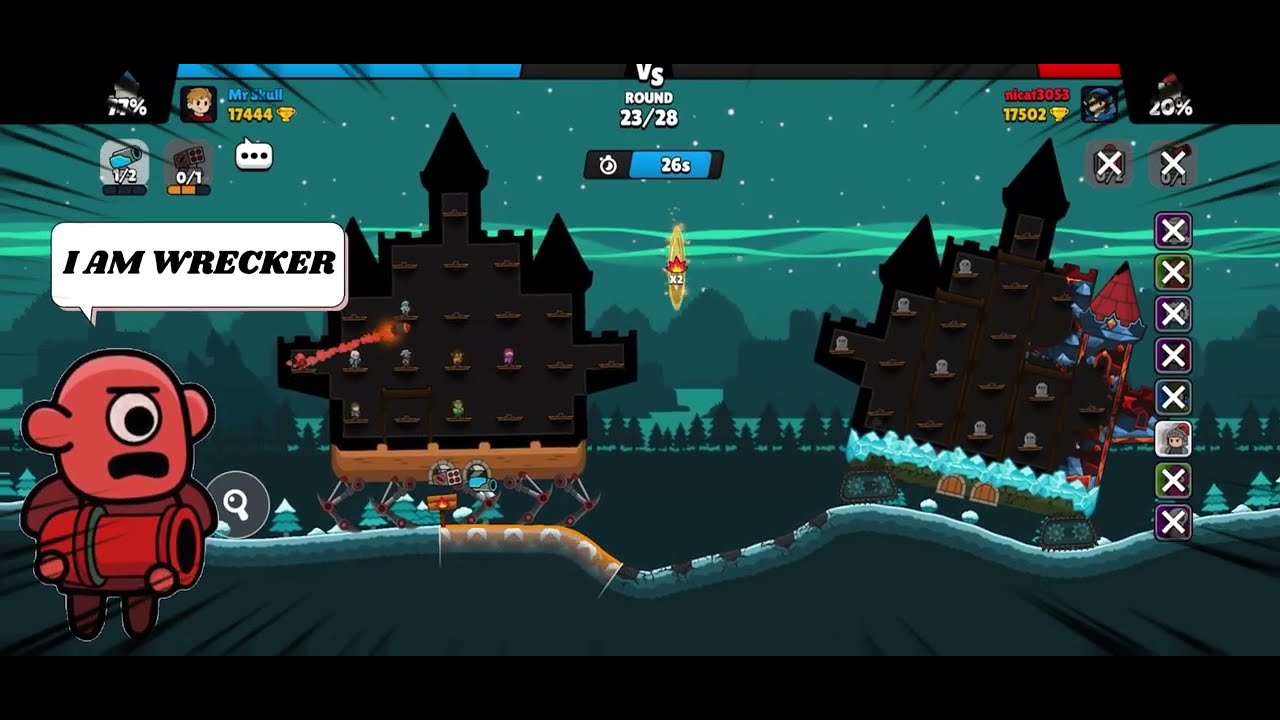
To dismantle enemy fortresses efficiently in Castle Busters, select heroes whose attack trajectories, damage types, and payload effects counter the specific layout and materials of the opponent's keep. Matching your units to structural vulnerabilities reduces required attacks and accelerates structural collapse.
| Attack Trajectory / Type | Primary Target | Siege Function |
|---|---|---|
| High-Arc Lob | Roofs, interior chambers, center structures | Bypasses outer walls for top-down collapse |
| Low-Arc / Direct Fire | Gates, lower walls, base pillars | Punches through armored fronts and foundations |
| Area of Effect (AoE) | Clustered units, wide building groups | Clears outer clutter and softens wide fortifications |
| Point Damage | Support pillars, platforms, specific blocks | Focuses force on critical structural weak points |
Matching Trajectories to Castle Silhouettes
Every hero launches attacks along a specific trajectory. Observing the baseline arc before firing determines whether a hero should strike from above or target the base.
- High-Arc Trajectories: Use lobbed shots to bypass high perimeter walls. Striking roofs or middle structures triggers top-down chain collapses that bring down upper floors without wasting attacks on heavy exterior armor.
- Low-Arc and Direct-Fire Trajectories: Direct shots punch through front gates and lower walls. Use these line-of-sight attacks to breach the foundation layers that stabilize the entire keep.
- Ricochet and Bouncing Projectiles: Select heroes with bouncing attacks when facing irregular castles with narrow gaps or internal trap rooms. These projectiles skip past exterior defenses to reach interior targets that direct fire cannot hit.
Balancing Point Damage and Area of Effect
Heroes fulfill distinct roles based on whether they inflict localized point damage or wide area-of-effect (AoE) damage.
- Point Damage: Deploy precision heroes against isolated support pillars, central weight-bearing beams, or specific hero platforms. Using point-damage units against wide, spread-out structures wastes their single-target potency.
- Area of Effect (AoE): Deploy AoE heroes against dense building clusters, multi-story barracks, or grouped defensive units. Striking the center of mass in clustered sections dismantles multiple blocks simultaneously.
Material Strengths and Payload Selection
Castle structures consist of materials with varying resistance levels, including wood, stone, and reinforced steel. Align your payload type with the primary building material of the target section.
- Wood: Standard physical impact forces quickly fracture brittle wooden blocks and light scaffolding.
- Stone and Reinforced Steel: High-impact, explosive, or fire payloads act as damage multipliers against heavy stone and metal fortifications. Light projectiles risk bouncing off dense stone walls without dealing significant structural damage.
Tactical Deployment Sequence
Succeeding in real-time sieges requires deploying heroes in a clear two-phase sequence rather than attacking single points at random.
- Softening Phase: Lead with AoE heroes to strip away outer defenses, clear enemy defender units, and expose structural supports inside the castle.
- Precision Phase: Switch to low-arc direct fire or high-point-damage heroes to strike the key load-bearing pillars exposed during the softening phase.
This sequence prevents premature collapses that bury interior targets and ensures maximum damage per hero deployment.

Free Castle Busters Codes
Current active codes and how to redeem them.

Sarah Williams
Sarah specializes in RPG and collection games, explaining team building, character growth, and beginner-friendly ways to avoid expensive early mistakes.
COMMUNITY
Player Comments
149 players commented on this guide.
Nice guide. I am checking the other Castle Busters articles next.
The explanation is clear, especially for beginners.
Can you add more details about heroes in a future update?
This saved me time in the early game.