
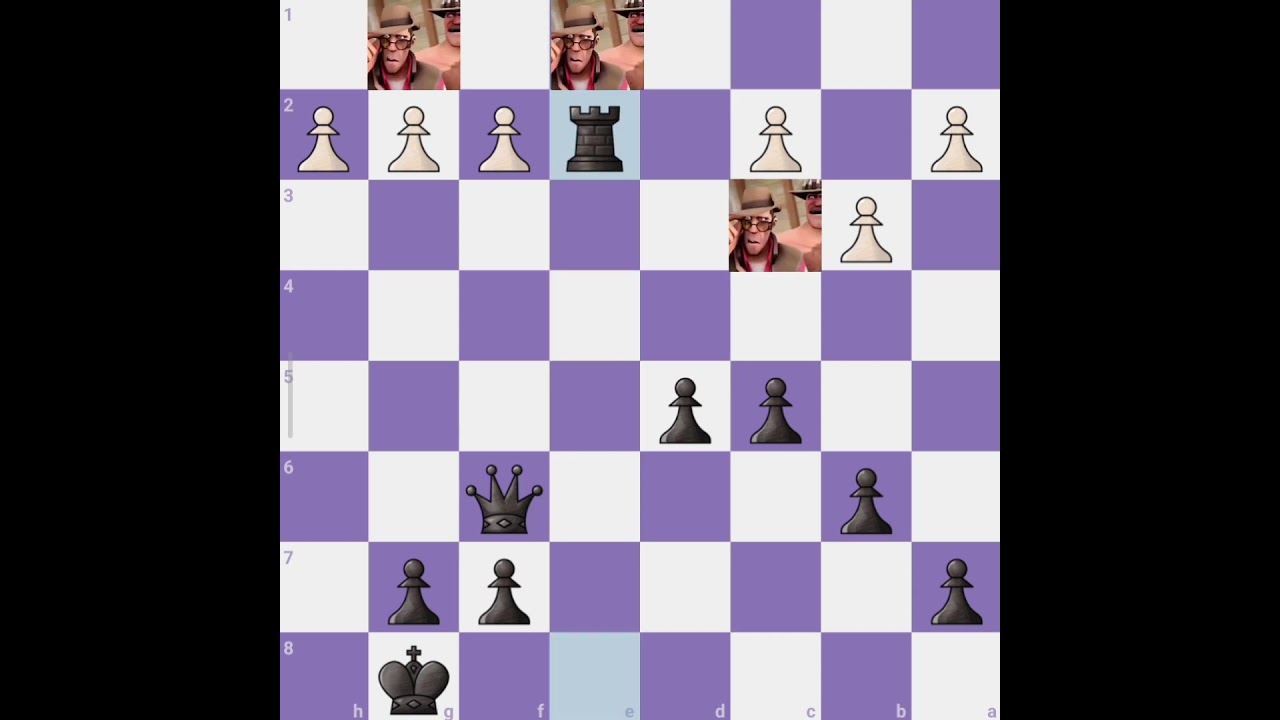
To execute a successful bishop sacrifice in Chess.com - Play and Learn, you must trade your three-point minor piece for an enemy pawn or defensive anchor to strip the opponent's king protection, followed immediately by forcing checks from your queen and knights. Never sacrifice a bishop on speculative attacking hopes. You must calculate a concrete sequence where your remaining pieces arrive before your opponent can consolidate the extra material.
Executing the Greek Gift Sacrifice
The Greek Gift sacrifice against h7 (or h2 when playing Black) is the most common tactical bishop strike against a castled king. It succeeds when the defender's f6 knight is absent or traded away, and you control the g5 and h5 squares.
Execute the breakthrough using this three-step sequence:
- The Sacrificial Breach: Play Bxh7+ to deliver check. Your opponent must either capture the bishop with Kxh7 or concede castling rights by retreating to h8.
- The Knight Leap: Follow up immediately with Ng5+. This move delivers check and establishes an aggressive forward outpost controlling f7 and h7.
- The Queen Infiltration: Route your queen to h5 or g4 depending on where the enemy king steps. This threatens direct mate along the open h-file or forces the exposed king forward into the center of the board.
Common Bishop Sacrifice Tactical Patterns
Disguised bishop attacks rely on diagonal line clearance and deflection. Because bishops exert long-range pressure across the entire board, players often overlook threats originating from distant squares like c1, b2, or g2 until a blocking pawn or knight vacates the diagonal.
| Sacrifice Type | Target Square | Key Supporting Pieces | Tactical Objective |
|---|---|---|---|
| Greek Gift Strike | h7 or h2 | Queen on d3 or h5, knight on g5 | Strip castled king shelter to force checkmate |
| Fianchetto Clearance | b7 or g7 | Queen, heavy rook on open file | Rip open long diagonals and attack back ranks |
| Deflection Blow | f7 or f2 | Active knight on e5, rook on f-file | Shatter king coordination and win undefended pieces |
| Double Bishop Blast | h7 and g7 | Queen on g4 or h5, third-rank rook lift | Decimate both defensive pawn shields in open files |
Calculation Checklist Before Sacrificing Material
A bishop sacrifice permanently surrenders three points of material. If your opponent absorbs the initial wave of checks, they will trade down into a won endgame. Run through these four checks before committing your bishop:
- King Escape Routes: Confirm whether the enemy king can slip out via flight squares like e7 or f8 into safety.
- Defensive Interceptions: Check if the opponent can block incoming lines with a defensive knight jump to f8 or a pawn push such as f5.
- Arrival Speed: Count the exact tempo count required for your queen, knight, or rook to deliver threats before the defense reorganizes.
- Fallback Perpetuals: Ensure you have a perpetual check sequence or a line that regains equal material if the opponent finds the best defensive moves.
How to Defend Against Bishop Sacrifices
Neutralizing incoming bishop sacrifices requires active prophylaxis against vulnerable entry squares:
- Anchor an f-file Knight: Maintain a knight securely on f6 (or f3 for White). This piece guards h7 against bishop captures and covers g4 and g5 against attacking knights and queens.
- Advance Flank Pawns: Play a timely h6 or a6 pawn move to physically deny enemy knights and bishops access to attacking outposts.
- Decline or Return Material: When an opponent launches a sacrifice, do not panic-capture. Calculate whether stepping the king aside or accepting the piece and immediately giving back material neutralizes the initiative while maintaining a positional advantage.

Free Chess.com - Play and Learn Codes
Current active codes and how to redeem them.

Michael Smith
Michael covers live-service games, events, reward systems, and efficient daily routines, turning frequent updates into clear actions for players.
COMMUNITY
Player Comments
148 players commented on this guide.
This helped me understand strategy much better.
The explanation is clear, especially for beginners.
Good guide for Chess.com - Play and Learn players. The strategy part was useful.
This saved me time in the early game.