
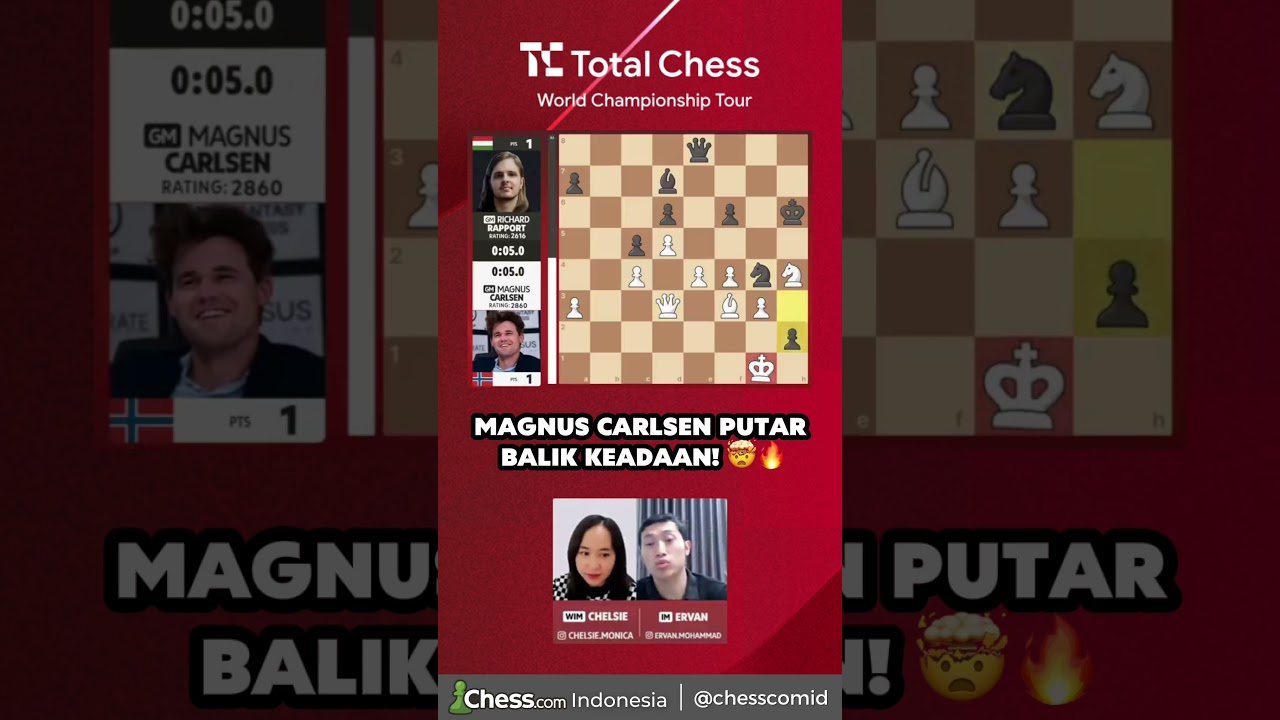
When facing a lost position in Chess.com - Play and Learn, shift immediately from passive defense to active complication. Objective engine lines often suggest quiet, technical defense, but human opponents struggle when forced to solve messy tactical dilemmas. Reversing a severe deficit requires creating friction, declining piece trades, and applying practical time pressure.
Complicating the Position and Denying Trades
Material trades inherently favor the player who is ahead, as each swap removes defensive obstacles and moves the game toward a straightforward endgame conversion. To keep winning chances alive, you must resist equal trades and keep tension on the board.
- Keep queens on the board: Queens provide the best opportunities for perpetual checks, sudden counter-attacks, and mating nets. Avoid trading queens when down material unless the exchange immediately recovers lost material.
- Maintain pawn and structure imbalances: Avoid opening files that provide your opponent's rooks with easy entry points. Keep pawn chains complex or push opposite-wing pawn advances to create mutual vulnerabilities.
- Forward-post your remaining minor pieces: Position knights and rooks on advanced, disruptive squares rather than tucking them into passive squares around your king.
Practical Swindles vs. Engine Defense
A practical swindle sacrifices formal positional soundness to maximize human difficulty. Instead of calculating how to hold a slightly worse endgame, set traps that tempt an overconfident attacker into overextending.
| Strategic Factor | Objective Engine Play | Practical Swindle Strategy |
|---|---|---|
| Material Balance | Protects point totals and limits losses | Sacrifices material to open dynamic counter-attack lines |
| Piece Exchanges | Accepts trades that preserve evaluation | Declines trades to keep piece density and complexity high |
| King Safety | Prioritizes structural pawn shelter | Accepts checks and open files to activate pieces |
| Tactical Approach | Aims for optimal defensive draws | Sets disguised traps and baits overextension |
Set deep traps disguised as natural moves rather than obvious one-move tricks. When an opponent believes the game is already decided, dangling a poisoned pawn or inviting an attack can lure their heavy pieces into vulnerable outposts, allowing an immediate counter-strike.
Weaponizing the Game Clock
Time trouble is an effective equalizer in rapid and blitz matches on Chess.com - Play and Learn. When an opponent's clock drops below thirty seconds, complex calculations become difficult and the likelihood of a blunder rises sharply.
- Pick up your move tempo: Play purposeful, forcing moves quickly so your opponent cannot use your thinking time to calculate ahead.
- Generate immediate threats: Make moves that attack loose pieces, threaten checks, or introduce mating pins. Forcing your opponent to spend several seconds checking for phantom threats rapidly drains their time.
- Use pre-moves safely: In severe time scrambles, pre-move safe checks and obvious recaptures to preserve your own clock while keeping up continuous pressure.
Reviewing Turnarounds in Game Review
After the match concludes, use the Chess.com Game Review tool to analyze how the turnaround unfolded. Open the match analysis and locate where the Evaluation Bar swung back toward equality.
Examine the specific move where your opponent cracked:
- Did they miss a tactical counter-threat because they relaxed too early?
- Did they commit a blunder under time trouble?
- Did your practical complication create a problem the engine labeled an inaccuracy, but which proved impossible for a human to solve over the board?
Documenting these tactical triggers helps you identify repeatable ways to turn lost games into practical wins.

Free Chess.com - Play and Learn Codes
Current active codes and how to redeem them.

James Brown
James focuses on Android gaming on PC, emulator setup, controls, performance tuning, and practical troubleshooting for longer play sessions.
COMMUNITY
Player Comments
142 players commented on this guide.
Nice guide. I am checking the other Chess.com - Play and Learn articles next.
The explanation is clear, especially for beginners.
The tips are practical and easy to follow.
I tried this today and it worked better than my old setup.