
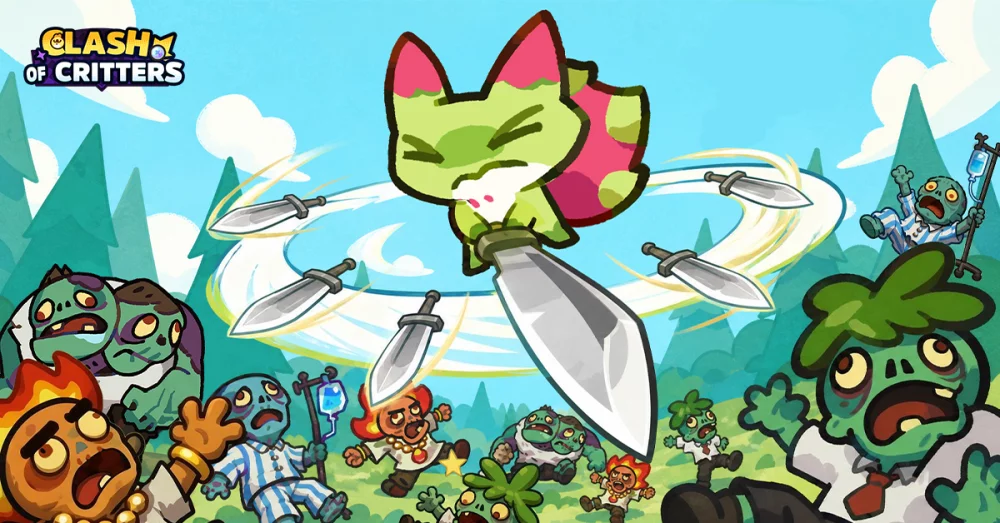
In Clash of Critters, the moment you teleport into a new map, you are thrust into a high-stakes survival scenario. The early-game environment is designed to be punishing, with dense clusters of hostile creatures ready to overwhelm under-equipped players. Survival in these first few minutes is not about combat; it is about mastering reactive movement, spatial awareness, and environmental exploitation. This guide provides the tactical blueprint you need to survive your arrival and transition from a vulnerable target to a strategic commander of your own critter army.
Identifying Immediate Threat Clusters
The primary cause of early-game failure in Clash of Critters is "spawn-clumping," where players materialize in the center of an enemy patrol path. When you first enter a zone, your priority must be an immediate threat assessment.
- The Peripheral Scan: Within the first two seconds of spawning, rotate your camera to check for red-tinted indicator icons. These denote hostile entities currently tracking your position.
- The Three-Unit Buffer: Maintain a minimum distance of three units from any roaming mob. If a monster’s idle animation shifts into a combat stance, it has locked onto you.
- Avoid Engagement: Resist the urge to attack. Starter units lack the DPS to clear clusters, and engaging will only anchor you to a single position, making you a target for flanking enemies. Your goal is to move, not to fight.
Mastering Kinetic Evasion Patterns
Survival in Clash of Critters relies on kinetic movement—the art of using the game’s pathfinding AI against itself. Because monsters typically move in predictable linear paths, you can exploit their turning radius to escape unscathed.
When being pursued, never run in a straight line. The AI follows your most recent vector; by utilizing a zig-zag movement pattern, you force the enemy to continuously recalculate its path. This constant "pathfinding reset" slows down the enemy significantly.
Pro-Tip: If you are being chased through dense terrain, use "lateral stutter-stepping." By moving perpendicular to the monster’s pursuit line, you force it to turn its entire hitbox, which often causes it to stumble or delay its attack animation. This extra half-second is often the difference between taking a hit and clearing the danger zone.
Leveraging Environmental Barriers
The environment is your most potent tool for crowd control. When monster density becomes unmanageable, look for specific terrain features to reset aggro.
- The Verticality Advantage: Many early-game enemies in Clash of Critters are programmed with rudimentary pathfinding that struggles with steep inclines. If a chase begins, prioritize finding higher ground. If you can jump onto a ledge or a platform that requires a specific traversal path, the AI will often lose interest and return to its spawn point.
- Line-of-Sight Breaking: Use large environmental assets—such as ancient ruins, boulders, or dense thickets—to break the line of sight. Once the enemy loses visual contact with your character for more than two seconds, their aggression resets.
- Bottlenecking: If you are cornered, lead the pack toward a narrow mountain pass or a gap in the trees. By forcing them into a single-file line, you effectively turn a group of five monsters into a series of five individual 1v1 encounters, which are far easier to manage if you are forced to fight.
The Trade-off: When to Evade vs. When to Engage
While evasion is the safest route for early survival, it comes with a significant cost: resource stagnation. Every monster you bypass is an experience point and a potential crafting material you are leaving on the table.
- The "Zone Trapping" Risk: If you spend your entire early game running, you risk moving further into the map, where ambient spawning density is naturally higher. Eventually, you will run out of map space.
- Controlled Aggression: Once you have created distance, identify the weakest member of a nearby cluster. If you have successfully managed your stamina, you can occasionally turn to pick off a straggler. Only do this if you have a clear "escape path" behind you.
- The 30/70 Rule: For the first 30 minutes of a new zone, spend 70% of your time moving/evading and 30% of your time scouting for high-value resource nodes. Do not prioritize combat until you have established a "safe zone" or temporary base.
Strategic Repositioning for Long-Term Progression
Once you have evaded the initial threats, you must pivot from survival to territorial establishment. This is where most players fail by setting up a base in high-traffic, monster-dense areas.
- Observe Patrol Cycles: Spend three full day-night cycles observing the local fauna. Every monster in Clash of Critters operates on a patrol loop. By timing your traversal during their reset phase, you can safely navigate through otherwise dangerous territory.
- Periphery Building: Never build your base in the center of a zone. Always look for the edges of the map where the biome transitions. These areas are typically "low-patrol" zones, providing you with a quiet space to manage construction and unit evolution without constant harassment.
- Pathing to Safety: Always leave at least two "exit paths" from your base. If an event or a high-level roaming boss wanders too close to your base, these exit paths allow you to evacuate your resources quickly rather than being trapped in your own walls.
By moving with intention and prioritizing the terrain over your own combat strength, you can survive the harsh world of Clash of Critters. Remember: a smart player who knows when to run always outlasts a reckless player who thinks they can fight everything they see.

Free Clash of Critters Codes
Current active codes and how to redeem them.

Emily Johnson
Emily writes practical mobile strategy guides with a focus on resource planning, base progression, and the early decisions that shape a long-term account.
COMMUNITY
Player Comments
102 players commented on this guide.
This saved me time in the early game.
I tried this today and it worked better than my old setup.
The explanation is clear, especially for beginners.
The tips are practical and easy to follow.