
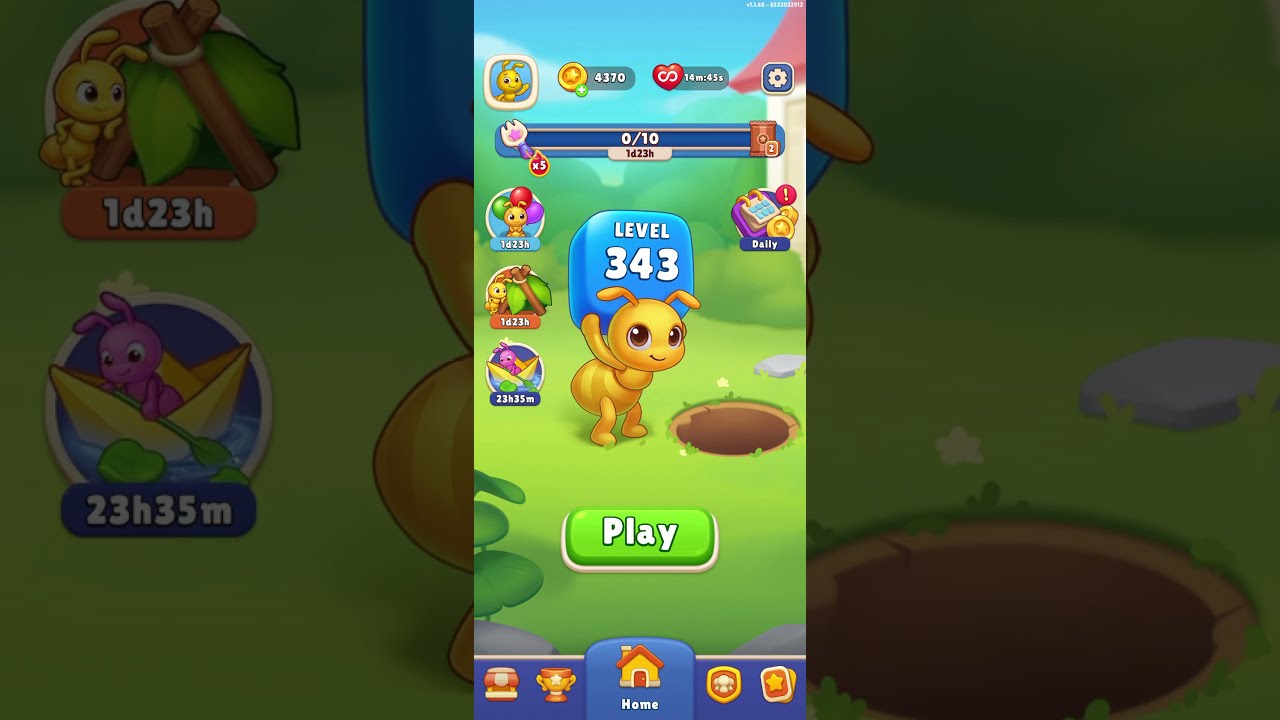
To beat Level 343 in Colony Flow!, clear the completely unobstructed color paths along the outer perimeter before attempting to move any pieces in the tangled center. Rushing the center causes overlapping color paths to collide at shared intersections, quickly filling your limited colony slots and causing a deadlock.
Following an outside-in peeling sequence clears open corridors around the borders, giving interior units the turning radius and transit lanes needed to reach their matching color goals.
Step-by-Step Level 343 Solution Strategy
Manage the board across four distinct phases to avoid lane collisions and slot overflow.
| Phase | Priority Action | Board Objective | Failure Risk |
|---|---|---|---|
| Early Opening | Dispatch unobstructed edge units | Clear boundary paths to create open turn corridors | Blocking exterior exits with prematurely triggered internal flows |
| Mid-Game Transition | Peel off secondary perimeter layers | Open secondary intersections feeding into the central zone | Creating bottleneck collisions in narrow convergence points |
| Core Resolution | Untangle central interlocking colors | Route high-density queues into freed exterior transit lanes | Overflowing holding slots while waiting for paths to clear |
| Late Clean-Up | Flush remaining isolated color queues | Empty the final static units cleanly into remaining gates | Misaligning color sequences and causing late deadlocks |
1. Clear Outer Perimeter Paths First
Survey the border channels before making your first move:
- Identify color groups along the top and side edges that have a straight shot or a simple single-turn path to their destination hole.
- Trace each candidate queue backward to ensure no stationary unit crosses its line of travel.
- Release only those units that can travel from start to finish without pausing in an intersection.
Clearing these outer paths removes border boundaries and converts edge tiles into empty highways for interior traffic.
2. Untangle the Central Intersection
The main obstacle in Level 343 is an interlocking central knot where perpendicular color lanes block each other's exits:
- Locate the primary blocking unit, which is typically a short color queue pinned directly across the mouth of a longer lane.
- Advance this blocking group into the cleared outer perimeter or directly into its target gate if the path is open.
- Immediately dispatch the freed queue behind it through the cleared intersection.
- Complete the entire sequence for that intersection before shifting your attention elsewhere. Leaving half-cleared lanes creates new roadblocks in your transit corridors.
3. Maintain Staging Slot Discipline
Limited staging slots mean you cannot park unassigned cubes in intermediate buffer spaces without a planned exit:
- Confirm exit availability: Never launch a color stream unless its target hole is already open or will clear during the current movement cycle.
- Check tail clearance: Ensure the final unit of a moving queue completely clears crossing intersections so it does not trap adjacent lanes.
- Avoid holding tiles: Treat newly opened cells as transit lanes rather than temporary storage. Stationary cubes in intermediate spaces block later rerouting attempts.
4. Route Final Queues via Perimeter Corridors
Once the central knot is broken, the remaining pieces consist of short, scattered queues:
- Route each remaining color group around the outer perimeter edges toward its matching hole rather than cutting through the messy center.
- Dispatch queues one at a time, allowing each stream to finish docking before releasing the next group.
Taking the longer path along the cleared perimeter carries no penalty and prevents accidental collisions with remaining static units.

Free Colony Flow! Codes
Current active codes and how to redeem them.

Emily Johnson
Emily writes practical mobile strategy guides with a focus on resource planning, base progression, and the early decisions that shape a long-term account.
COMMUNITY
Player Comments
50 players commented on this guide.
I wish I had read this before upgrading the wrong thing.
The explanation is clear, especially for beginners.
The tips are practical and easy to follow.
Can you add more details about strategy in a future update?