
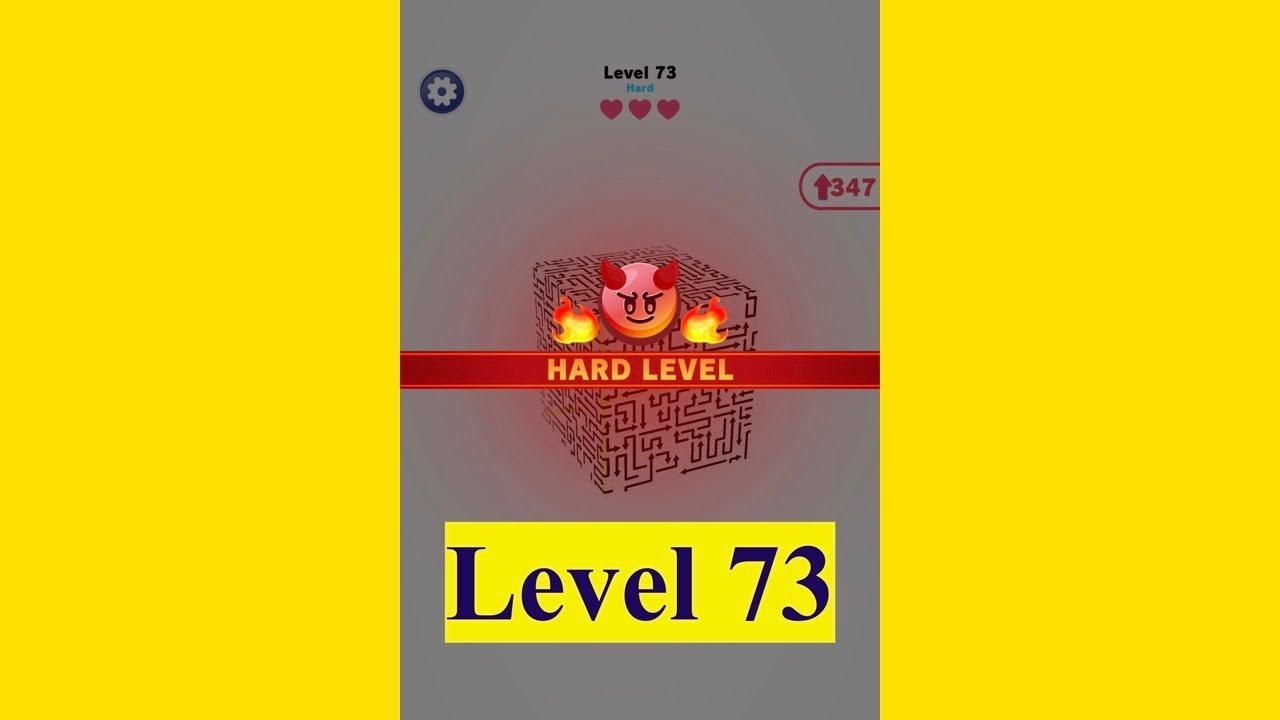
Level 73 of CubeAway is a definitive "skill-check" stage that separates casual players from those who have mastered spatial reasoning. At this point in the game, the developers introduce complex, overlapping directional constraints that make simple trial-and-error nearly impossible. To clear Level 73, you must stop looking at the board as a collection of individual blocks and start viewing it as a series of interconnected mechanical dependencies.
The key to solving this level is central column prioritization. By clearing the center first, you create a "decompression zone" that allows you to maneuver peripheral blocks that are otherwise locked by the game's strict arrow-based movement rules.
The Mechanics of CubeAway Directional Constraints
In CubeAway, every block is governed by an arrow indicator. These arrows are not merely aesthetic; they are hard-coded directional requirements. A block can only be removed from the grid if its arrow is pointing toward an open edge of the cube.
In Level 73, you will encounter blocks with arrows pointing inward toward the center or toward other blocks. This is the primary source of frustration for players. You cannot move these blocks until the obstruction in their path is removed. Understanding this "dependency chain" is the secret to mastering the mid-70s levels. Before touching any block, trace its arrow to its destination. If it points to an occupied tile, that tile is your current objective, not the block you are currently looking at.
Step-by-Step: Prioritizing Central Column Clearance
The central column of the cube in Level 73 acts as a structural anchor. If you clear the outer edges prematurely, you will find yourself with a dense, unmovable cluster in the middle. Follow this logic to maintain board flow:
- Survey the Center: Identify the blocks in the core 3x3 grid that have arrows pointing directly to an exit.
- Clear the "Exit-Ready" Center Blocks: Remove these first. This provides the spatial buffer needed to rotate the cube and see the faces you were previously blind to.
- Identify "Anchor" Obstructions: Look for blocks in the center that are blocked by other center blocks. Clear the blocking pieces first.
- Peripheral Expansion: Only once the central column is reduced by at least 50% should you move to the outer edges. This ensures that when you shift outer blocks, they have a "landing zone" or a path to move into the now-empty center to align with an exit.
Strategic Pivot Points: Managing Complex Patterns
A "Pivot Block" in CubeAway is a piece that, when moved, unlocks a pathway for two or more other blocks. Level 73 is specifically designed with these pivot points.
If you find that every move you make results in an "invalid move" icon, you have hit a bottleneck. This happens when you have prioritized the wrong sequence. To fix this:
- Rotate the Perspective: Use your camera controls to look at the cube from the "bottom" or "side" profiles. Often, a block that looks like it is pointing at a wall is actually aligned with an exit on a different face of the cube.
- The "One-In, One-Out" Rule: If you are unsure which block to move, look for the block that requires the fewest moves to reach an edge. Clearing it is always the safer play to avoid board density issues.
Avoiding Common Mistakes in Level 73
Even experienced players often fall into these three traps during Level 73:
- The Bait Trap: The game places easy-to-remove blocks on the corners. While tempting, these are often "bait." If you remove them too early, you lose the ability to shift adjacent blocks that need a specific wall-bounce or buffer to reach an exit.
- Ignoring the Backside: Players frequently forget that the cube has a backside. Always rotate the cube fully before making a move. There is almost always a hidden path on the rear face that is essential for solving the front-facing grid.
- Over-Commitment: Don't clear a line just because you can. If clearing a block puts another important piece in a "dead" position where its arrow points into a wall, leave that block alone for now.
Advanced Sequencing for the Final Third
The final third of the board is where the difficulty spikes. You are often left with 5–8 blocks that must be removed in a very specific order. If you mess up the sequence, you will be forced to restart the level.
The "Work-Backward" Technique: When you reach the final few blocks, stop and perform a reverse calculation. Start at the exit point and ask: "Which block needs to be here to satisfy its arrow requirement?" Then look for the piece blocking it. Remove the blocker. Repeat this process until you have a clear path for all remaining pieces. This turns the chaos of the end-game into a simple logic puzzle.
Why This Strategy Works
This approach works because it respects the spatial constraints of the CubeAway engine. By clearing the center, you effectively increase the "degrees of freedom" for the remaining blocks. The game’s difficulty in Level 73 is not about speed; it is about managing the limited space available on the cube's faces.
When you treat the board as a structural puzzle rather than a clearing task, the "deadlocks" disappear. By the time you reach the final pieces, you will have enough empty space to shift blocks into their required orientation, ensuring you clear the stage with minimal restarts. Remember, every move is a permanent change to the board's state—think two moves ahead, clear the center, and always verify your exit paths before committing.

Free CubeAway Codes
Current active codes and how to redeem them.

Emily Johnson
Emily writes practical mobile strategy guides with a focus on resource planning, base progression, and the early decisions that shape a long-term account.
COMMUNITY
Player Comments
93 players commented on this guide.
The explanation is clear, especially for beginners.
The tips are practical and easy to follow.
This guide answered the exact question I had.
Can you add more details about updates in a future update?