
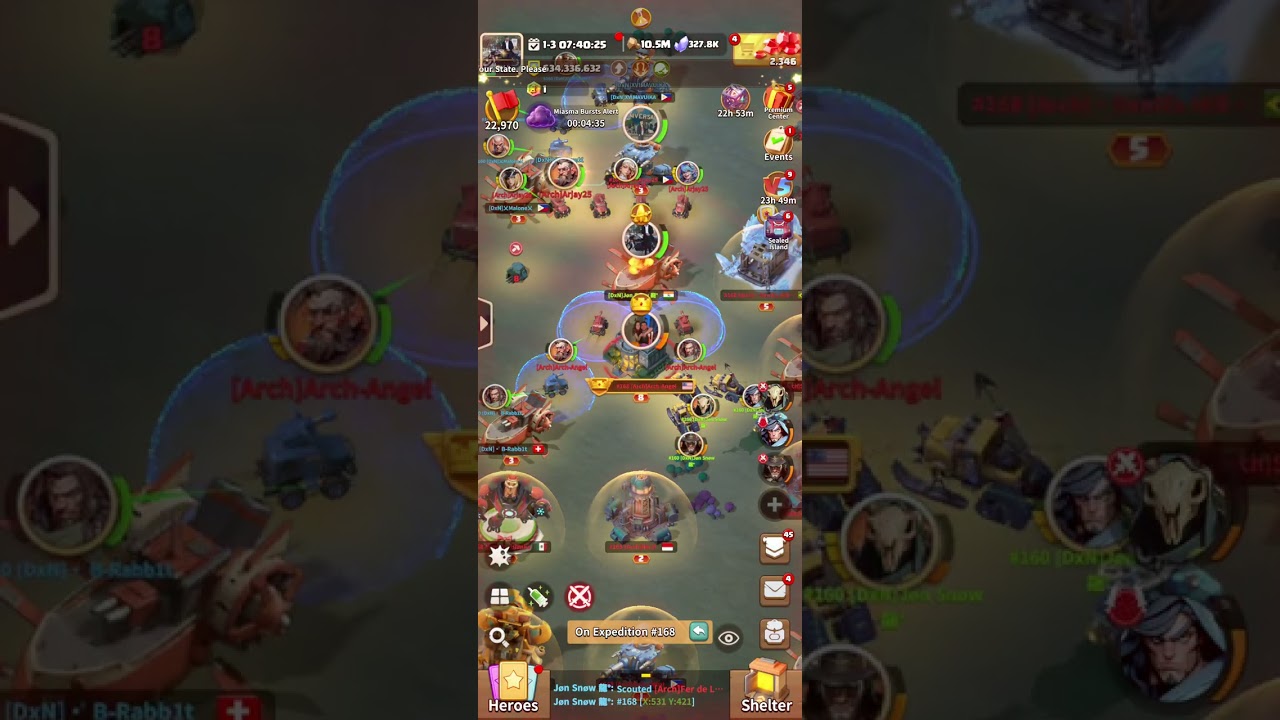
To emerge victorious in high-stakes combat in Dark War: Survival, you must move beyond simple power-level comparisons and focus on active tactical engagement. When faced with evenly matched opponents—such as the common 160 vs 168 power level scenarios—the difference between winning and losing lies in how effectively you manage hero ability cooldowns and formation placement. Success in these close-margin fights requires precise execution during the heat of battle to overcome an opponent's defensive advantages and maximize your squad’s output.
Evaluating Power Parity and Combat Realities
In Dark War: Survival, a marginal difference in total power does not guarantee victory. When you engage an opponent with a power level nearly identical to your own, the game’s combat engine balances the encounter heavily on your ability to deploy skills manually rather than relying on auto-battle. Players often mistake similar power numbers for a guaranteed "fair" fight, but your unit composition and the specific synergies between your deployed heroes often override the raw numerical value displayed on the pre-combat screen.
When viewing combat logs or live engagements, notice how the combat flow shifts based on which side triggers their ultimate abilities first. In a 160 vs 168 power scenario, the eight-point power gap is negligible compared to the tactical impact of a single well-timed crowd-control ability. Always prioritize observing the enemy’s vanguard composition before committing to these high-stakes engagements, as specific hero counters can nullify your power advantage regardless of your current stats.
The Critical Advantage of Manual Skill Activation
Relying on the game’s automatic combat settings is a common mistake when participating in intense, high-level player versus player encounters. In manual mode, you retain the ability to chain hero abilities together, creating a "burst" window that can wipe out enemy backline units before they have a chance to retaliate. By holding back a high-damage ability for a few seconds, you can ensure it lands after the enemy’s protective shield or damage-reduction buffs have expired.
Effective manual control involves watching the health bars of your front-line heroes. When your tank is nearing critical health, activating a healing or damage-mitigation skill can buy your damage-dealing heroes the extra five seconds required to turn the tide. In the 160 vs 168 scenario, the player who manages their ability cooldowns with the highest level of precision consistently wins, as they effectively "out-damage" the auto-battle logic that often wastes abilities on low-health targets or fires them during enemy invulnerability windows.
Advanced Positioning Tactics for Edge-Case Encounters
Strategic placement of your heroes within the formation grid is essential for mitigating incoming damage in tight matchups. If you are struggling against an opponent with slightly higher power, try shifting your strongest defensive units to absorb the focus fire of the enemy’s primary damage dealer. This "tanking" strategy forces the opponent to waste their high-impact abilities on your most resilient units, allowing your secondary units to operate safely for the duration of the fight.
Consider these tactical shifts when preparing for high-stakes combat:
- Frontline Rotation: Place heroes with self-sustain or high dodge rates at the front to delay the enemy’s advance.
- Backline Protection: Keep your squishy, high-damage heroes behind a robust frontline, ensuring they are not hit by area-of-effect (AoE) abilities.
- Target Prioritization: Manually target the enemy healer or support hero first to prevent them from extending the duration of the combat and neutralizing your damage.
- Staggered Deployment: If you have multiple AoE damage dealers, wait for one to finish their animation before firing the next to prevent "overkill" on dying units.
Managing Ability Cooldowns Under Pressure
The "thrill" of a close combat encounter often leads to panicked button mashing, which is the most common cause of defeat in Dark War: Survival. Instead, treat your ability bar as a resource that must be spent efficiently. Avoid dumping all your skills simultaneously; stagger them to ensure you have a constant flow of damage or crowd control. This prevents the enemy from recovering and keeps the pressure high throughout the entire engagement.
Timing is particularly vital when your opponent uses heroes that provide temporary immunity or invulnerability. If you fire your strongest attacks while the enemy is shielded, you effectively waste your most valuable tactical resources. Monitor the visual cues on the screen—such as glowing armor or specific status effects—that indicate a defensive ability is active. Wait for the animation to fade, then unleash your full combo to maximize your combat efficiency.
Recognizing the Limitations of Tactical Play
While manual control provides a distinct advantage, it requires a high level of situational awareness that may not be sustainable in every game mode. In scenarios where you are fighting multiple waves of enemies or managing large-scale battles, the mental load of tracking every cooldown can lead to fatigue. Use manual control primarily for high-stakes, "even-power" fights where the outcome is uncertain and the stakes—such as territory control or ranking—are high.
Be aware that manual control also has a limit: if your heroes are significantly under-leveled or lack proper gear, no amount of tactical timing can compensate for a raw power deficit. Always ensure your heroes are upgraded to the current level cap and equipped with the best available gear before attempting to force a win through manual play. Tactics serve to maximize your current power, but they cannot replace the necessity of consistent long-term progression. By combining disciplined resource management with manual combat precision, you can consistently punch above your weight class in Dark War: Survival.

Free Dark War:Survival Codes
Current active codes and how to redeem them.

Sarah Williams
Sarah specializes in RPG and collection games, explaining team building, character growth, and beginner-friendly ways to avoid expensive early mistakes.
COMMUNITY
Player Comments
99 players commented on this guide.
Nice guide. I am checking the other Dark War:Survival articles next.
The explanation is clear, especially for beginners.
Good guide for Dark War:Survival players. The early game part was useful.
I tried this today and it worked better than my old setup.