
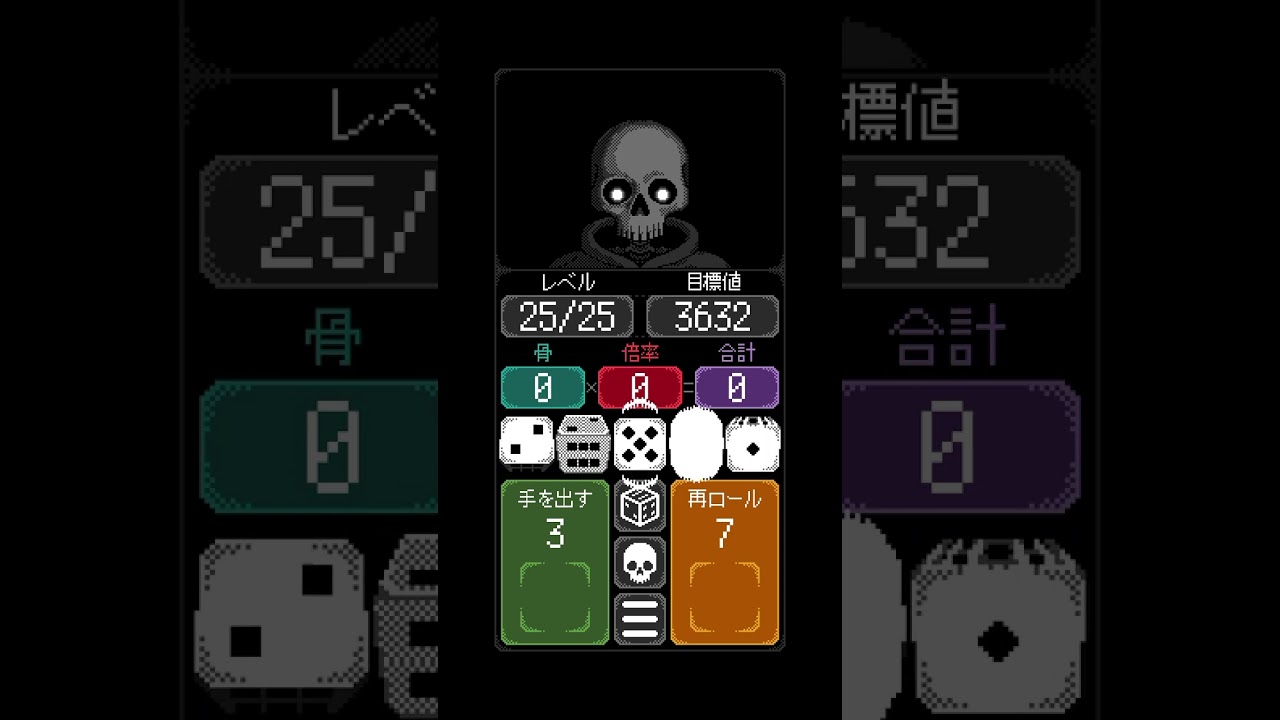
To reach Level 25 and trigger the ending cutscene in Dice of Kalma, you must transition away from flat-scoring dice hands and build an engine centered on compounding multipliers. Surviving the final stretch requires stripping low-impact dice from your pool, pairing specialized skulls to boost a single hand archetype, and banking rerolls so random opening rolls do not end your run.
Overcoming the Late-Game Score Scaling Spike
Basic combinations such as Pairs, Three of a Kind, and flat face bonuses provide enough points to clear the first 15 stages. Between Levels 20 and 25, however, stage point quotas increase sharply. Standard additive scoring hits a ceiling where even optimal natural rolls fail to meet required Kalma totals.
Surviving this threshold requires multiplicative scaling across all submitted hands:
- Sell off flat-value relics: Early-game items that grant modest static points dilute your inventory. Sell or replace them before entering the final five stages.
- Commit to one archetype: Focus your build around a single high-tier hand, such as a Full House or Five of a Kind, so your items repeatedly trigger on the same setup.
- Stack multipliers: Ensure that face modifiers and active skull abilities multiply each other rather than adding flat bonuses to the base sum.
Pruning and Sculpting the Dice Pool
Random rolls with mixed face values cannot produce the consistent high-tier hands required at Level 25. By Level 23, your dice pool should be streamlined enough to assemble your primary combination within one reroll.
Use shops and customization nodes to sculpt your pool around three priorities:
- Target Ranks: Convert off-rank faces into duplicates of your primary number to maximize high-tier combinations like Five of a Kind.
- Multiplier Inscriptions: Apply face modifiers that grant multiplicative bonuses when scored alongside matching skulls.
- Pool Thinning: Remove filler dice entirely to ensure high-synergy faces appear on every cast.
Skull Roles and Multiplier Management
Skulls supply the core passive multipliers needed to beat late quotas. Additive skulls become ineffective in the endgame, meaning your final slots must prioritize exponential triggers.
| Skull Category | Mid-Game Role | Value at Level 25 | Recommendation |
|---|---|---|---|
| Additive Scorer | Provides flat points for early clears | Poor | Replace before Level 20. |
| Multiplier Booster | Multiplies completed hand totals | Critical | Keep to establish baseline scaling. |
| Trigger Enhancer | Multiplies points per matching face | Essential | Stack to convert full sets into winning scores. |
| Cursed Skull | Offers extreme multipliers with penalties | Situational | Take only if the drawback does not consume rerolls. |
Exercise caution when considering cursed skulls in the final stages. Penalties that restrict reroll flexibility can end a run on Level 24 or 25. Only equip a cursed skull if its multiplier directly supports your primary hand and its negative condition is fully mitigated by your refined pool.
Protecting the Late-Game Reroll Economy
Arriving at the final stages without rerolls leaves you vulnerable to bad opening draws. Treat rerolls as a survival buffer rather than spending them aggressively to hunt items in mid-game shops.
- Maintain a reroll floor: Keep a reserve of reroll consumables or abilities during every shop visit within five stages of Level 25.
- Pace hand submissions: If an initial roll secures roughly 70% of a stage's quota, bank the hand and use subsequent turns to finish the target rather than spending rerolls to chase a single-hand clear.
- Prioritize economy relics: Equip items that award bonus rerolls upon submitting high-tier hands to replenish your reserves during extended encounters.
Executing the Level 25 Encounter
When Level 25 begins, check the total quota immediately and divide the required points across your available hand submissions. Attempting to clear the entire requirement in a single cast often leads to over-rolling and wasted reroll charges.
Open by locking in your most dependable high-synergy hand to establish a solid base score. Trigger your stacked multipliers across planned submissions until the Kalma meter fills completely. Locking in the final required points clears the encounter and triggers the ending cutscene and credits.

Free Dice of Kalma Codes
Current active codes and how to redeem them.

Emily Johnson
Emily writes practical mobile strategy guides with a focus on resource planning, base progression, and the early decisions that shape a long-term account.
COMMUNITY
Player Comments
122 players commented on this guide.
This helped me understand strategy much better.
This guide answered the exact question I had.
I tried this today and it worked better than my old setup.
This saved me time in the early game.