
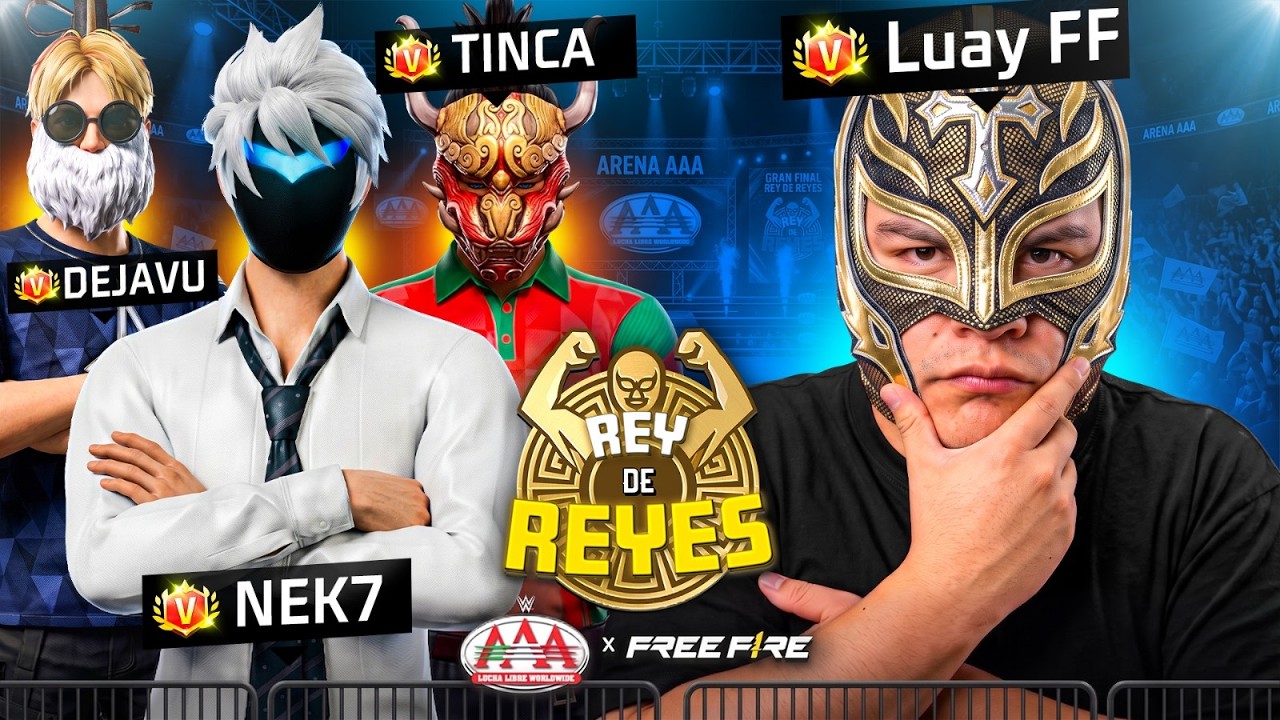
To dominate in Free Fire tournament finals, you must shift your mindset from standard ranked play to a high-intensity, objective-focused strategy. Success in competitive formats like the "Rey de Reyes" requires superior map awareness, precise squad synergy, and the disciplined use of utility items. In the finals, the goal is not to rack up the most eliminations, but to outlast the competition by controlling the map and neutralizing threats through coordinated movement.
Prioritizing Positional Advantage Over Aggression
In Free Fire tournament settings, consistent victories are secured by prioritizing superior positioning rather than seeking out unnecessary engagements. As the play zone shrinks, the ability to control elevated ground or central buildings becomes exponentially more valuable than hunting for individual kills. Teams that occupy the center of the zone early force outside squads to push into them, often resulting in easy defensive picks against opponents forced to move through open terrain.
When rotating, avoid open fields where your squad is vulnerable to long-range snipers. Instead, utilize "edge-to-edge" rotations, moving along the perimeter of the safe zone to minimize the number of directions from which enemies can attack. This defensive posture ensures that your team remains the hunters rather than the hunted, allowing you to pick your battles based on the movement patterns of other competing squads.
Tactical Gloo Wall Management for Survival
Gloo walls are the most critical utility item for surviving the intense pressure of a tournament final. In high-level play, players rarely engage in a firefight without immediate access to hard cover. You must treat your gloo wall inventory as a life-saving resource, deploying them not just for protection, but as a method to manipulate enemy line-of-sight during crucial rotations.
Master these tactical deployments to stay ahead:
- The Double-Wall Push: Deploy two gloo walls in a staggered formation to create a "staircase" or a wider barrier. This allows your squad to advance toward a building while protected from multiple angles.
- Healing Cover: Always place a gloo wall before attempting to revive a downed teammate, ensuring you have at least three seconds of uninterrupted safety.
- Baiting Fire: Use a single gloo wall to peek and fire, forcing opponents to waste their ammunition before you reposition to a different angle.
- Rotation Blocking: Use walls to block off chokepoints during a retreat, forcing pursuing enemies to waste time destroying your cover while you gain distance.
Defining Squad Roles and Communication
The difference between a top-tier tournament team and an average squad is the clarity of communication. During the finals, you should clearly designate roles:
- In-Game Leader (IGL): Responsible for calling rotation paths and determining the team’s overall strategy.
- Sniper/Support: Provides long-range suppression and covers the team during movement.
- Entry Fragger: Leads the push into buildings or zones, clearing obstacles for the rest of the squad.
Effective communication in the heat of the moment should be concise. Avoid cluttering voice chat with panic; focus on "Callouts," which include the direction (compass heading), the health status of the target, and the number of enemies spotted. By confirming these details before initiating a fight, your team ensures that all four members are focusing their fire on the same target, which drastically reduces your team's time-to-kill.
Resource Management During Late-Game Rotations
Resource management in Free Fire finals goes beyond just having enough ammunition; it involves monitoring your utility count relative to the stage of the match. As you reach the final three circles, you must conserve your grenades and gloo walls. Using all your utility in a mid-game skirmish leaves your squad defenseless during the final collapse, where natural cover is often sparse or destroyed.
Always keep a reserve of medkits and inhalers, prioritizing their use before engaging in a fight. If your squad is low on supplies, it is often better to rotate toward a loot drop or a peripheral building to scavenge before the final zone collapse. Remember that in a competitive environment, the play zone is your deadliest opponent; always map out your next two rotation points based on the projected path of the safe zone to avoid being caught in the open.
Adapting to Opponent Playstyles in Real-Time
Tournament finals often involve facing the same high-skill opponents repeatedly. Pay close attention to the kill feed and the movement of specific rival squads. If you notice a particular squad playing hyper-aggressively, prioritize securing defensive structures near them to punish their over-extension. Conversely, if a team is playing passively, treat them as a "corner" threat that will only emerge when the shrinking zone forces them out.
By observing these patterns, you can adjust your strategy mid-game. If a nearby team is wiped, quickly seize their territory to gain a better vantage point. Being the team that dictates the flow of the match by occupying key defensive nodes—rather than constantly reacting to the movements of others—is the hallmark of a champion-level squad.
Common Mistakes to Avoid in Finals
Even top-tier teams can fall victim to avoidable errors during the intensity of a final match. Avoiding these pitfalls is essential for maintaining your team's structural integrity:
- Over-committing to a Knock: Do not chase an enemy into an open field just because you landed a few shots. If the enemy has retreated into cover, they likely have a teammate waiting to revive them. Prioritize keeping your team together over chasing a risky kill.
- Neglecting the Compass: Never move without knowing where your team is relative to the compass. Losing track of your squad's positioning during a rotation often leads to being picked off by enemy teams holding angles.
- Ignoring the "Kill Feed": The kill feed provides critical data. If you see that multiple teams are engaging each other, it is often the perfect time to rotate or third-party the weakened survivors.
- Static Positioning: Do not stay in one building for too long. If the zone moves, you must rotate early. Staying put until the last second makes you a sitting duck for teams rotating into the new safe zone.
By mastering these fundamental strategies—positioning, utility, communication, and situational awareness—you will significantly increase your squad's chances of securing victory in any Free Fire tournament final. Focus on disciplined, team-oriented play, and you will find yourself consistently outmaneuvering the competition.
Free Free Fire Codes
Current active codes and how to redeem them.

Michael Smith
Michael covers live-service games, events, reward systems, and efficient daily routines, turning frequent updates into clear actions for players.
COMMUNITY
Player Comments
27 players commented on this guide.
Can you add more details about resources in a future update?
Nice guide. I am checking the other Free Fire articles next.
I tried this today and it worked better than my old setup.
This saved me time in the early game.