
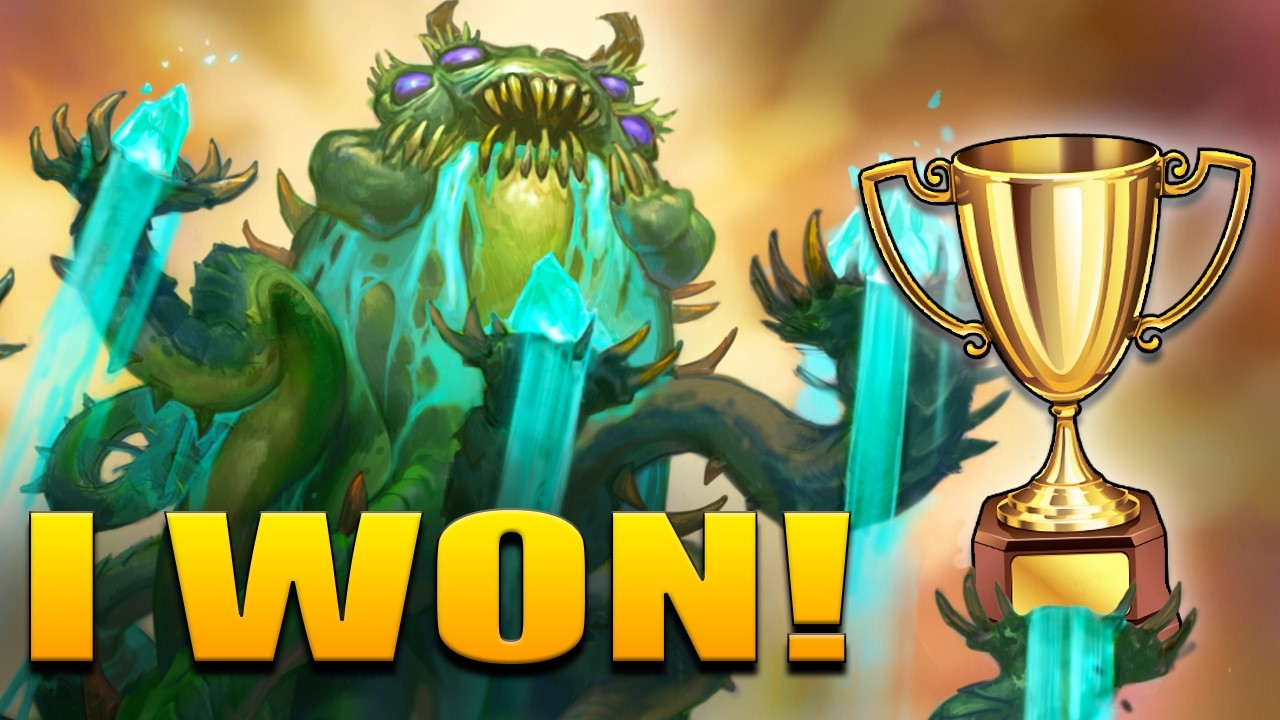
To win a Hearthstone tournament format that requires an Old God in every deck, build proactive midrange shells rather than slow, purely defensive control piles. In restricted brackets featuring C'Thun, the Shattered; Yogg-Saron, Master of Fate; N'Zoth, God of the Deep; or Y'Shaarj, the Defiler, opponents frequently construct greedy decks that rely on late-game fatigue. Punish these unrefined lists by seizing early board control, curving out on turns two through five, and treating Old Gods as secondary closers instead of your only path to victory.
Lineup Construction: Independent Mid-Game Shells
Do not build decks that stall until turn ten to do anything meaningful. A deck should function smoothly even when your Old God is trapped in the bottom half of your library.
- C'Thun, the Shattered: Pair C'Thun with high-draw engines or stealth packages. The four five-mana fragments—Eye, Heart, Body, and Maw of C'Thun—help clear boards and keep you alive, while aggressive cycling lets you assemble and draw the 30-damage finisher before opponents gain massive armor pools.
- Y'Shaarj, the Defiler: Run strong Corrupt minions such as Dunk Tank and Carnival Clown. Corrupted cards generate immediate mid-game swings, and Y'Shaarj refills your hand with zero-cost copies to finish the match without relying on fatigue.
- Yogg-Saron, Master of Fate: Slot Yogg-Saron into spell-heavy decks as an emergency stabilizer. Treat the ten-mana spin as a targeted comeback tool when facing a lost board, not as your primary game plan.
- N'Zoth, God of the Deep: Include resilient minions across distinct minion types to ensure a wide, sticky board reload on turn ten.
Mulligan Rules
Holding ten-mana cards in your opening hand reduces your playable resources and gives passive opponents room to develop. Always mulligan for low-cost initiative.
| Card Category | Action | Primary Reason |
|---|---|---|
| Ten-Cost Old Gods | Always Toss | Dead card in hand during the critical opening turns. |
| Expensive Corrupt Minions | Always Toss | Clunky early; must be drawn after their corrupting activators. |
| Two- and Three-Mana Minions | Always Keep | Establishes early board control and forces out defensive spells. |
| Low-Cost Card Draw & Cycle | Keep with Curve | Digs for core pieces without giving up tempo. |
Neutralizing Control Removal
Many tournament opponents rely on heavy sweeping removal like Brawl, Twisting Nether, or Soul Mirror to extend the game into late fatigue.
- Bait removal with expendable threats. Deploy enough mid-cost minions or token generators to create a lethal clock, forcing the opponent to cast a board clear.
- Hold your reload in hand. Do not overcommit all your resources to a single board state. Keep follow-up minions ready to deploy immediately after a sweep.
- Deploy the Old God as the finisher. Once the opponent expends their primary sweepers on your mid-game waves, an assembled C'Thun or Y'Shaarj swing will close the game without fear of an immediate counter-clear.
Bracket Adaptations and Tech Cards
Opponents in specialized Old God brackets frequently bring disruption tech like Dirty Rat, Armor Vendor, and targeted weapon removal.
- Play around Dirty Rat: Avoid keeping an isolated Old God as the only minion in your hand if you suspect Dirty Rat. Hold battlecry finishers until the turn you can play them, or keep auxiliary minions in hand to dilute the summon pool.
- Maintain face pressure: Keep the opponent's health low enough that they cannot safely pass turns to hoard cards or set up complex combos.
- Exploit off-meta archetypes: Utilizing lesser-seen class shells forces opponents to make mulligan errors, giving your proactive curve an immediate advantage.
Free Hearthstone Codes
Current active codes and how to redeem them.

Sarah Williams
Sarah specializes in RPG and collection games, explaining team building, character growth, and beginner-friendly ways to avoid expensive early mistakes.
COMMUNITY
Player Comments
88 players commented on this guide.
This saved me time in the early game.
I wish I had read this before upgrading the wrong thing.
The explanation is clear, especially for beginners.
This guide answered the exact question I had.