
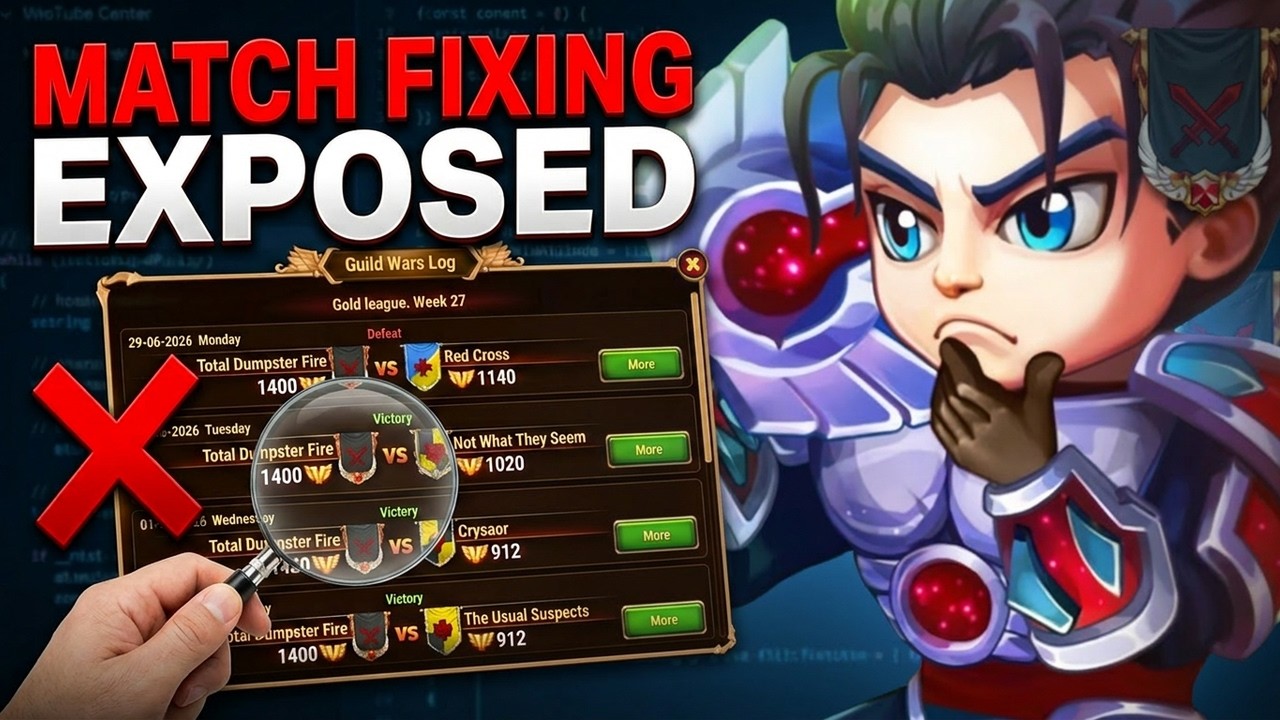
In Hero Wars, winning a Guild War isn't always about brute force; it is about resource management and spatial control. While many players focus exclusively on building high-damage offensive teams, the most successful guilds understand that a defensive "stall" team is often more valuable than a high-power glass cannon. By forcing opponents to fight against the clock rather than just the hero roster, you can effectively neutralize even the strongest attackers. This guide breaks down the mechanics of "stalling," how to build these formidable walls, and the strategic trade-offs required to climb the ranks.
The Strategy of Time-Wasting Defenses
The fundamental mechanic of Hero Wars combat is the two-minute battle timer. If an attacker fails to eliminate your entire team before this timer hits zero, the battle counts as a defensive victory for your guild. In competitive Guild Wars, your primary objective is to make the opponent run out of time, not necessarily to kill them.
To execute this, you must shift your team composition focus from "Damage Per Second" (DPS) to "Survival Per Second." Teams designed for stalling prioritize:
- Healing and Regeneration: Heroes that provide constant health ticks or burst heals to negate chip damage.
- Shields and Damage Mitigation: Abilities that absorb incoming attacks, effectively nullifying an opponent’s ultimate ability.
- Crowd Control (CC): Stuns, silences, and knockbacks that prevent the enemy from casting their high-damage spells.
When an attacker is forced to fight through three layers of shields and constant healing, their damage output becomes irrelevant. Even if they have a team with millions in power, if they cannot break your sustain cycle within 120 seconds, your team wins by default.
Building the Ultimate Defensive Wall
To build a true "stall" team, you need to understand the synergy between your heroes and the auto-combat AI. In Hero Wars, defensive teams are always controlled by the AI, which favors specific casting patterns.
Essential Components of a Stall Team:
- The Tank: Choose a hero with extreme survivability or high dodge stats (e.g., Aurora or Astaroth). Their job is not to deal damage, but to act as a permanent damage sponge.
- The Sustain Engine: Pair your tank with healers or heroes who provide health recovery synergy. The goal is to keep the tank's health pool static even under pressure.
- The Disruptor: Use a hero that can interrupt enemy casting. Stopping an enemy’s core combo is often the difference between a loss and a time-out win.
By testing these combinations against your guildmates in friendly skirmishes, you can identify which setups cause the most frustration. If a guildmate tells you their top team is "annoying" to fight, you have found a perfect candidate for your Guild War defense.
Strategic Hero Placement and Map Control
In Hero Wars, not all defensive slots are created equal. The Guild War map is designed to create chokepoints—specific nodes that the enemy must clear to advance.
- Frontline Chokepoints: Place your most robust stall teams at the entry nodes of your guild's defense. This forces the opponent to burn their best offensive heroes immediately. If they waste their top-tier damage dealers on a stall team, they will have significantly less power to tackle your secondary and tertiary lines of defense.
- The "Attrition" Layering: Consider placing weaker teams that have one or two high-stalling heroes behind your main walls. An opponent who has already exhausted their primary cooldowns will struggle against even a mediocre team if that team is designed to stall for time.
- Communication is Key: Coordinate with your guild leadership to ensure a mix of defensive styles. If every member puts up a pure stall team, you may lack the offensive power to counter-attack effectively. A balanced guild uses a "wall" of stallers to drain enemy resources, followed by calculated offensive strikes to secure the win.
Exploiting AI and Auto-Combat Quirks
Because Hero Wars defensive teams operate on auto-pilot, they will always prioritize their abilities as they come off cooldown. You can manipulate this to your advantage.
Teams that rely on complex, high-skill-ceiling rotations are often bad for defense because the AI might misfire their ultimates. Conversely, teams that are "set-and-forget" are superior. For example, a team that features a hero who triggers a shield upon reaching 50% health will consistently act as a defensive barrier, whereas a hero who requires manual targeting to land a stun will often waste that ability on a low-priority target.
The Trade-offs: When to Stall vs. When to Attack
The most significant mistake players make is over-investing in defense at the expense of their offensive potential. Every hero assigned to a defensive slot is unavailable for your own attacks.
- The Resource Cost: If you lock your strongest healers and tanks into a defensive stall team, your own ability to clear enemy nodes drops. You must decide if your current war goal is defensive survival or aggressive territory capture.
- The Meta-Game Shift: Defensive strategies are only as good as the current meta. If a new hero is released that specializes in "Anti-Shield" or "Healing Suppression," your previously unbeatable stall team will suddenly become a liability. Regularly audit your defensive teams after every war. If you see that your stall team is losing in under 60 seconds, it is time to cycle in new heroes or adjust your synergy.
Final Expert Insights for Success
To truly "cheat" the system, you must embrace the psychology of the attacker. Most players in Hero Wars look for quick, efficient wins. When they encounter a team that forces a long, drawn-out fight, they often become impatient and make tactical errors. They might spam their abilities incorrectly, waste their "ultimate" triggers, or simply quit the battle early out of frustration.
By building for the clock rather than the health bar, you turn the game’s core mechanics into a weapon. Stay updated on the latest hero reworks and stat adjustments, maintain a communication line with your guild, and always remember: a victory by time-out counts exactly the same as a victory by annihilation. Protect your nodes, drain their time, and watch your guild's win rate climb.

Free Hero Wars: Alliance Adventure Codes
Current active codes and how to redeem them.

Michael Smith
Michael covers live-service games, events, reward systems, and efficient daily routines, turning frequent updates into clear actions for players.
COMMUNITY
Player Comments
67 players commented on this guide.
The tips are practical and easy to follow.
I tried this today and it worked better than my old setup.
Can you add more details about heroes in a future update?
Good guide for Hero Wars: Alliance Adventure players. The heroes part was useful.