
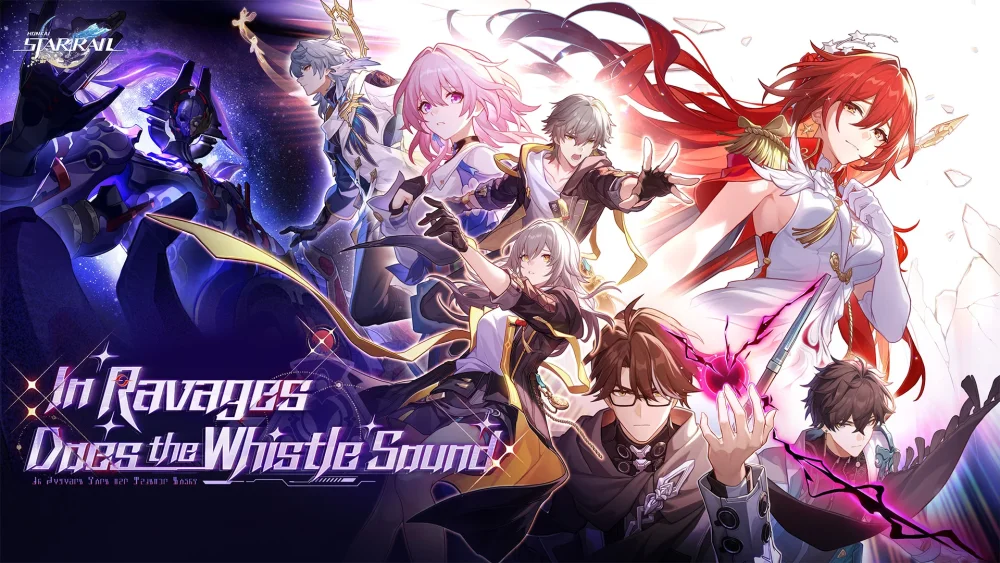
In Honkai: Star Rail, Aventurine is more than just a member of the Ten Stonehearts; he is a master of perception. When he appears in promotional material—such as his recent "vacation" to the Thousand Stars city—players are witnessing a sophisticated blend of character narrative and corporate propaganda. Far from being a simple getaway, these appearances are tactical deployments of the Interastral Peace Corporation’s (IPC) soft power. By deconstructing Aventurine’s advertising tactics, players can better understand his role as a Strategic Investment Department executive and the overarching influence the IPC exerts over the narrative of Honkai: Star Rail.
The Mechanics of the "Corporate Vacation"
Aventurine’s public-facing persona is intentionally curated to disarm. When the IPC releases media depicting him in leisurely settings, it is a deliberate subversion of his role as a ruthless high-stakes gambler and debt collector. This "vacation" narrative serves three primary mechanical functions within the game's lore:
- Normalization of Corporate Reach: By framing a high-ranking IPC official as a tourist, the organization humanizes its most aggressive department, suggesting that the IPC is a part of everyday life rather than an external, looming authority.
- Information Asymmetry: Aventurine thrives on keeping his opponents guessing. By presenting himself in a relaxed, non-threatening state, he forces his adversaries—and the Trailblazers—to constantly question whether they are seeing the "real" Aventurine or a performance.
- Brand Integration: The blatant inclusion of sponsors like Slorada serves as a meta-commentary on the IPC’s total control over the galaxy’s economy. If a member of the Ten Stonehearts is drinking a specific brand, that brand becomes the standard for the entire star system.
The Slorada Connection: Commodifying the Lifestyle
The recent buzz surrounding Aventurine’s "vacation" and his associated promotional deals—specifically involving Slorada—highlights the IPC’s strategy of total cultural saturation. In Honkai: Star Rail, currency and trade are the lifeblood of the universe, and the IPC controls the tap.
When Aventurine is seen endorsing a product, he isn't just acting as a spokesperson; he is reinforcing the hierarchy of power. For the player, this is a signal to look deeper. Why would an executive of his stature care about an advertising contract? The answer lies in the IPC’s desire to dictate the "vibe" of any given region. By integrating their products into the leisure time of the galaxy’s elite, they ensure that even the most rebellious planets perceive the IPC as the arbiter of "success" and "coolness." Players should view these advertisements not as flavor text, but as evidence of the IPC’s ability to influence public sentiment without firing a single shot.
Strategic Ambiguity: The Gambler’s Greatest Asset
Aventurine’s character arc is defined by the tension between his genuine, tragic past and his manufactured present. His presentation in promotional materials is the ultimate extension of this duality. He uses the "vacationer" archetype to mask the "investor" archetype, creating a layer of ambiguity that serves as his primary defense mechanism.
Key Indicators of Aventurine’s Calculated Persona:
- The "All-In" Facade: He acts with a sense of nonchalance, as if he has nothing to lose. This is a deliberate gamble to force others to react to his perceived instability rather than his actual, rigid objectives.
- Selective Disclosure: In every social interaction, he reveals just enough of his personality to seem relatable, while concealing the specific financial or political metrics he is actually tracking.
- The House Always Wins: Every action he takes is an investment. If he is seen on vacation, it is because he has already determined that the "cost" of the appearance is lower than the "return" in public relations or intelligence gathering.
Distinguishing Lore from Marketing
Players must learn to differentiate between the "official" version of events—the one the IPC wants the galaxy to see—and the underlying reality of the Trailblaze Missions. The IPC’s media machine is designed to make the Ten Stonehearts appear as celebrities or lifestyle icons. However, as the story of Honkai: Star Rail progresses, the disconnect between their polished, high-definition advertisements and the cold, often brutal, consequences of their business dealings becomes starkly apparent.
When you encounter promotional content involving Aventurine, ask yourself: What is the IPC gaining by showing me this?
- If the goal is to distract, they will emphasize his charm and wealth.
- If the goal is to intimidate, they will emphasize his connection to the IPC’s bottomless resources.
- If the goal is to gather information, they will position him in social circles where he can observe without being observed.
Why This Matters for the Trailblazer
Understanding the IPC’s advertising tactics is not just an exercise in lore-hunting; it is essential for surviving the political intrigue of the game. Aventurine is the face of the IPC’s soft power, and his ability to manipulate the narrative is as dangerous as any combat ability.
By recognizing that his vacation is a front, you stop playing by his rules. You cease to be a passive consumer of his "brand" and start acting as an observer of his true motives. This mindset is vital for the later stages of Honkai: Star Rail, where alliances shift based on wealth, public perception, and the ability to control the narrative.
Ultimately, Aventurine is a man who bets on the house, and the IPC is the house. When you see him lounging with a drink in hand, remember that he is likely already four moves ahead, counting the chips, and waiting for you to make the mistake that lets him win the round. Treat every interaction with him like a high-stakes contract—read the fine print, ignore the flashy marketing, and always keep your eyes on the bottom line.

Free Honkai: Star Rail Codes
Current active codes and how to redeem them.

Sarah Williams
Sarah specializes in RPG and collection games, explaining team building, character growth, and beginner-friendly ways to avoid expensive early mistakes.
COMMUNITY
Player Comments
122 players commented on this guide.
Good guide for Honkai: Star Rail players. The strategy part was useful.
This saved me time in the early game.
I wish I had read this before upgrading the wrong thing.
The explanation is clear, especially for beginners.