
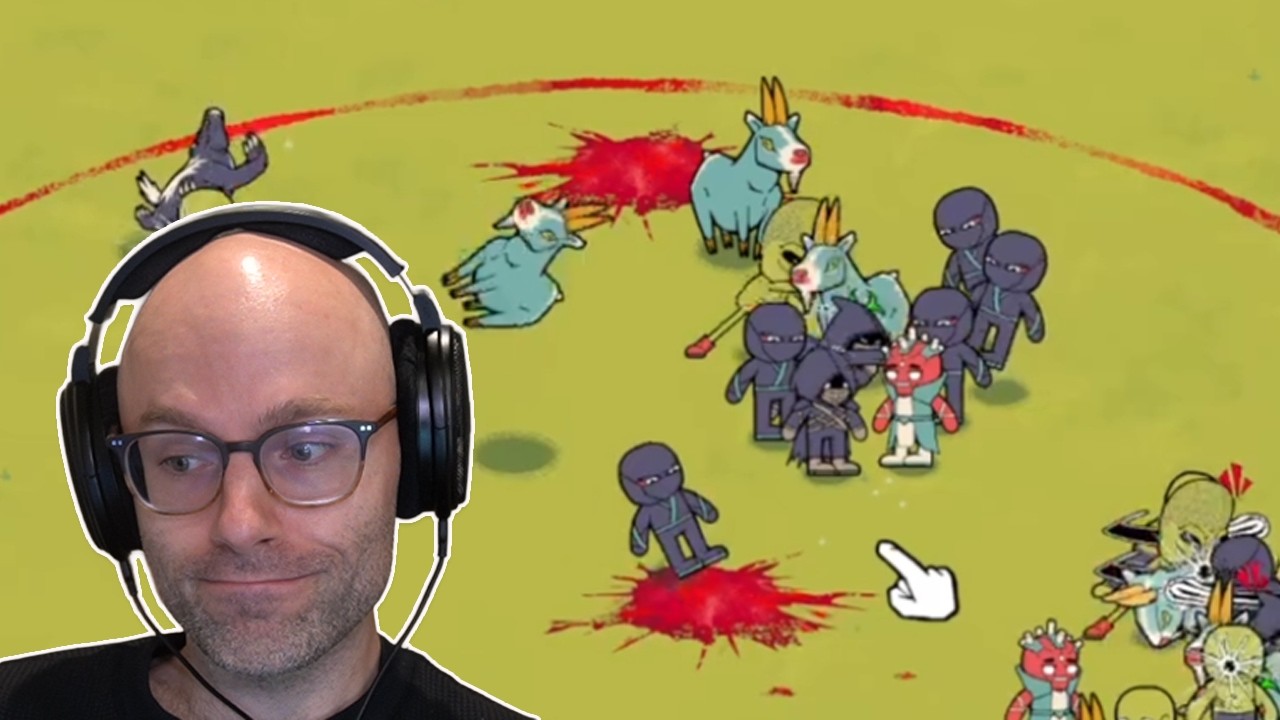
In How Many Dudes?, the difference between a record-breaking run and an early defeat lies in your ability to manage the chaos on screen. Unlike standard tower defense games, this roguelike dudebuilder rewards players who treat their army as a cohesive, singular entity rather than a collection of individual units. When the screen fills with hundreds of enemies, spatial management becomes your primary survival mechanic.
To succeed, you must move beyond basic unit recruitment and master the geometry of the battlefield. This guide details how to leverage unit clustering, environmental chokepoints, and "kiting" maneuvers to maintain control even when the game reaches its maximum entity density.
The Foundation: Why Clustering Beats Expansion
The most common mistake for new players in How Many Dudes? is attempting to cover the entire map with their army. By spreading units thin, you lose the ability to focus fire, and you become highly susceptible to being flanked. Instead, you must adopt a "Compact Core" strategy.
When your Dudes are clustered tightly, they create a overlapping field of fire. This isn't just for aesthetic cohesion; it’s a mathematical necessity for DPS scaling. When enemies approach from multiple directions, a loose formation allows them to slip through the gaps. A compact, circular or "wedge" formation ensures that every enemy entering your perimeter is subjected to the maximum number of projectiles or melee hits simultaneously.
Key Rule: Never leave a unit isolated. If a single Dude is pushed out of the main cluster, they are effectively dead weight. Use the game’s grouping mechanics to pull stragglers back into the formation immediately.
Leveraging Environmental Geometry
Every map in How Many Dudes? features terrain that can be used to mitigate the sheer volume of enemies. You should never engage in the center of an open field unless you have no other choice.
- Identifying Chokepoints: Look for L-shaped corridors, narrow bridges, or gaps between static map assets.
- The Mouth Strategy: Position your cluster at the exit of a narrow passage. By doing this, you force the enemy to transition from a wide, unmanageable swarm into a thin, single-file line.
- Density Control: Because enemies in How Many Dudes? often have collision physics, forcing them through a tight space creates a "traffic jam." This prevents 50 enemies from attacking your front line at once, limiting them to maybe 3 or 4, while the rest are stuck behind their own allies.
Target Density: Managing "The Blob"
As you progress, you will encounter waves that feel impossible to manage. The secret is to stop looking at individual enemies and start looking at "density threats."
If you have a screen full of enemies, identify the thickest cluster—the "blob"—that is closest to your formation. Your entire army’s AI should be focused on this high-density area. If you split your fire across the entire screen, you will fail to kill anything, and the swarm will eventually reach your perimeter. By focusing on the densest cluster, you create a "hole" in the enemy wall, which often causes the pathfinding of surrounding enemies to break or stall, buying you precious seconds of safety.
Understanding Spatial Capacity Limits
How Many Dudes? has a hard limit on how many entities can exist simultaneously. Savvy players use this technical constraint as a tactical advantage.
When the game hits its entity cap, enemy AI often becomes jittery or prone to clumping. You can intentionally "clog" a chokepoint to trigger this limit. Once the clog is established, the game may stop spawning new, threatening enemies for a brief window, or it may force existing enemies to push each other into your kill zone.
Warning: This is a high-risk, high-reward strategy. If the clog breaks, the "pressure cooker" effect will release a massive wave of entities all at once. Always keep a reserve group of Dudes positioned slightly behind your main line to act as a secondary defensive wall should your primary line be breached.
The Art of Kiting: Dynamic Repositioning
Static defense is a trap. In the late stages of a run, staying in one spot for too long is a death sentence. You must master the "Kite," which involves moving your entire formation backward while maintaining your cluster structure.
- Identify the Threat: When a wave grows too large, begin moving away from the swarm.
- Maintain Cohesion: Move the entire group as one. Never drag units individually; this breaks your defensive perimeter.
- Reset at a New Choke: Move until you reach the next narrow corridor or obstacle. By pulling the enemy across the map, you keep them chasing you, which naturally keeps them bunched up in a tight, vulnerable formation.
Common Mistakes to Avoid
- The Perimeter Fallacy: Trying to surround the enemies. In How Many Dudes?, you are the one who needs to be surrounded by protection, not the other way around. Keep your back to a wall or a corner whenever possible.
- Ignoring Unit Speed: If you have units with vastly different movement speeds, your formation will constantly break. Group your slower, high-health units at the front and keep faster, ranged units in the center of your formation.
- Over-Recruiting: More Dudes isn't always better. If your army exceeds your ability to manage their placement, you will lose the benefits of clustering. Recruit only as many Dudes as you can effectively control within a single, tight, maneuverable formation.
By shifting your focus from individual unit power to the geometry of your formation, you turn the overwhelming chaos of How Many Dudes? into a manageable system. Prioritize your position, respect the physical limits of the game, and always keep your Dudes moving as one.

Free How Many Dudes? Codes
Current active codes and how to redeem them.

James Brown
James focuses on Android gaming on PC, emulator setup, controls, performance tuning, and practical troubleshooting for longer play sessions.
COMMUNITY
Player Comments
136 players commented on this guide.
This saved me time in the early game.
This guide answered the exact question I had.
The tips are practical and easy to follow.
Good guide for How Many Dudes? players. The updates part was useful.