
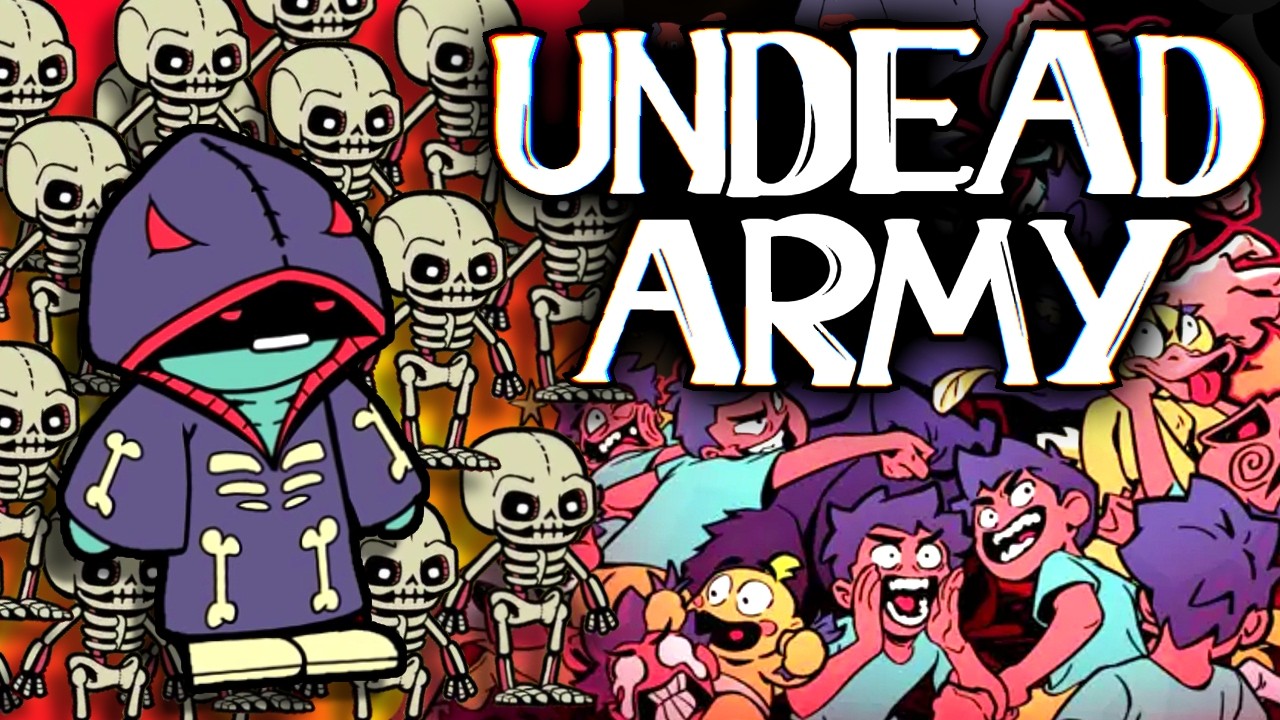
In How Many Dudes?, the Necromancer stands out as one of the most potent units due to its ability to manipulate the battlefield’s economy. Rather than relying on static damage numbers, the Necromancer scales dynamically with the enemy count. By turning every defeated foe into a temporary skeleton, you essentially convert the game’s difficulty—the density of enemy waves—into your own defensive wall. Mastering the Necromancer requires moving beyond simple recruitment; you must treat your squad as an ecosystem where every unit's placement and speed stat contributes to an infinite cycle of revival.
The Core Mechanic: Mastering Corpse Economy
The Necromancer does not just deal damage; it generates "fuel" from the fallen. Every time an enemy dies within range of your Necromancer, a skeleton is raised. These skeletons act as high-value meat shields, absorbing incoming projectiles and melee strikes that would otherwise target your squishy core units.
The secret to a successful Necromancer run is understanding the Conversion Threshold. If you generate skeletons faster than they die, you create a "death ball" that occupies the entire lane. If your generation rate is slower than the incoming damage, your line will collapse, leaving your Necromancer vulnerable. To succeed, you must focus on maximizing the "uptime" of your skeletons by ensuring your Necromancer is constantly firing. This creates a recursive loop where your army grows larger the more the enemy pushes, effectively turning the hardest segments of a wave into your most fortified moments.
Prioritizing Stats: Why Attack Speed is King
In How Many Dudes?, many players fall into the trap of prioritizing raw damage (Base ATK) for their Necromancer. This is a mistake. The Necromancer’s damage output is secondary to its Activation Frequency.
- Attack Speed (ATK SPD): This is the single most important stat. Higher attack speed allows for more revival procs per second. In late-game waves where enemies have high HP pools, you need to be able to raise skeletons instantly as the previous ones fall.
- Cooldown Reduction (CDR): If your specific version of the Necromancer has an active ability, prioritize CDR to bridge the gaps between standard attacks.
- Range: While tempting, range is secondary to attack speed. You want your Necromancer to sit just behind the front line to ensure it remains protected while still having enough reach to hit the enemies as they enter the kill zone.
Always choose attack speed items or level-up bonuses over flat damage increases. A faster firing rate keeps your undead frontline dense, which is significantly better for survivability than a slightly harder-hitting single unit.
Strategic Placement and Formation
Placement is the difference between a stalled run and an infinite loop. Never place your Necromancer in the front row. Instead, use a "Triangular Formation":
- Front Line: Place high-health "tank" Dudes or existing skeletons at the very front to draw aggression.
- Mid Line: Place your AoE damage units here to soften up the enemy swarm.
- Back Line (Center): Place your Necromancer here. This protects it from stray projectiles and ensures it has a clear line of sight to the bodies created by your AoE units.
By forcing enemies into a "choke point" using your tankier units, you ensure that all enemy deaths occur within the Necromancer's revival range. If your formation is too wide, deaths will occur outside the Necromancer's radius, and the snowball effect will fail to materialize.
Synergies: The "Death-Ball" Composition
A Necromancer is only as good as the units feeding it corpses. If you don't have enough damage to kill enemies, the Necromancer has no fuel. If you have too much single-target damage, you won't be able to handle wide waves.
Recommended Support Units:
- AoE Specialists: Units that deal damage in a cone or circle are mandatory. They ensure that multiple enemies reach low health simultaneously, allowing the Necromancer to raise a full "wave" of skeletons at once.
- Debuffers: Units that apply "Slow" or "Vulnerability" are vital. Slowing enemies keeps them in your kill zone longer, and vulnerability ensures your AoE units secure the kills, triggering the Necromancer’s passive.
- Single-Target Heavy Hitters: You need one or two units dedicated purely to boss damage. Because skeletons are temporary, they often fail to deal significant damage to high-HP bosses. A specialized high-DPS unit acts as your "finisher" while the Necromancer keeps the boss distracted with a constant stream of skeletons.
Managing Performance and Visual Clutter
As you push further into the game, the Necromancer build can create hundreds of active entities. This often results in "entity capping" or visual clutter, where it becomes impossible to see enemy telegraphs.
- Limit your "Clutter" Units: Avoid recruiting units that spawn other temporary units (like explosive mines or secondary summons) if you are already running a Necromancer. You want to save your entity count for the skeletons that actually benefit from your buffs.
- Zoom and Scan: Get used to playing in a zoomed-out perspective if the game allows. It is easy to lose track of your Necromancer’s health bar in the sea of skeletons. If you see the skeleton wall thinning, it is a sign that your attack speed is insufficient for the current wave density.
Common Mistakes to Avoid
- Over-Investing in Necromancer Damage: Boosting the Necromancer’s personal damage is inefficient. Focus on its utility. Let the army do the heavy lifting.
- Ignoring the "Kill" Threshold: If you find your skeletons are disappearing without being replaced, you aren't killing the enemies fast enough. Upgrade your support units' damage, not the Necromancer's.
- Neglecting Positioning: If your Necromancer dies, the build dies. Always keep a "bodyguard" unit next to the Necromancer to intercept any enemies that manage to break through the skeleton wall.
By following these strategies, you can turn the Necromancer into the most reliable engine in How Many Dudes?. Focus on speed, prioritize AoE support, and maintain a tight formation to ensure your undead army is always ready to rise.

Free How Many Dudes? Codes
Current active codes and how to redeem them.

Sarah Williams
Sarah specializes in RPG and collection games, explaining team building, character growth, and beginner-friendly ways to avoid expensive early mistakes.
COMMUNITY
Player Comments
32 players commented on this guide.
Can you add more details about strategy in a future update?
This guide answered the exact question I had.
The explanation is clear, especially for beginners.
This helped me understand strategy much better.