
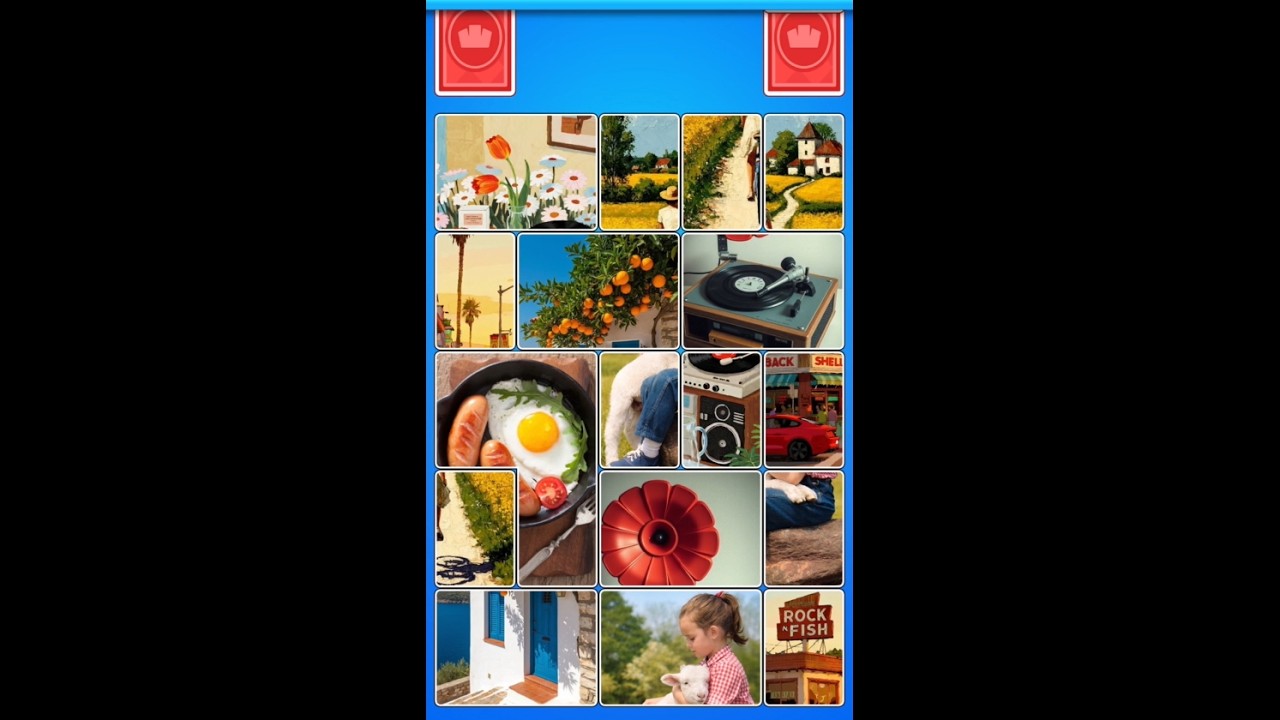
Efficiently clearing the first ten levels of Jigsaw Drop: Solitaire Puzzle requires shifting your focus from random tile manipulation to identifying fixed anchor points and spatial logic. While the initial levels serve as an introduction to the core mechanics, they also establish the habits necessary for solving the more complex, high-density puzzles encountered later in the game. By moving away from trial-and-error and adopting a structured assembly method, you can minimize congestion, reduce move counts, and complete your picture collections with precision.
The Foundation: Prioritizing Edge and Corner Pieces
The most effective way to start any puzzle in Jigsaw Drop: Solitaire Puzzle is to identify and secure pieces that belong on the outer perimeter of the frame. Because corners and edges possess fewer potential neighbors than center pieces, they serve as natural stabilizers that define the boundaries of your play area.
When you lock these pieces into place first, you effectively shrink the "active" play area. This creates a rigid frame that prevents you from misplacing pieces in the wrong quadrants. If you find yourself struggling with a specific level's complexity, scan the pieces for straight edges. Placing these along the outer bounds of the grid creates a clear visual baseline, allowing you to organize the interior segments with significantly higher accuracy and speed.
Identifying Visual Anchor Points
Every puzzle in the introductory sequence features high-contrast sections or distinct color clusters that function as natural anchor points. Rather than dragging pieces randomly to see if they snap into place, scan the board for these recognizable motifs—such as a vibrant eye, a specific piece of clothing, or a unique background element.
Aligning these anchor pieces early allows you to build outward, using established visual logic to fill in the gaps. If a level feels overwhelming, break the image down into its simplest components. For instance, in puzzles involving faces or complex landscapes, prioritize joining pieces that share a specific color gradient or line texture. By focusing on these clusters before attempting to place them into the final grid, you reduce the number of potential placement errors and accelerate your completion time.
Managing Piece Congestion
A common mistake in the early levels of Jigsaw Drop: Solitaire Puzzle is overcrowding the center of the screen with unplaced tiles. When too many pieces are clustered in the middle, it becomes difficult to track their individual shapes and visual cues. This "visual noise" often leads to frustration and unnecessary moves.
To maintain a clean workspace, follow these organization rules:
- Clear the Center: Push pieces you aren't currently using to the far sides or corners of the board.
- Categorize by Type: Keep similar piece shapes or colors in specific "staging" zones.
- Pre-Assembly: If you identify two pieces that clearly form a pair, move them next to each other immediately, even if they aren't ready to be placed in the final grid.
Proactive organization prevents the board from becoming a chaotic mess, ensuring that you always have a clear view of your next available move.
Logical Sequencing for Complex Images
As you progress toward Level 10, images increase in detail and complexity. Do not attempt to complete the image piece-by-piece from top to bottom. Instead, work in "blocks" of color or texture. By completing a small, recognizable section—like a patch of sky or a solid-colored object—you gain a reference point that makes it mathematically simpler to deduce the placement of surrounding, more ambiguous pieces.
When you encounter a piece that does not immediately fit into your established blocks, set it aside. Attempting to force a piece into a slot where it doesn't belong often leads to further confusion as you misidentify the potential neighbors. By consistently returning to your established blocks, you reinforce the correct image structure, making the final stages of the puzzle feel like a natural, logical progression rather than a guessing game.
Evaluating Piece Geometry and Mechanics
The geometry of the pieces is your most reliable hint when visual cues are ambiguous. Observe the interlocking tabs and blanks on the edges of the pieces; these are objective indicators of where a piece can possibly connect. Even if the image on the piece is confusing, the physical "lock" will only accept specific counterparts.
Paying attention to these mechanical constraints is essential for the later, more visually dense levels. Use this evaluation checklist to determine your next move:
- Edge Alignment: Does the piece have a flat side? If so, it belongs on the perimeter.
- Tab Counting: How many connections does this piece require? Pieces with three or four connections are rarely found on the edges.
- Color Continuity: Do the lines or colors on this piece bleed naturally into an already placed piece? If not, it is likely a misplaced segment.
- Shape Matching: Does the notch of the piece match the protrusion of the target tile?
Developing Your Puzzle-Solving Strategy
To master Jigsaw Drop: Solitaire Puzzle, you must balance your reliance on visual imagery with an understanding of the game's underlying grid system. Players who succeed early are those who stop seeing the screen as a jumble of pieces and start seeing it as a structured puzzle to be dismantled and rebuilt.
Remember that every move should be purposeful. If you find your progress stalling, pause and re-evaluate your staging area. Often, the missing link is already on your board, hidden within a cluster of pieces you haven't yet organized. By applying these foundational tactics—prioritizing edges, establishing anchor points, and managing your workspace—you will find that levels 1 through 10 become a smooth, satisfying experience that prepares you for the advanced challenges ahead.

Free Jigsaw Drop: Solitaire Puzzle Codes
Current active codes and how to redeem them.

Michael Smith
Michael covers live-service games, events, reward systems, and efficient daily routines, turning frequent updates into clear actions for players.
COMMUNITY
Player Comments
85 players commented on this guide.
Nice guide. I am checking the other Jigsaw Drop: Solitaire Puzzle articles next.
This guide answered the exact question I had.
This saved me time in the early game.
Good guide for Jigsaw Drop: Solitaire Puzzle players. The strategy part was useful.