
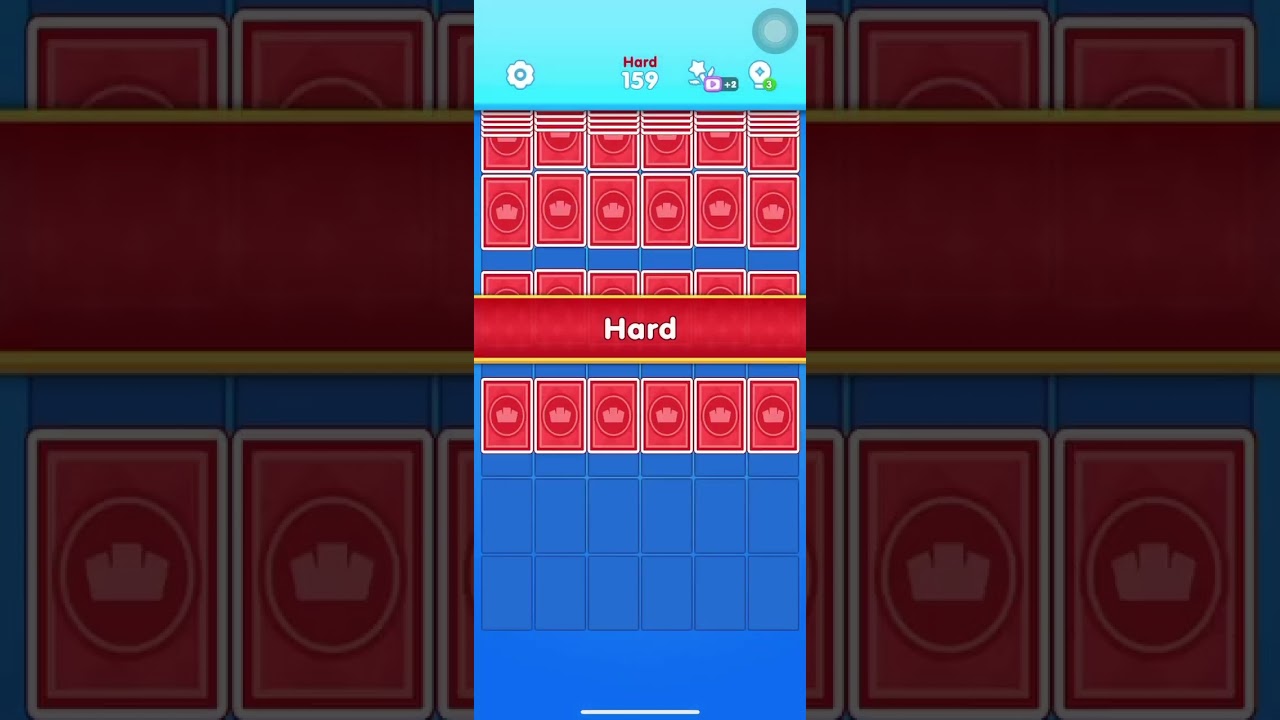
Levels 160, 161, and 162 in Jigsaw Drop: Solitaire Puzzle represent a significant difficulty spike that tests your ability to balance speed with long-term board management. Unlike earlier stages where clearing cards is straightforward, these levels hide essential puzzle pieces behind dense, multi-layered stacks. To succeed, you must shift your focus from clearing the easiest cards to dismantling the most restrictive columns.
The Core Mechanic: Why Vertical Depth Matters
In Jigsaw Drop: Solitaire Puzzle, the board is not just a collection of tiles; it is a vertical ecosystem. In levels 160–162, the game developers intentionally place high-value puzzle pieces at the very bottom of the deepest columns. If you play horizontally across the top of the board, you will find yourself running out of moves while the pieces you need remain trapped under five or six layers of cards.
The key to victory is to prioritize "depth-first" clearing. Every move you make should serve one of two purposes: clearing a base-level card to open a column or unlocking a path to a trapped puzzle piece. If a move doesn't directly contribute to exposing a hidden piece or creating a new cascade opportunity, it is likely a wasted move that brings you closer to failure.
Mastering Bottleneck Identification
A "bottleneck" in these specific levels is a card that holds up an entire vertical stack. Often, you will see a puzzle piece visible near the bottom, but it is blocked by a single card that cannot be moved until a different column is cleared.
To identify these bottlenecks:
- Scan the bottom row: Identify the cards that are directly preventing you from reaching a puzzle piece.
- Trace the dependencies: Follow the chain of cards above those blockers. If a card is buried under three others, it is not your immediate target.
- Target the anchors: Look for the "anchor" cards—the ones that, when removed, allow the entire column to shift downward. Clearing these anchors is the most efficient way to lower the barrier to your target puzzle pieces.
Strategic Cascade Management
Cascades are the secret weapon for high-level play in Jigsaw Drop: Solitaire Puzzle. A cascade occurs when clearing a bottom-row card causes the remaining cards in that column to drop, potentially aligning with other cards to clear them automatically.
In levels 160–162, you should never make a move without checking if a potential cascade is hidden in the columns below. Before you tap a card, ask yourself: "If I remove this, will the cards above it fall into a position that creates a match?"
This approach minimizes move usage. By setting up cascades, you can clear three or four cards with a single move. This is vital in these levels because the move count is tight; wasting moves on isolated, top-level cards is the most common reason players fail at this stage.
Avoiding the "Tunnel Vision" Trap
The most dangerous habit in Jigsaw Drop: Solitaire Puzzle is "tunnel vision"—the tendency to focus only on the puzzle piece itself. When you stare at the piece you need, you stop seeing the rest of the board. This leads to poor decision-making, such as clearing a card that was actually holding up a necessary sequence for later in the level.
Instead, keep your focus on the board's equilibrium. A balanced board is one where no single column is drastically deeper than the others. If you clear one side entirely while the other remains stacked high, you lose the ability to shift cards effectively. Always aim to keep your column heights relatively uniform so that you have the maximum number of options for your next move.
Troubleshooting Common Mistakes
Even experienced players struggle with the jump in difficulty at level 160. If you find yourself repeatedly failing, check your gameplay against these common pitfalls:
- The "Hasty Tap": Avoid tapping the first match you see. Take three seconds to scan the bottom of every column first.
- Ignoring the Piece Location: If you are clearing columns that contain no puzzle pieces, you are wasting moves. Only clear columns without pieces if they are blocking a path to a column that does contain a piece.
- Panic Moves: When the move counter gets low, players often start clearing cards randomly. This is almost always a loss. If you are low on moves, identify the one path to your remaining puzzle pieces and ignore everything else.
Expert Strategy Table: Level 160–162 Decision Matrix
| Scenario | Recommended Strategy | Why It Works |
|---|---|---|
| Two pieces side-by-side | Clear the column between them | Opens space to drop both pieces simultaneously. |
| Deep stack, no pieces | Focus on the anchor card | Quickly reduces the height of the board. |
| High move count | Focus on cascade setups | Conserves moves for later stages of the level. |
| Low move count | Target the direct blockers | Minimizes unnecessary moves to reach the goal. |
Final Tips for Success
Levels 160–162 are designed to be "puzzle-solvers" rather than just "tile-clickers." If you feel yourself getting frustrated, step away for a moment. The game does not penalize you for taking your time. Each of these levels has a specific solution path that is mathematically sound; if you haven't found it yet, it’s because you haven't cleared the right bottleneck.
Remember that Jigsaw Drop: Solitaire Puzzle rewards patience. By focusing on the bottom of the board, clearing vertical columns systematically, and avoiding the trap of mindless tapping, you will find these levels much more manageable. You aren't just playing a game; you are dismantling a structure. Plan your moves as if you were pulling a Jenga tower apart, and you will clear these levels with moves to spare.

Free Jigsaw Drop: Solitaire Puzzle Codes
Current active codes and how to redeem them.

Emily Johnson
Emily writes practical mobile strategy guides with a focus on resource planning, base progression, and the early decisions that shape a long-term account.
COMMUNITY
Player Comments
105 players commented on this guide.
This guide answered the exact question I had.
I wish I had read this before upgrading the wrong thing.
Good guide for Jigsaw Drop: Solitaire Puzzle players. The strategy part was useful.
Nice guide. I am checking the other Jigsaw Drop: Solitaire Puzzle articles next.